Why putting a glass of water near the radiator could save you money
As winter approaches and heating systems get ready to switch on, many families are once again worried about rising energy bills. The increase in gas and electricity prices — partly due to global conflicts and economic instability — has led many to look for creative, low-cost ways to stay warm and comfortable at home without overspending.
One clever trick that’s gaining attention is surprisingly simple: placing a glass of water near the radiator. It may sound like an old-fashioned tip, but it’s an effective way to improve the air quality in your home, protect your health, and even reduce heating costs. Let’s see how and why this works.
Why Humidity Matters for Your Health
Indoor air quality plays a crucial role in our well-being. Most people focus on temperature when thinking about comfort, but humidity — the amount of water vapor in the air — is just as important.
When the air inside your home is too dry or too humid, it can lead to several problems. Studies have shown that extreme humidity levels, whether high or low, can increase the spread of viruses and cause discomfort or health issues.
-
Low humidity can irritate the respiratory tract, throat, and eyes. It often leads to dry skin, cracked lips, and even worsens allergies. People who live in very dry environments may experience sore throats or voice fatigue, especially during the winter when heating systems are constantly running.
-
High humidity, on the other hand, can promote the growth of mold, dust mites, and bacteria, which can trigger allergies, asthma, and other respiratory problems.
The ideal indoor humidity level for comfort and health is typically between 40% and 60%. To measure it accurately, you can use a simple device called a hygrometer, available in most home improvement stores.
How Heating Affects Indoor Humidity
Heating systems — especially radiators and central heating — make our homes cozy during the winter months, but they also have an unintended side effect: they dry out the air.
When warm air is produced, it can reduce the relative humidity of the environment. As the temperature increases, the air’s ability to hold moisture also rises, meaning that the existing amount of water vapor becomes less significant. The result is that familiar “dry air” feeling many people experience during the cold season.
Dry indoor air doesn’t just make you uncomfortable; it can also affect sleep quality, irritate mucous membranes, and even damage wooden furniture or flooring.
That’s why it’s essential to find ways to reintroduce moisture into the air — and you don’t necessarily need an expensive humidifier to do it.
The Simple Trick: A Glass of Water by the Radiator
If you’re looking for a quick, low-cost solution to balance your home’s humidity, this old household trick is perfect.
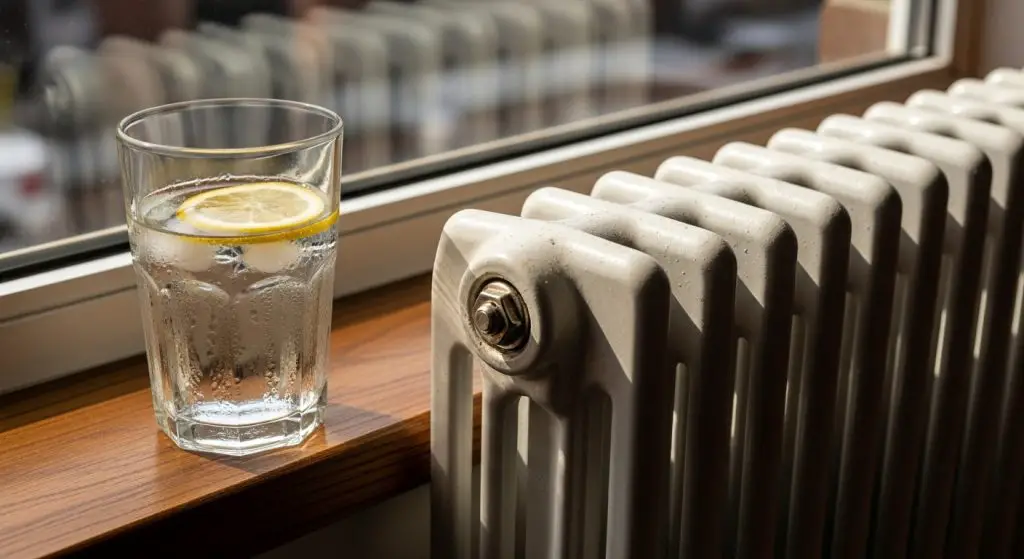
Simply place a glass or small bowl of water near the radiator. As the radiator heats up, it warms the water slightly, allowing it to evaporate slowly into the air. The result? A gentle, natural humidification process that helps maintain a healthier atmosphere in your home.
If you have more space, you can even use special ceramic containers designed to hang directly on the radiator. These act as small evaporators that efficiently release moisture as the heating element warms up.
This method has several benefits:
-
It helps maintain an optimal humidity level.
-
It reduces dryness in the air, protecting your skin and airways.
-
It prevents that “stuffy” feeling that often occurs in overheated rooms.
-
It costs nothing — just a bit of water and the warmth already produced by your radiator.
In essence, it’s a simple way to make your heating system work double duty: warming your space while improving the air you breathe.
Additional Tips for Naturally Humidifying Your Home
If you’d like to go a step further, there are other easy ways to naturally add moisture to your indoor environment:
-
Dry your clothes indoors.
Hanging freshly washed clothes near the radiator not only helps them dry faster but also releases water vapor into the air. It’s one of the most economical ways to humidify a room during winter. -
Use steam from cooking or showers.
When you cook or take a hot shower, don’t let the steam go to waste. Leave the kitchen or bathroom door open afterward to let that moisture circulate throughout your home. -
Decorate with houseplants.
Indoor plants don’t just make your home more beautiful — they also naturally release moisture through a process called transpiration. Ferns, peace lilies, and spider plants are particularly effective. -
Add essential oils for extra comfort.
To enhance the atmosphere, add a few drops of essential oil to the water near your radiator. Eucalyptus oil, for instance, helps open airways and can be especially soothing during cold and flu season. Lavender or citrus oils, on the other hand, can create a relaxing or refreshing scent throughout the room.
A Healthier Home and Lower Bills
Maintaining proper humidity levels offers more than just comfort — it can also help you save money on heating.
When the air in your home is too dry, it feels cooler than it actually is. By adding moisture, the air retains heat more effectively, allowing you to lower the thermostat slightly without sacrificing comfort. Even a one-degree reduction in temperature can translate into noticeable savings on your energy bill over time.
So, placing a simple glass of water near your radiator not only benefits your respiratory health and skin but can also help make your heating system more efficient.
Final Thoughts
In times when energy costs are high, it’s comforting to know that some of the best home solutions don’t require expensive devices or complicated technology. A single glass of water near the radiator can make a real difference — improving air quality, protecting your health, and helping you save on heating.
This small act transforms something as ordinary as your radiator into a tool for comfort and well-being. It’s proof that sometimes, the simplest household tips are the ones that work best — quietly, effectively, and naturally.