Dishwashing sponge: add salt before use: the housewife’s secret
It might seem strange at first, but adding a bit of salt to your dish sponge can make a huge difference in your kitchen hygiene. While most people think their sponge is one of the cleanest items in their home—after all, it’s used with soap and water every day—the truth is that this humble cleaning tool can quickly become one of the dirtiest. Hidden inside its porous surface, thousands of bacteria can multiply in just a few days. Fortunately, there’s a simple, natural way to keep your sponge clean and germ-free: salt.
The Hidden Dirt on Your Sponge
When you finish washing the dishes, your sponge looks clean. It smells like soap, and you rinse it with water—so it must be fine, right? Unfortunately, the damp and warm environment of a kitchen sponge is ideal for bacterial growth. Studies have shown that after less than two weeks of daily use, an average sponge can harbor millions of bacteria per square inch. These microorganisms include potentially harmful species that can transfer to your dishes, utensils, and even your hands.
That’s why experts recommend replacing kitchen sponges every two weeks. However, if your sponge still seems in good condition, there’s no need to throw it away. With a simple cleaning routine using salt, you can safely extend its life while keeping it fresh and disinfected.
Why Salt Works So Well
Salt is one of the most versatile and natural disinfectants available. Known for its antiseptic, antibacterial, and deodorizing properties, it’s been used for centuries to preserve food, heal wounds, and sanitize surfaces. When salt comes into contact with bacteria, it draws out the moisture from their cells through osmosis, effectively killing them. This same principle makes salt an excellent cleaning aid for your sponge.
But the benefits of salt don’t stop there. Around the home, salt can be used to clean, disinfect, and refresh a variety of items:
- For fruits and vegetables: Add a tablespoon of salt to a bowl of water and soak produce for 10–15 minutes. This helps remove dirt, pesticides, and bacteria without leaving any salty residue after rinsing.
- For faded clothes: Soak dull fabrics in cold water with salt and a splash of vinegar for an hour to revive colors naturally.
- For shoes: Mix salt with baking soda and sprinkle inside shoes to absorb moisture and neutralize odors.
These examples show how powerful—and safe—salt can be for maintaining cleanliness in everyday life.
How to Clean and Disinfect Your Sponge with Salt
Here’s a simple and effective method to disinfect your dish sponge using salt. It’s best to do this every two to three weeks, or more often if you wash a lot of dishes daily.
Step 1: Rinse Thoroughly
After washing the dishes, rinse the sponge well under running water. Remove any food particles and excess soap. Make sure both sides of the sponge are free from grease or residue.
Step 2: Pre-clean with Soap and Vinegar
Apply a small amount of dish soap and a splash of white vinegar to the rough side of the sponge. Work the mixture through the entire sponge until it foams. The vinegar helps break down grease and kill some bacteria on contact. Rinse again under warm water and squeeze out as much liquid as possible.
Step 3: Prepare the Salt Bath
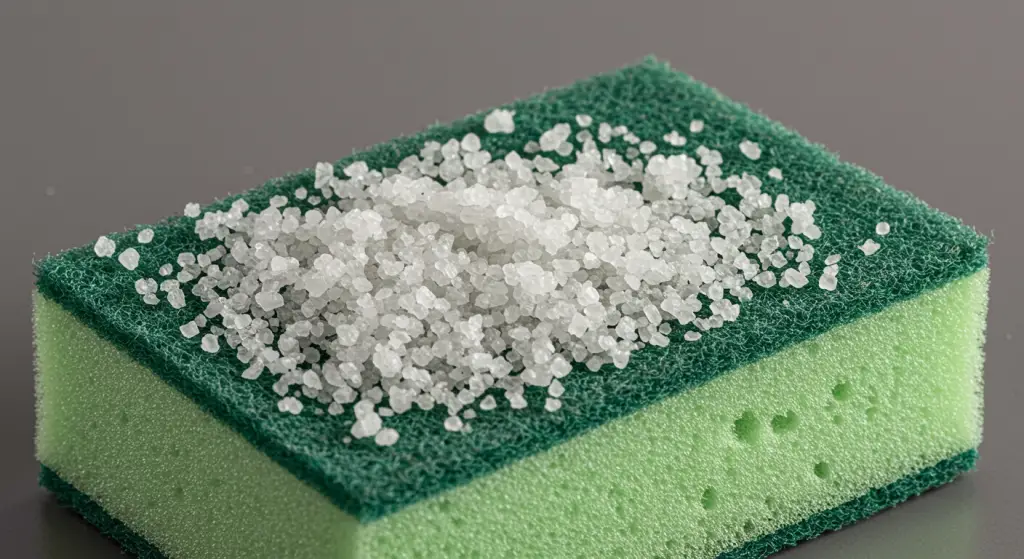
Place the damp sponge in a small bowl or container. Generously cover it with fine salt—enough to form a thin layer on top. Then, pour hot water (previously boiled) over the sponge until it’s fully submerged. Be careful not to burn yourself during this step.
Step 4: Let It Soak
Allow the sponge to sit in the hot salt water for about 15–20 minutes. The combination of heat and salt works together to break down biofilm, kill germs, and eliminate bad odors.
Step 5: Rinse and Dry
After soaking, remove the sponge and rinse it well under running water. Squeeze it several times to remove any salt residue. Finally, place it in a well-ventilated area to dry—ideally in direct sunlight. Sunlight not only speeds up drying but also adds another layer of natural disinfection thanks to ultraviolet rays.
Keeping Your Sponge Fresh Longer
Once your sponge has been disinfected, there are a few simple habits you can adopt to maintain its cleanliness:
- Always squeeze out excess water after every use. A dry sponge discourages bacterial growth.
- Store it upright in a ventilated area, not lying flat on the sink, where moisture accumulates.
- Avoid cross-contamination: Don’t use the same sponge for dishes, countertops, and raw food cleanup.
- Sanitize regularly: In addition to the salt soak, you can occasionally disinfect sponges in the microwave for one minute (only if they don’t contain metal parts) or soak them in a vinegar and water solution.
The Eco-Friendly Advantage
Using salt to clean your sponge isn’t just good for hygiene—it’s also an environmentally friendly practice. Instead of constantly throwing away sponges and using harsh chemical cleaners, you’re relying on a simple, natural ingredient that’s completely biodegradable. Salt is inexpensive, widely available, and safe for both you and the environment.
Moreover, by extending the lifespan of your sponge, you reduce waste and save money. A sponge that might otherwise last only two weeks can easily stay clean and usable for twice as long with regular salt disinfection.
Final Thoughts
It’s easy to overlook the small items we use every day, but even something as ordinary as a dish sponge can have a big impact on household hygiene. By incorporating salt into your cleaning routine, you not only keep your kitchen tools fresher and safer but also embrace a natural, sustainable approach to cleanliness.
So the next time you finish washing the dishes, don’t just rinse and toss your sponge aside—give it a quick salt treatment. This small step can make a big difference, ensuring that the tool you rely on to clean your kitchen remains truly clean itself.