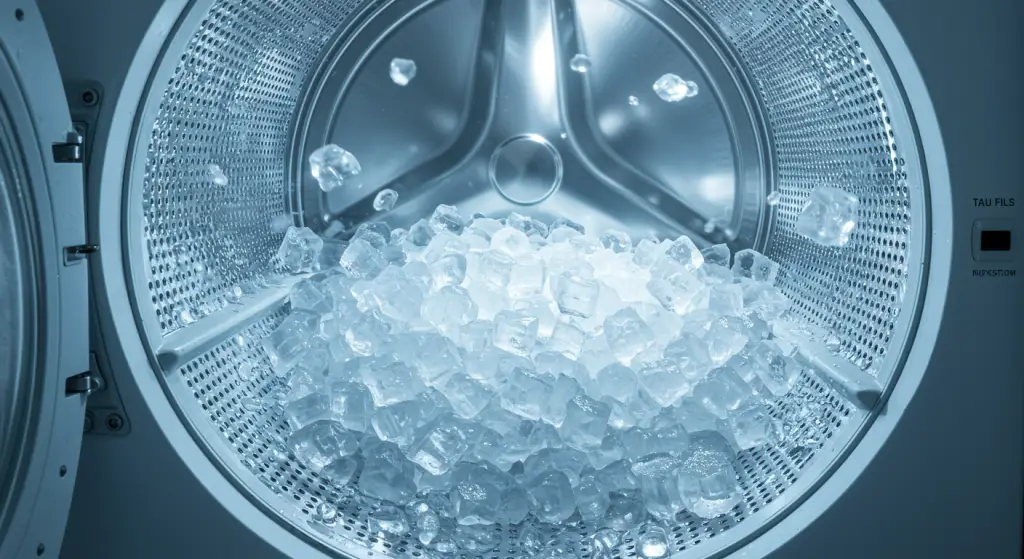
Ice in the dryer, the secret procedure of every laundry
For many, ironing laundry is one of the most time-consuming and tedious household chores. But what if there were a simple trick that could reduce or even eliminate the need to use a clothes iron? Surprisingly, the solution may be sitting right in your freezer: ice cubes in the dryer. While it may sound counterintuitive at first, this method has a logical and effective basis. Here’s how it works and why it’s becoming a popular tip for busy households.
How Ice Cubes Can Help with Laundry
At first glance, it seems odd that something as simple as ice cubes could help dry laundry or remove wrinkles. The trick lies in the steam generated during the drying process. When ice cubes are added to a hot dryer, they gradually melt and evaporate, producing steam. This steam circulates among the clothes, softening the fibers and smoothing out wrinkles in a manner similar to ironing.
Think about how a steam iron works: it releases targeted bursts of moisture to relax the fibers in fabric, eliminating creases. In the dryer, the effect is less targeted but covers all garments simultaneously. The heat of the dryer causes the ice to vaporize slowly, distributing moisture evenly and leaving clothes significantly less wrinkled—often eliminating the need to iron entirely.
Is Investing in a Dryer Worth It?
With energy prices rising, adding another high-consumption appliance to your home may not seem appealing. However, dryers can offer time savings, convenience, and consistent results, especially in regions with frequent rain, limited sunshine, or small living spaces where indoor drying is cumbersome.
The actual cost of using a dryer depends largely on three factors:
-
Type of dryer – Ventilated, heat pump, or condensation models all consume energy differently.
-
Energy rating – Higher efficiency models (A+ or above) are more cost-effective in the long term.
-
Electricity plan – Your energy provider’s rates and tariff structure affect the overall expense.
For households struggling to hang laundry indoors during bad weather or to dry bulky items like sheets and blankets, even occasional use of a dryer can justify the investment.
Understanding Different Dryer Types
There are three main types of dryers, each with unique features and energy requirements:
-
Vented Dryers: These draw air from the environment, heat it, and blow it into the drum. While inexpensive to buy, they tend to consume more electricity.
-
Heat Pump Dryers: These work similarly to air conditioners, using a closed-loop system to heat air efficiently. They are energy-efficient and have a lower impact on electricity bills.
-
Condensation Dryers: These extract moisture from clothes and condense it into a water container, which must be emptied. They are convenient for apartments or spaces without external vents.
When choosing a dryer, it is essential to check the energy label to estimate consumption and budget accordingly.
How to Use Ice Cubes to Reduce Ironing
Using ice cubes in the dryer is simple and requires no special equipment:
-
Load the dryer: Place your damp or freshly washed clothes inside the dryer as usual.
-
Add ice cubes: For a standard load, 2–3 ice cubes are usually sufficient. You can experiment with the quantity based on load size and wrinkle severity.
-
Start the dryer: Run the dryer on a standard heat setting. As the ice melts, it gradually turns into steam, helping relax the fibers in your clothes.
-
Finish and remove: Once the cycle is complete, promptly remove clothes from the dryer to prevent new wrinkles from forming.
The result is clothing that comes out softer, less wrinkled, and easier to fold or wear immediately—often without touching an iron at all.
Why This Method Works
The science behind this trick is straightforward. Wrinkles form when fabric fibers dry in a compressed or twisted state. Introducing moisture in the form of steam allows the fibers to relax and return to their natural shape. Ice cubes act as a slow-release steam source, providing enough moisture without over-wetting the clothes.
Additionally, this method:
-
Reduces ironing time dramatically
-
Saves energy compared to prolonged ironing sessions
-
Can be applied to delicate fabrics safely (avoid high heat settings for sensitive garments)
Additional Tips for Best Results
-
Use damp clothes: For optimal wrinkle removal, slightly damp garments respond better to steam than completely dry ones.
-
Separate fabrics: Heavy items like towels or jeans may require a longer cycle or additional ice cubes.
-
Shake out clothes: After drying, shake garments gently to prevent new wrinkles from forming.
-
Fold or hang immediately: Promptly storing clothes helps maintain the smooth texture achieved during drying.
Conclusion
The ice cube trick is a surprisingly effective hack that can save time, reduce the need for ironing, and make laundry day less stressful. By combining the heat of your dryer with a small amount of moisture, clothes emerge soft, refreshed, and ready to wear.
For households considering whether a dryer is worth the investment, this method demonstrates an additional benefit beyond convenience: less time spent ironing, lower energy use compared to running a steam iron for long periods, and improved overall laundry efficiency.
Next time you prepare a load of laundry, try tossing a few ice cubes in your dryer. It’s a small, simple step that makes a noticeable difference, giving you smooth, ready-to-wear clothes with minimal effort.