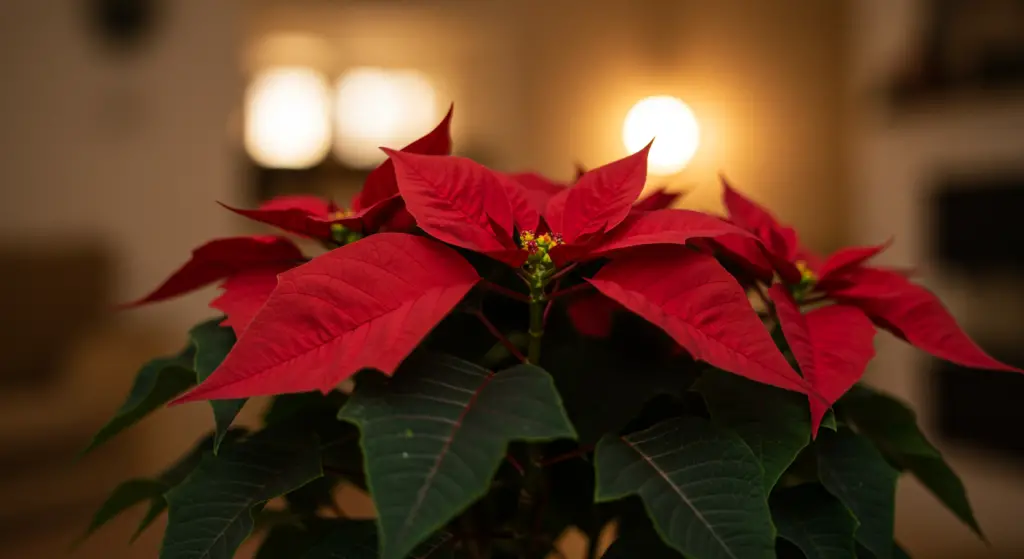
The Poinsettia, or Euphorbia pulcherrima, is one of the most iconic plants of the Christmas season. With its brilliant red and green foliage, it symbolizes festivity, warmth, and joy during the winter holidays. However, despite its popularity, one question continues to puzzle plant lovers every year: is it safe to keep a Poinsettia on the stair landing (pianerottolo) or in a cooler hallway?
To answer this once and for all, professional growers and horticultural experts have weighed in with some valuable insights.
The True Nature of the Poinsettia
Many people assume that the Poinsettia’s red “petals” are its flowers, but that’s not the case. In fact, those vibrant red, pink, or white parts are modified leaves called bracts. The true flowers of the plant are the tiny, yellowish-green buds in the center of the bracts.
Native to Mexico and Central America, the Poinsettia was known to the Aztecs for centuries before it became a global Christmas icon. It was introduced to the United States in the 19th century by Joel Roberts Poinsett, the first U.S. ambassador to Mexico, who gave the plant its common name. Since then, it has become a holiday staple in homes, churches, and shops across the world.
Symbolically, the Poinsettia represents good cheer, purity, and renewal, making it a meaningful Christmas gift. Giving someone a Poinsettia is often seen as a wish for good fortune and happiness in the coming year.
A Beautiful but Delicate Plant
Despite its charm, the Poinsettia has a bit of a reputation for being a difficult plant to care for, especially during the winter months. Many people buy one during the holidays only to find it wilting or losing its leaves soon after. This is usually due to a lack of understanding of its specific needs—particularly when it comes to temperature, lighting, and humidity.
That’s where the question arises: since Poinsettias add such a festive touch to entrances and hallways, can they safely be kept on the stair landing or in a semi-outdoor corridor?
The Temperature Factor: Beware of the Cold
According to horticultural experts, the number one concern when placing a Poinsettia anywhere outside a heated room is temperature. Despite being a wintertime symbol, the Poinsettia is actually a tropical plant and cannot tolerate low temperatures.
Ideally, it should be kept in a warm, stable environment between 18°C and 22°C (65°F to 72°F). If temperatures drop below 12°C (54°F), the plant begins to suffer. Prolonged exposure to cold air can cause leaf drop, wilting, or even death.
Most stair landings—especially those in apartment buildings—are poorly insulated and can become quite chilly, particularly at night. Even if the landing isn’t technically outdoors, it may still be exposed to drafts from open doors or windows, making it unsuitable for a Poinsettia.
Experts warn that even a short exposure to cold air while transporting or positioning the plant can lead to shock. If the leaves begin to curl or fall off within a few days, temperature stress is often to blame.
Light: The Key to Color and Health
Another critical factor is lighting. The Poinsettia’s bright red and green colors depend heavily on light exposure—specifically indirect sunlight. The plant needs at least six hours of bright, indirect light each day to maintain its vivid color and healthy growth.
A stair landing might seem bright, but experts note that most indoor hallways or common areas rely on artificial LED lights, which don’t provide the same type of energy that natural sunlight does. In addition, stairwells often have lights that stay on overnight due to safety regulations, disrupting the plant’s natural rhythm of light and darkness.
Like humans, plants also need rest. For a Poinsettia, that means a clear cycle of light and darkness—about six hours of darkness each night—to maintain its color balance and encourage healthy growth. Constant exposure to artificial light can interfere with this process, causing dull bracts or weak stems over time.
Drafts and Airflow: Hidden Dangers
Even if your stair landing is well-lit and relatively warm, there’s another hidden danger: airflow. Poinsettias are extremely sensitive to drafts, whether hot or cold. Sudden air movement—from a nearby vent, elevator shaft, or an exterior door—can quickly dry out the leaves and cause them to drop.
Because stairwells and hallways are high-traffic areas, they’re often subject to frequent temperature changes and moving air currents. If you notice your plant losing leaves or appearing limp, it may be reacting to draft stress rather than a watering issue.
In short, the Poinsettia thrives best in a stable, draft-free environment, something that most stair landings simply cannot guarantee.
How to Tell if Your Poinsettia Is Suffering
The first sign that your Poinsettia is unhappy is leaf loss. When temperatures fluctuate or the air becomes too dry, the plant reacts by shedding its lower leaves. You may also notice:
If you spot any of these symptoms, move the plant immediately to a warmer, more stable location and check its watering schedule.
So, Can You Keep It on the Landing?
The answer is: it depends. According to expert growers, you can only keep a Poinsettia on your stair landing if certain ideal conditions are met:
-
The area stays consistently warm, never dropping below 18°C (65°F).
-
It receives plenty of indirect natural light during the day.
-
It’s protected from drafts, both cold and warm.
-
The lighting system allows for periods of darkness at night.
If your stair landing meets all these requirements, you can safely display your Poinsettia there for a festive touch. However, if the space is cool, exposed, or artificially lit around the clock, it’s better to place the plant near an indoor window or by the front door, where it can still greet guests without risking its health.
Final Advice from the Experts
The Poinsettia is a stunning holiday plant, but it rewards those who understand its tropical origins. Treat it as a delicate guest from a warmer climate—give it warmth, soft light, and protection from cold air.
If you want to decorate your stair landing, you can opt for artificial Poinsettias or hardier winter plants instead. But if you’re determined to use the real thing, make sure your landing offers the right microclimate.
Handled with care, your Poinsettia will stay vibrant and healthy long after the holidays—serving as a symbol of life, warmth, and renewal throughout the winter season.