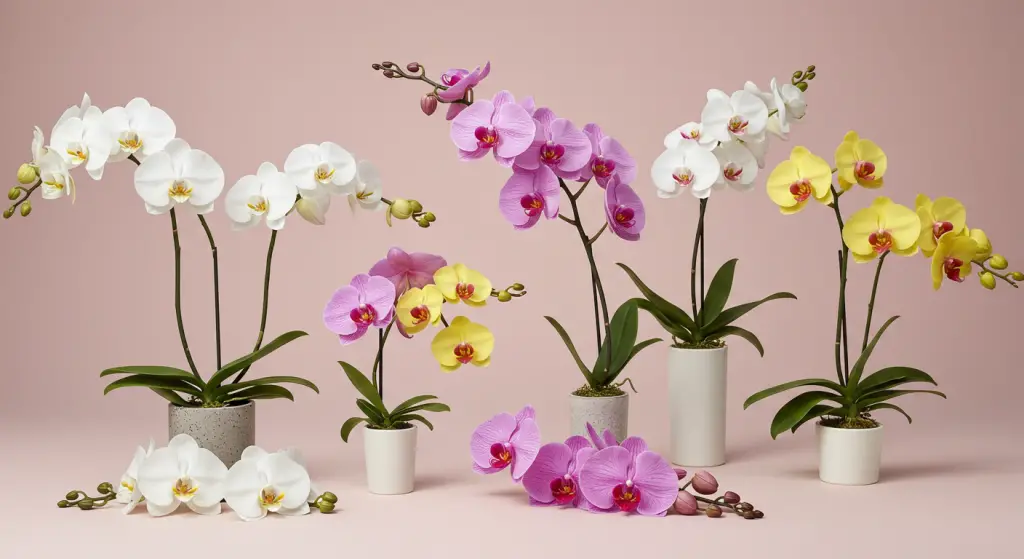
A healthy, lush orchid: where to place it to make it bloom: the unexpected place
To grow a healthy and lush orchid at home, it’s important to understand the needs of this beautiful exotic flower. With the right care and attention, your orchid can thrive and bloom spectacularly for months, adding elegance and color to your living space.
The Charm of the Orchid
Orchids are among the most admired flowers in the world, celebrated for their perfect symmetry and fascinating variety of colors and shapes. They have long been symbols of beauty, love, and refinement, often given as gifts for special occasions. Despite their reputation for being delicate, orchids are not nearly as difficult to grow as many people believe. With a few key practices, anyone can successfully cultivate them indoors.
The True Nature of Orchids
Orchids belong to one of the largest plant families on Earth, with thousands of species and hybrids. They are tropical plants by nature, meaning they flourish in environments with consistent warmth, humidity, and filtered light. Because of their exotic origins, many assume they are fragile, but in truth, orchids are quite resilient once their basic needs are understood.
In ancient times, several civilizations used orchids not only for decoration but also for medicinal and even magical purposes. They were thought to possess healing properties and were often associated with love and desire. Today, their symbolic and aesthetic value remains strong, and their presence in a home adds an unmistakable touch of sophistication.
Creating the Right Environment
The first step toward cultivating a thriving orchid is to recreate, as much as possible, the conditions of its natural habitat. Orchids love bright but indirect light. Direct sunlight can scorch their leaves, while too little light prevents flowering. The ideal location is a bright windowsill with filtered light—an east- or west-facing window is usually perfect.
Temperature is another critical factor. Orchids prefer warm environments with daytime temperatures between 20°C and 30°C (68°F to 86°F) and slightly cooler nights, around 18°C to 25°C (64°F to 77°F). They dislike sudden temperature changes or cold drafts, so avoid placing them near open windows, air conditioners, or doorways where cold air may enter.
The Importance of Humidity
As tropical plants, orchids love humidity. Dry indoor air, especially during winter when heating systems are running, can stress the plant and cause buds to drop before they bloom. To maintain proper humidity, lightly mist the leaves once a week throughout the year. You can spray both the upper and lower surfaces of the leaves, but avoid getting water directly on the flowers, as this can cause spots or mold.
Another effective trick is to create a humid microclimate around the plant. Place the orchid’s pot on a shallow tray filled with small pebbles and water, ensuring the bottom of the pot does not sit directly in the water. As the water evaporates, it increases the moisture in the air around the plant—an easy way to mimic the tropical conditions orchids adore.
Watering Your Orchid the Right Way
Overwatering is the most common mistake people make when caring for orchids. Their roots are designed to absorb moisture quickly but also need to dry out between waterings. When an orchid is in bloom, watering every two weeks is sufficient. The best method is immersion: submerge the pot in a container of lukewarm water for about 15–20 minutes, then allow it to drain completely before placing it back in its decorative cover pot. This ensures the roots absorb enough moisture without staying soggy.
Once the flowers have fallen, reduce watering to about once every three weeks. During this resting phase, the plant uses less water as it gathers energy for its next blooming cycle. Never let the roots sit in standing water, as this can lead to root rot.
Fertilizing and Repotting
Orchids benefit from regular feeding during their growth and flowering periods. Use a fertilizer specifically formulated for orchids, usually a balanced mix of nitrogen, phosphorus, and potassium, diluted to half the recommended strength. Feed the plant every two to three weeks during the active growing season to promote vibrant leaves and abundant flowers.
Repotting is another important aspect of orchid care. These plants prefer tight pots, but over time, their roots can outgrow the container. When you notice roots pushing through the plastic pot or the potting mix becoming compacted and decomposed, it’s time to repot. Typically, this should be done every two to three years, ideally just after flowering. Use a special orchid mix composed of bark, sphagnum moss, or perlite to ensure good drainage and aeration.
Choosing the Best Location in Your Home
Placement plays a key role in the health and flowering of your orchid. It should be in a well-lit area, but never in full sun. Avoid dark corners or spots with poor airflow. The kitchen or a bright bathroom can be ideal environments, as they naturally provide higher humidity levels. Just make sure there’s plenty of light—without direct exposure to the sun’s harsh rays.
Avoid placing your orchid in drafty areas or near vents, as sudden temperature fluctuations can cause stress and damage. The goal is to create a stable, warm, and humid environment where the plant feels at home.
Encouraging Flowering
One of the most rewarding aspects of orchid care is watching it bloom again. To encourage flowering, maintain consistent conditions and don’t move the plant too often. Orchids can take several months to rebloom, so patience is essential. Continue watering and fertilizing regularly, and keep the plant in a bright, stable environment.
If your orchid hasn’t produced new flowers for a while, a slight drop in nighttime temperature can sometimes trigger blooming. This mimics the natural conditions orchids experience in the wild, where cooler nights signal the start of a new growth cycle.
A Final Thought
Growing orchids at home is not nearly as difficult as it seems. These graceful plants ask for very little—just the right balance of light, water, warmth, and humidity. In return, they reward you with breathtaking flowers that can last for months. With patience and a few simple techniques, you can turn your orchid into a stunning, long-lived centerpiece that brings beauty and serenity to your home all year round.