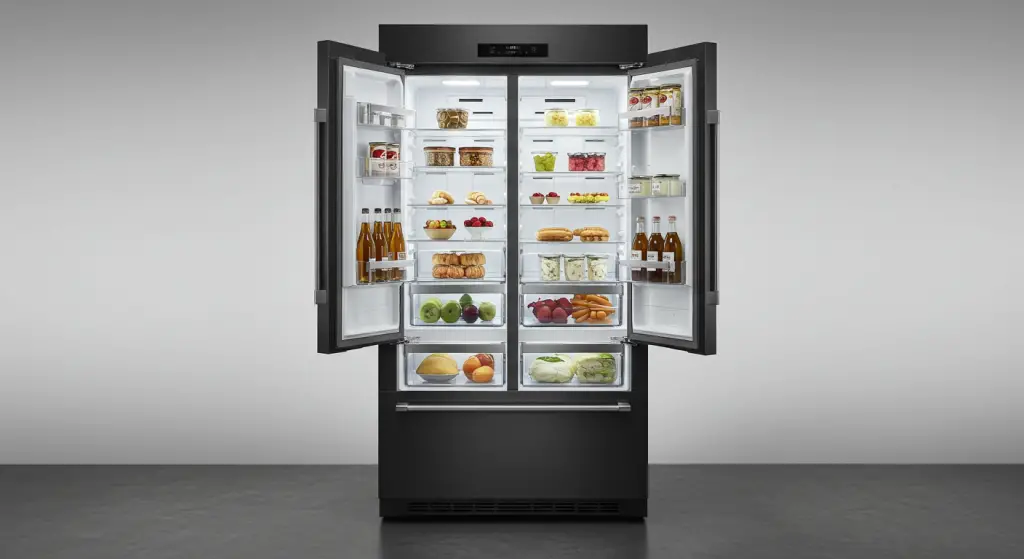
Do you know how much your refrigerator consumes per day? The costs at the end of the month.
From today, you might want to think twice before opening your refrigerator door too often. While this simple gesture seems harmless, it can significantly affect your electricity bill. The refrigerator is one of the few appliances in our homes that never rests — it runs 24 hours a day, 365 days a year. But do you know how much energy it actually consumes? The answer may surprise you.
Understanding Refrigerator Energy Consumption
Every refrigerator, regardless of model or brand, consumes energy continuously to maintain the right internal temperature for food preservation. However, the exact amount of energy used depends on several factors, including its energy efficiency class, size, age, and how it’s used.
Modern refrigerators are labeled according to the European Union energy efficiency scale, which runs from A (most efficient) to G (least efficient). In older models, you might still find categories like A+, A++, or A+++, which were once used to indicate incremental levels of efficiency. However, this classification was recently revised to simplify understanding — now, A represents the most energy-efficient appliances available.
Choosing a high-efficiency refrigerator might be costly upfront, but it’s a long-term investment that pays for itself through lower electricity bills and reduced environmental impact. For example, replacing an older A-class refrigerator with a new A+++ model can cut your annual energy consumption by up to 60%.
What Influences Energy Use?
While the energy class gives a general indication, real-world consumption varies widely depending on the model type, usage habits, and environmental conditions. Some of the main factors include:
- Size and Type: Larger refrigerators or those with dual doors (like American-style models) consume more energy because of the greater internal volume that needs cooling.
- Compressor System: Models with separate compressors for the fridge and freezer sections tend to be more efficient than those sharing a single motor.
- Age of the Appliance: Older refrigerators are generally less efficient, even if they were considered top-class at the time of purchase.
- Location: Placing the fridge near an oven, radiator, or direct sunlight forces it to work harder to maintain its internal temperature.
- Door Openings: Every time the door is opened, warm air enters, and the compressor has to kick in again to restore the set temperature. Frequent opening is one of the main hidden causes of high energy consumption.
Typical Energy Usage and Cost
On average, a standard household refrigerator consumes 1 to 2 kilowatt-hours (kWh) per day. Over the course of a year, that adds up to around 365 to 438 kWh. If we calculate this with an average electricity cost of €0.50 per kWh, the annual expense comes to approximately €180–220 — just for your refrigerator alone.
It’s important to note that the appliance doesn’t consume electricity at the same rate all the time. The compressor cycles on and off throughout the day. It draws more power each time it starts, especially after the temperature rises due to frequent door openings or placing warm food inside.
Recommended Temperature Settings
To optimize efficiency and ensure proper food preservation, the internal temperature of your refrigerator should be kept between 1°C and 5°C. The freezer compartment should stay between –15°C and –19°C. Setting temperatures lower than necessary doesn’t improve freshness but only wastes energy.
How the New Energy Labeling Works
As of recent years, the EU energy labeling system has been simplified. The previous system, which used confusing multiple “+” symbols, has been replaced with a clear A–G scale. Appliances rated A, B, or C are now considered the most energy-efficient. Although top-class models may come with higher price tags, they offer significant savings over their lifetime.
If your budget is limited, choosing a D-class refrigerator can still be a reasonable compromise — it’s less efficient but often more affordable while maintaining acceptable performance.
Tips to Reduce Refrigerator Energy Consumption
Fortunately, there are many practical ways to reduce your fridge’s power usage without compromising its cooling ability. By following a few simple steps, you can lower your electricity bill and extend the lifespan of your appliance:
- Adjust the Temperature Correctly: Avoid setting the thermostat too cold. Stick to the manufacturer’s recommended temperature range.
- Choose a No-Frost Model: No-frost refrigerators prevent ice buildup, allowing the appliance to work more efficiently.
- Defrost Regularly: If your fridge isn’t no-frost, make sure to defrost it frequently. A thick layer of ice reduces efficiency and increases consumption.
- Check Door Seals: Damaged or loose door gaskets allow cold air to escape, forcing the compressor to work harder.
- Avoid Overloading: Don’t pack the refrigerator too tightly — proper air circulation is essential for even cooling.
- Keep It Away from Heat Sources: Avoid placing your fridge near ovens, stoves, or direct sunlight. Heat from nearby sources makes the compressor run longer.
- Cool Food Before Storing: Never place hot or warm dishes directly into the fridge. Let them reach room temperature first to avoid raising the internal temperature.
- Close the Door Quickly: Don’t leave the door open for longer than necessary. Plan what you need before opening it.
- Maintain Proper Airflow: Ensure there’s enough space behind and around the refrigerator for ventilation. Overheating the motor can increase power consumption.
- Clean the Coils: Dusty or dirty condenser coils reduce the fridge’s cooling efficiency. Clean them at least twice a year.
How Much Can You Save?
Small changes in usage habits can lead to noticeable results. Simply maintaining proper temperature settings and limiting unnecessary door openings can cut annual energy consumption by 10–15%. Regular maintenance, such as checking the seals and cleaning coils, can add another 5–10% savings.
If your refrigerator is more than ten years old, replacing it with a modern energy-efficient model can further reduce your electricity bill by as much as 60%. Over time, this saving can offset the cost of the new appliance entirely.
Final Thoughts
Your refrigerator is a vital appliance — it keeps your food fresh and your household running smoothly. However, it’s also one of the biggest contributors to your home’s electricity consumption. Understanding how it works, maintaining it properly, and using it wisely can make a significant difference in both energy efficiency and cost savings.
By adopting smarter habits — from defrosting regularly to minimizing door openings — you’ll not only protect the environment but also enjoy the satisfaction of a lighter electricity bill. After all, every small gesture counts, and when it comes to your refrigerator, awareness is the first step toward real savings.