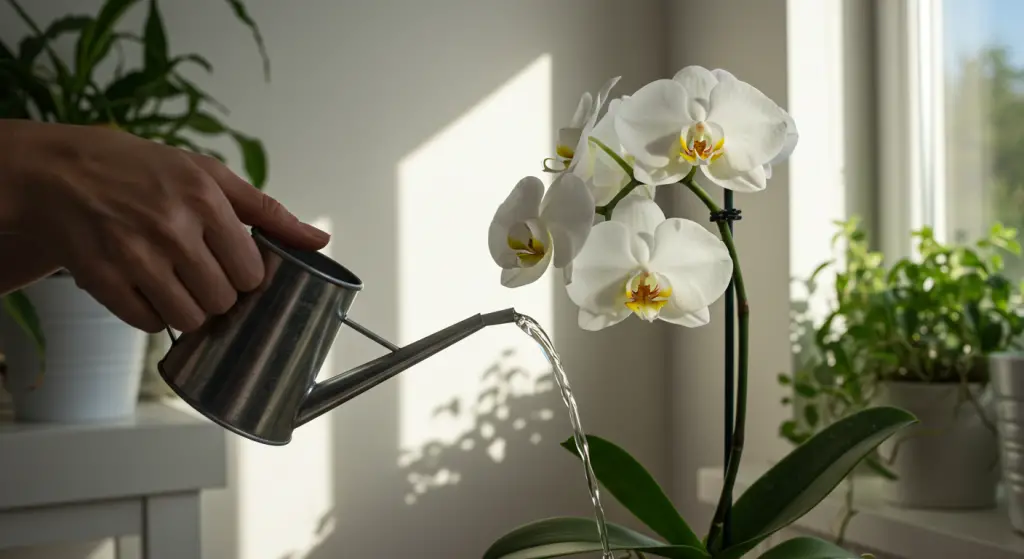
How to Water an Orchid, with this method it will become immortal
When you walk into your home and spot your orchid, one question often comes to mind: how do I water it so that it stays as stunning and vibrant as the day I brought it home?
We buy them, we receive them as gifts, and we proudly display them—but too often, they begin to wilt because we don’t know how to care for them properly. Yet, when treated and watered the right way, orchids can be surprisingly resilient and long-lasting. If you want to learn how to keep your orchid healthy and flourishing, read on.
Understanding the Orchid and Its Needs
During the holiday season, many people receive orchids as gifts, not just the traditional poinsettia. Orchids are often given as tokens of appreciation or elegant presents for special occasions. Their exotic beauty, delicate flowers, and sophisticated appearance make them one of the most popular gift plants around the world.
However, unlike many other houseplants, orchids have specific requirements when it comes to light, temperature, watering, and nutrition. Learning the right balance will help you enjoy their blooms for months—or even years—without stress.
The Importance of Light
Like most plants, orchids need plenty of light to thrive, but direct sunlight can easily damage them. The ideal location is near a bright window, where the plant receives filtered or indirect light. If sunlight streams directly into the room, use sheer curtains to diffuse it.
A lack of light will prevent your orchid from blooming, while too much direct sunlight can scorch its leaves, causing them to turn yellow or brown. A good sign that your orchid is receiving the right amount of light is the color of its leaves: they should be a healthy, bright green, not too dark or pale.
The Right Temperature for Orchids
There are many species of orchids, and while their specific needs may vary slightly, most come from tropical or subtropical regions. This means they prefer warm, stable temperatures and do not tolerate cold air or drafts.
Keeping your orchid indoors is often the best choice, as the typical home temperature—between 18°C and 25°C (65°F–77°F)—is ideal for their growth. Avoid placing them near cold windows, air conditioners, or heating vents, as sudden temperature changes can stress the plant.
Feeding Orchids: The Right Fertilizer Matters
Just like other houseplants, orchids need nutrients to grow well and bloom again. However, they require the right balance of minerals depending on their growth stage.
Before flowering, orchids benefit from a fertilizer rich in phosphorus and potassium, which promote strong roots and vibrant blooms. You can use a specialized orchid fertilizer diluted to half strength every two to three weeks during the active growing season.
Be careful not to over-fertilize—this can burn the roots and do more harm than good. A light feeding schedule is usually enough to support a healthy plant.
When and How to Prune an Orchid
After your orchid has finished blooming, you’ll notice that the flower spike (or stem) begins to dry out. Some gardeners recommend cutting the entire spike once all the flowers have fallen, while others suggest leaving it if it’s still green and healthy.
If the stem is completely dry, you can safely cut it off at the base. However, if it’s still partially green, you can trim it halfway or leave it entirely, as sometimes new flower buds will emerge from the old spike. The key is to observe your plant—each orchid can behave a little differently.
How to Water an Orchid the Right Way
Watering is the most critical part of orchid care—and also the most misunderstood. Orchids are not like typical houseplants that prefer constantly moist soil. Their roots need both moisture and air circulation to stay healthy.
First, avoid using regular tap water, especially if it’s hard or rich in minerals, as this can damage the delicate roots. Instead, use bottled water or filtered water at room temperature.
To prevent overwatering, never let your orchid sit in standing water. It’s a good idea to place a layer of damp clay pebbles or stones at the bottom of the decorative pot to improve drainage and humidity.
During the summer months, when temperatures are higher and the air is drier, your orchid will need more frequent watering—about once every 7 days. In winter, when the air is cooler and growth slows, you can reduce watering to every 10–14 days.
Step-by-Step: The Proper Watering Method
-
Prepare a container: Place your orchid (still in its inner pot) inside a larger container or bowl.
-
Add water: Pour enough water to cover the roots, then add any diluted fertilizer if needed.
-
Soak: Let the plant sit in the water for about 20 minutes. This allows the roots to absorb moisture fully. You’ll notice the roots turning a vibrant green—this means they’re hydrated.
-
Trim dead parts: While the orchid soaks, take the opportunity to remove any dry flower stems or dead leaves.
-
Drain completely: After soaking, remove the orchid from the water and let it drain thoroughly.
-
Rinse the pot: Before placing the orchid back in its decorative container, clean the outer pot to remove any bacteria or algae buildup.
-
Re-water lightly: Pour a small amount of the soaking water over the top of the plant to re-moisten the growing medium.
This simple routine, repeated every 7–10 days in summer and less often in winter, will keep your orchid hydrated and strong without causing root rot.
Extra Tips for a Thriving Orchid
-
Avoid overwatering: The biggest mistake people make is watering too often. Wait until the roots look silvery or the potting medium feels dry before watering again.
-
Ensure good airflow: Orchids need ventilation around their roots and leaves to prevent mold and rot.
-
Provide humidity: These tropical plants love humidity. Mist the leaves occasionally or place the pot on a tray of wet pebbles.
-
Use clear pots: Transparent pots help you monitor the roots and ensure they’re healthy.
-
Give it rest: After flowering, allow the orchid a resting phase with less water and fertilizer before the next bloom cycle.
In Summary
Caring for an orchid doesn’t have to be complicated. With the right balance of light, warmth, and careful watering, your orchid can remain lush, elegant, and full of life throughout the year.
By following these simple steps—using clean water, avoiding excess moisture, providing proper light, and fertilizing at the right time—you’ll be rewarded with a plant that blooms beautifully and stays as captivating as the day you first brought it home.