Receipts: Where do you throw them? Almost everyone gets them mixed up: Up to a €155 fine if you get them wrong.
When it comes to waste sorting, most of us have learned to separate paper, plastic, glass, and organic waste without thinking twice. But there’s one small item that still causes confusion: receipts. You might assume they belong in the paper bin, but that’s actually a mistake — and in some cases, throwing them in the wrong place could even lead to a fine of up to €155.
Let’s take a closer look at what makes receipts different from ordinary paper and how to dispose of them properly to protect both the environment and your wallet.
The Importance of Waste Sorting
In today’s environmentally conscious world, recycling and proper waste management are more important than ever. Many companies are adopting eco-friendly practices, replacing plastic packaging with paper or biodegradable alternatives. Even retail stores and e-commerce businesses are shifting to recyclable materials for bags and shipping boxes.
Despite these efforts, one everyday item continues to slip through the cracks — the humble receipt. It might look like ordinary paper, but its composition is quite different, and that difference has a big impact on how it should be disposed of.
Why Receipts Are Not Like Ordinary Paper
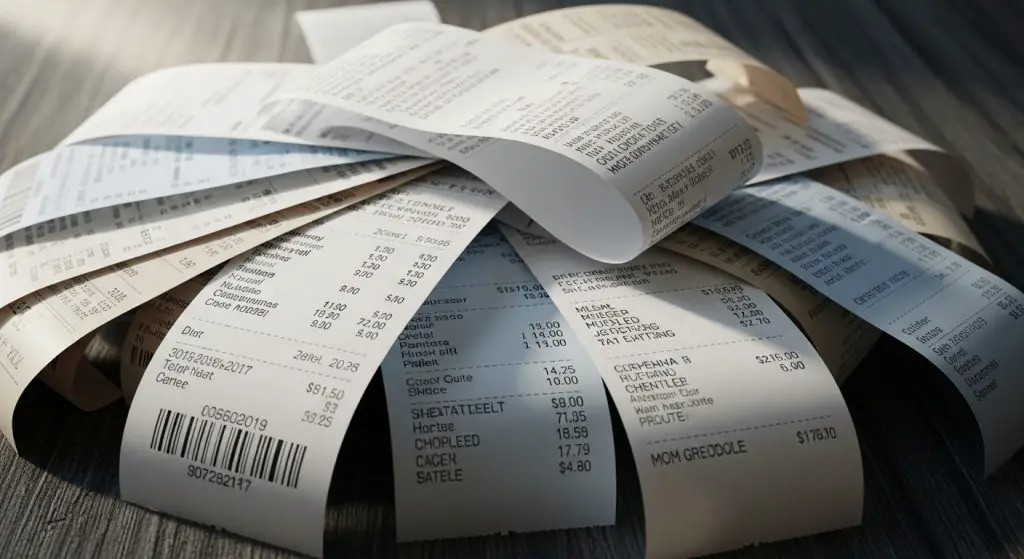
Receipts play a special role in our daily transactions. They serve as proof of purchase, are often required for returns or warranty claims, and can be important for business expense tracking. Because of these functions, receipts need to remain legible over time, even if they’re stored in a wallet or exposed to heat and light.
To achieve this durability, most receipts are printed on thermal paper — a type of paper coated with chemical compounds that react to heat. This coating allows thermal printers to produce text without using ink, but it also makes the paper non-recyclable and potentially harmful to the environment.
The Different Types of Paper Used for Receipts
To understand where receipts should be thrown away, it’s important to know what kind of paper they’re made of. Generally, there are three main types used in printing:
-
Virgin or recycled paper (traditional printing):
These are printed with regular ink and contain no chemical coatings. Receipts printed on this type of paper can safely be recycled in the paper bin. -
Chemical paper (carbon copy paper):
Used less frequently today, this type contains chemical dyes and carbon compounds that make it unsuitable for recycling. -
Thermal paper (most common):
The vast majority of modern receipts are printed on thermal paper. It contains a chemical layer that reacts to heat, allowing the printing process to occur without ink. Unfortunately, this chemical coating makes it non-recyclable.
Why You Should Not Throw Receipts in the Paper Bin
Because thermal paper contains chemicals that interfere with the recycling process, throwing receipts into the paper bin contaminates recyclable waste. This forces recycling centers to discard entire batches of paper waste, reducing the efficiency of recycling systems.
The proper way to dispose of thermal receipts is to place them in the general waste bin (non-recyclable waste). In Italy and other EU countries, this type of waste is known as rifiuto indifferenziato.
If you mistakenly toss receipts into the paper bin, you could face a fine ranging from €25 to €155, depending on local regulations. These penalties are in place to encourage responsible waste sorting and to prevent contamination of recyclable materials.
The Environmental Impact of Receipts
The environmental impact of receipts extends beyond improper disposal. Every day, millions of receipts are printed around the world, and the production of thermal paper contributes to pollution and waste.
Traditional thermal paper contains Bisphenol A (BPA) or its less harmful counterpart Bisphenol S (BPS) — both of which are chemical compounds used to make plastics more durable. BPA in particular has been linked to hormonal imbalances, and while its toxicity in thermal paper is relatively low, the compound can still pose environmental risks when accumulated over time.
For this reason, the European Union has set strict limits on the use of Bisphenol in thermal paper. According to EU regulations, the concentration of BPA must not exceed 0.02%. While this may seem like a small amount, the cumulative effect of millions of discarded receipts can still have a significant impact.
The Rise of Eco-Friendly and Recyclable Receipts
To address this issue, many companies and paper manufacturers have started producing BPA-free and fully recyclable thermal paper. This newer type of paper doesn’t rely on harmful color developers or chemical coatings. Instead, it uses alternative compounds or mechanical printing methods that allow for recycling.
Some major retailers and banks are already adopting this change, switching to eco-receipts that can safely go into the paper bin. Others are encouraging customers to choose digital receipts, which are sent by email or stored in mobile apps — a step that eliminates paper waste entirely.
These changes not only reduce environmental impact but also make waste sorting much simpler for consumers.
How to Dispose of Receipts Correctly
Here’s a quick guide to help you remember where each type of receipt should go:
-
Traditional paper receipts (ink printed):
➤ Paper recycling bin. -
Thermal paper receipts (smooth, shiny surface, heat-printed):
➤ General waste bin (indifferenziato). -
BPA-free or recyclable thermal paper (usually labeled as such):
➤ Paper recycling bin.
When in doubt, look at the texture: if the receipt has a smooth, waxy feel or the text fades when rubbed, it’s thermal paper and should not go in the recycling.
A Small Change That Makes a Big Difference
It might seem insignificant to worry about where you throw a small piece of paper, but with millions of receipts printed and discarded every day, the collective impact is huge. Disposing of receipts properly helps keep recycling systems efficient and reduces the spread of harmful chemicals into the environment.
By taking a few seconds to toss your receipts in the correct bin, you’re not only avoiding a potential fine but also doing your part to protect the planet. And whenever possible, opt for digital receipts — the cleanest, most sustainable solution of all.
In short: most receipts go in the general waste bin, not the paper bin. It’s a simple habit change that benefits everyone — and keeps both your conscience and your recycling record spotless.