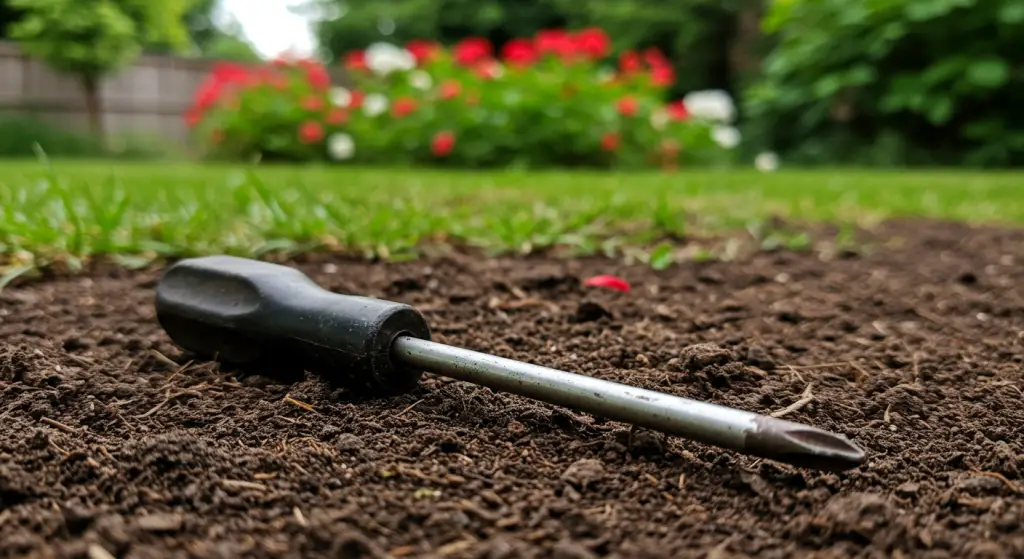
Screwdriver in the ground: this is how the best gardeners have a perfect garden.
Gardening might look simple from the outside — just watering, trimming, and a bit of soil, right? In reality, it’s an art that demands patience, dedication, and a genuine passion for nature. Every plant, flower, and patch of grass has its own specific needs, and understanding them is the difference between a thriving garden and one that struggles.
Those who care for their gardens know how much daily effort it takes to keep everything healthy and vibrant. Weather conditions play a crucial role — temperature, rainfall, and humidity can all affect plant growth. But one of the biggest challenges many gardeners face is watering correctly. Too little water and plants dry out; too much and roots may rot. Finding that perfect balance is key.
Often, gardeners tend to focus all their attention on flowers and ornamental plants, forgetting one very important element: the lawn. The lawn is what visually ties the entire garden together. It’s the green carpet that enhances every other plant and creates harmony in the landscape. Neglecting it can make even the most carefully arranged garden look dull. Luckily, there’s a simple yet incredibly effective method used by expert gardeners to ensure their lawns stay lush and healthy — and all you need is a simple screwdriver.
How to Keep Your Lawn Healthy and Green
A dry, yellowing lawn is one of the most common and frustrating problems gardeners face. Over time, heat, poor soil conditions, and irregular watering can make the grass lose its color and vitality. A patchy, lifeless lawn immediately gives the impression of neglect, even if the rest of the garden is in good shape.
The summer heat, in particular, can wreak havoc on grass. High temperatures, intense sunlight, and lack of rain can quickly dehydrate the soil. When this happens, the roots can no longer absorb the water and nutrients they need. As a result, the grass turns dry, brittle, and eventually dies off.
To revive a struggling lawn, you’ll need to take action — and consistency is key. Start by raking the lawn thoroughly to remove any dead grass and debris. This simple step makes a huge difference. Dead grass and compacted thatch form a barrier that prevents water from soaking into the soil. By raking and aerating, you allow moisture and oxygen to reach the roots, helping the grass recover faster.
Once you’ve cleared the lawn, move on to watering properly. Give the lawn a deep watering, ensuring the moisture penetrates well below the surface. This encourages the roots to grow deeper, making the grass stronger and more resilient against drought. As the cooler months of autumn and winter arrive, you can gradually reduce the frequency of watering, as rainfall usually helps maintain natural moisture levels.
It’s also essential to keep an eye on weeds. When the soil becomes dry and compacted, weeds tend to appear more frequently, competing with the grass for water and nutrients. Pull them out as soon as they appear to prevent them from spreading.
Maintaining a healthy lawn is not about constant watering — it’s about understanding what your soil and plants truly need. And this is where the screwdriver trick comes in.
The Screwdriver Method: A Gardener’s Clever Soil Test
Sometimes, the best gardening tools aren’t fancy or expensive — they’re already sitting in your toolbox. Many experienced gardeners use the “screwdriver test” to determine the health and hydration of their lawn. It’s quick, effective, and incredibly easy to do.
Here’s how it works:
Take a regular screwdriver — any size will do, as long as it’s sturdy. Then, push it straight down into the soil. Don’t force it; let it slide naturally. The depth to which the screwdriver penetrates tells you everything you need to know about your lawn’s condition.
-
If the screwdriver slides easily down 15–17 centimeters (about 6 inches) into the soil, that’s a great sign. It means the lawn is well-hydrated and the soil is loose and aerated. The roots are receiving enough moisture, and the grass is likely in good health.
-
If the screwdriver stops before reaching that depth or feels difficult to push in, your soil is too compacted or too dry. This indicates poor water penetration, meaning the roots are probably not getting enough hydration.
When the soil becomes too hard or dry, it creates a barrier that prevents water from reaching deeper layers where the roots grow. In this case, you’ll need to increase watering frequency temporarily and aerate the lawn — either manually with a garden fork or using a lawn aerator. Aeration helps create small holes in the soil, allowing air, water, and nutrients to circulate freely.
Performing this screwdriver test regularly can act as a preventive measure. It helps you catch problems before your lawn starts to show visible signs of stress. Think of it as a quick “check-up” for your garden — a simple way to stay ahead of potential issues.
Small Habits, Big Results
Achieving a lush, picture-perfect lawn isn’t about using complicated techniques or expensive fertilizers. It’s about consistency, observation, and knowing when your soil needs help. Rake regularly, water deeply but wisely, pull out weeds early, and check hydration using the screwdriver test.
Even just five minutes a day spent observing and maintaining your garden can make a world of difference. Over time, these small habits create the foundation for a healthy, resilient, and beautiful outdoor space — one that truly looks like it came straight out of a gardening magazine.
So next time you’re tending to your garden, grab that old screwdriver and give your soil a quick test. It might seem like a small thing, but it’s one of those clever, time-tested gardening secrets that can help transform your lawn from patchy and pale to lush and vibrant.
In the end, a beautiful garden doesn’t just happen — it’s built one careful, thoughtful step at a time.