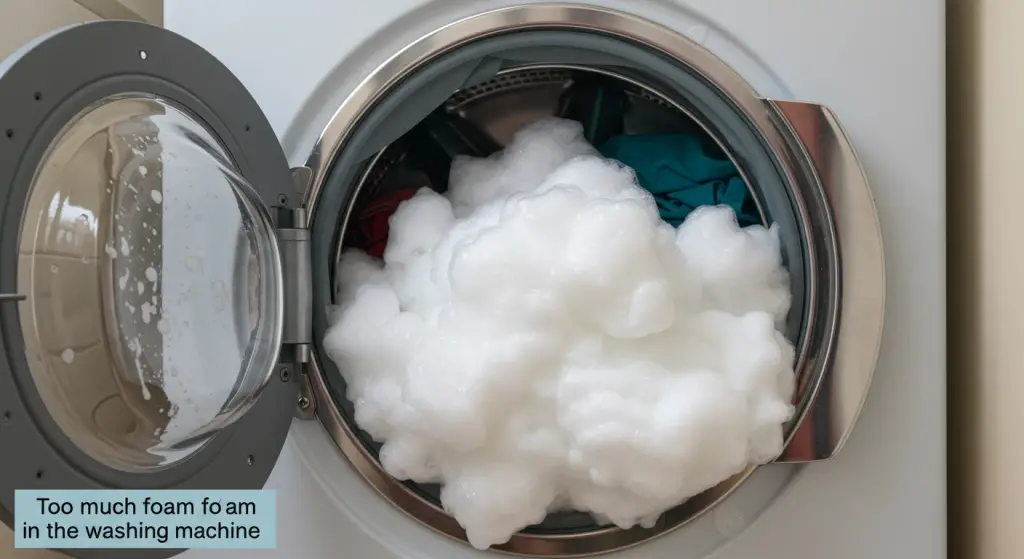
Too much foam in the washing machine: how to permanently fix the problem
It’s a common scenario: after finishing a laundry cycle, you open your washing machine and find it filled with excessive foam. Sometimes, the clothes themselves may still be covered in soap suds. This problem can occur if too much detergent is used for the size of the load, or if the detergent is particularly foamy. While it might seem harmless, excessive foam can create several issues—for your laundry, your washing machine, and even your health.
Why Excess Foam Happens
Excessive foam is not a sign of cleaner clothes. Using more detergent than necessary does not improve washing performance. On the contrary, detergent left on garments can irritate the skin, causing itchiness or rashes when clothes come into contact with the body.
The problem isn’t limited to the clothes themselves. Too much detergent can also harm your washing machine. Foam can clog the drainage system, create buildup inside the drum, and in some cases even damage the appliance over time. Therefore, it’s important to address excessive foam promptly and understand how to prevent it in the future.
Using Fabric Softener to Neutralize Foam
Surprisingly, one of the first solutions for excessive foam is to use fabric softener. While it may seem counterintuitive, fabric softeners contain surfactants that are chemically opposite to those in detergents. When these substances interact, they cancel each other out, helping to reduce foam.
Fabric softener is designed to go into a separate compartment in your washing machine for this reason. If you find excessive suds during a wash cycle, adding a small amount of fabric softener can help break down the foam and balance the cleaning agents.
Risks of Too Much Detergent
Using excessive detergent doesn’t just create foam—it can also stain clothes. Undissolved detergent residue can leave white marks or streaks on garments, producing the opposite effect of cleanliness. Over time, detergents that are not properly rinsed can even damage fabric fibers, causing small holes or weakening certain areas of clothing.
Additionally, poorly rinsed clothes may develop unpleasant odors. Detergent residue can trap bacteria or mildew, particularly if garments are left in the machine for a long period after washing. Following the manufacturer’s recommended dosage for detergents is essential to prevent these issues.
How to Remove Excess Foam
There are several practical ways to deal with excess foam, depending on whether the issue is primarily with the clothes or the washing machine drum itself.
1. Using Coarse Salt
Coarse kitchen salt is an effective and natural solution for reducing foam. You can add a handful of salt to the detergent compartment or, if the wash is already in progress, pause the cycle, open the drum, and sprinkle salt directly onto the sudsy clothes before restarting the program.
Salt works on multiple levels: it helps control foam, acts as a natural stain remover, softens fabrics, and even prevents limescale buildup inside the washing machine. Salt can also aid in cleaning dirt residues that accumulate around seals and gaskets.
2. Using White Vinegar
White vinegar is another excellent solution. Simply pour about one cup of vinegar into the detergent compartment and run a rinse cycle. Vinegar neutralizes detergent residues and reduces foam, while also softening clothes and eliminating odors.
For a more thorough cleaning, vinegar can be used directly in the drum during an empty wash cycle. Pour approximately one liter of white vinegar into the drum and run a hot wash—around 90°C if your machine allows it. This method not only removes detergent buildup but also sanitizes the drum and prevents unpleasant smells.
After using vinegar, don’t forget to clean the rubber door seal with a damp cloth. Residues often collect in this area, and wiping it down ensures no leftover detergent or dirt remains.
Preventing Excess Foam in the Future
Prevention is always better than cure. Here are some tips to avoid excessive foam:
-
Follow detergent instructions: Check the recommended dosage for your load size and water hardness. Avoid adding extra detergent “just to be safe.”
-
Choose low-foaming detergents: Especially for high-efficiency machines, low-foaming detergents are ideal.
-
Avoid overloading: Too many clothes can prevent proper rinsing, trapping detergent in the fibers.
-
Use fabric softener appropriately: It can help balance detergent surfactants and prevent buildup.
-
Regular maintenance: Clean your washing machine drum and seals periodically with vinegar or a mild washing machine cleaner to remove residues.
The Bottom Line
Excessive foam in your washing machine may seem like a minor inconvenience, but it can lead to bigger problems if left unchecked. Clothing can be damaged, skin can be irritated, and your washing machine can suffer from clogs or buildup.
The solutions are simple and inexpensive: fabric softener, coarse salt, or white vinegar can neutralize foam and restore your machine’s efficiency. Combining these fixes with preventative measures—such as proper detergent dosing, not overloading the machine, and regular cleaning—ensures a smooth laundry routine.
By paying attention to these details, you can keep your laundry fresh, clean, and free from detergent residue, while also protecting your washing machine and reducing the risk of malfunctions. Excessive foam doesn’t have to be a headache; with the right approach, it’s easily managed.