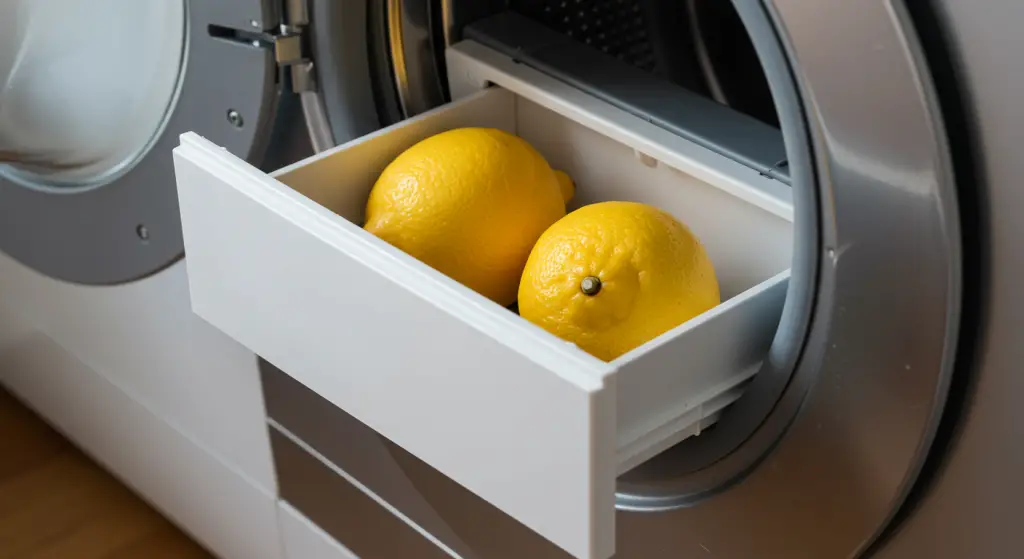
Washing machine: Put two lemons in the tray: the ingenious laundromat trick
The washing machine is one of the most indispensable appliances in any modern home. Unlike in the past, when our grandmothers had to scrub clothes by hand, today’s fast-paced lifestyle leaves little time for such labor-intensive tasks. Most people rely heavily on their washing machines, as well as dryers and dishwashers, to save time and effort.
However, just like any other household appliance, your washing machine requires regular maintenance. Neglecting it can lead to serious problems, including mold buildup—an issue that not only causes unpleasant odors but can also reduce the machine’s efficiency and lifespan. If left untreated, mold can even force you to replace your washing machine prematurely, leading to unnecessary expenses.
Why Mold Forms Inside the Detergent Drawer
Mold thrives in moist, warm, and poorly ventilated areas, making your washing machine an ideal breeding ground. While you may be diligent about cleaning your home, mold can still find its way into unexpected places—such as the detergent drawer.
The detergent compartment is particularly vulnerable because of the combination of residual detergent, fabric softener, and constant exposure to water. After each wash, some detergent remains trapped inside the drawer, creating a sticky residue. When the drawer remains closed between washes, humidity cannot escape, encouraging mold growth.
Moreover, many people forget to leave the detergent drawer and drum door open after each use. This simple step is crucial, as it allows air circulation and prevents moisture from being trapped inside the appliance.
Signs of Mold in the Detergent Drawer
You may not notice mold at first, but there are telltale signs that indicate a problem:
-
Unpleasant odors: If your freshly washed clothes smell musty, your machine may be harboring mold.
-
Visible dark spots: Black or greenish residue around the drawer edges or seals are clear signs of mold buildup.
-
Sticky or slimy texture: If the inside of the drawer feels slimy, it’s likely contaminated by mold or detergent residue.
Ignoring these symptoms can lead to recurring odor issues and even impact the quality of your wash cycles.
A Natural and Effective Cleaning Method
There’s no need for harsh chemicals to clean your washing machine. You can eliminate mold and sanitize the detergent drawer using natural ingredients you probably already have in your kitchen: white vinegar and lemon juice.
Both are excellent natural cleaning agents. White vinegar acts as a powerful degreaser and disinfectant, while lemon juice not only kills bacteria and mold but also leaves behind a fresh, clean scent.
Here’s a simple and effective method to clean your detergent drawer:
-
Prepare the cleaning solution.
Mix two cups of water with half a cup of white vinegar and a quarter cup of lemon juice. Pour the mixture into a spray bottle. -
Spray generously.
Remove the detergent drawer if possible, and spray the solution all over the inside and outside surfaces. Make sure to reach corners and crevices where mold tends to hide. -
Let it sit.
Allow the solution to rest for about 10–15 minutes. This will loosen up any detergent buildup and kill mold spores. -
Scrub thoroughly.
Using a microfiber cloth or sponge, wipe the surfaces clean. For hard-to-reach areas, an old toothbrush works perfectly. Don’t forget to clean the slot where the drawer fits into the washing machine as well. -
Rinse and dry.
Once the drawer is clean, rinse it thoroughly with warm water and dry it completely before reinserting it into the machine. -
Deep clean the rest of the washing machine.
To ensure your appliance is fully sanitized, pour the remaining cleaning mixture into the drum and run a full washing cycle at 90°C (194°F) with no clothes inside. This will disinfect the interior, dissolve detergent residue, and freshen the machine.
If you prefer, you can also use a mixture of hydrogen peroxide and water to clean the drawer. Hydrogen peroxide is highly effective at killing mold and bacteria and is safe for most washing machines.
Preventing Mold Growth in the Future
While cleaning removes existing mold, prevention is key to keeping your washing machine in perfect condition. Here are some simple but effective steps to avoid future mold problems:
-
Use the right amount of detergent.
Using too much detergent doesn’t make your clothes cleaner—it actually makes things worse. Excess detergent often remains in the drawer or the drum, encouraging mold growth. Always follow the manufacturer’s dosage recommendations. -
Choose liquid detergent when possible.
Gel or liquid detergents tend to dissolve better than powders, leaving fewer residues behind. You can even add them directly to the drum instead of the drawer to prevent buildup. -
Keep the drawer and drum open after every wash.
Once your laundry cycle is finished, leave both the detergent drawer and the washing machine door open for a few hours. This allows air to circulate and prevents moisture from lingering inside. -
Clean the seals and gaskets regularly.
Mold also tends to grow on rubber door seals. Wipe them down weekly with a cloth soaked in vinegar or your lemon solution to remove any hidden residue. -
Check the drawer valves.
Over time, the drawer valves can become blocked or fail to close properly. Occasionally inspect them to make sure they’re functioning well and free from buildup.
By incorporating these habits into your laundry routine, you can keep your washing machine hygienic, efficient, and odor-free for years.
The Bottom Line
Mold in the detergent drawer may seem like a small issue, but if ignored, it can affect your laundry quality and even damage your washing machine. With simple, natural ingredients like lemon juice and white vinegar, you can easily restore your appliance to a clean and healthy state.
A little care after each wash—such as wiping, drying, and leaving the drawer open—goes a long way toward preventing mold from coming back. Keeping your washing machine clean not only ensures fresh-smelling laundry but also extends the life of one of your most essential household helpers.