Salt in your sink drains, why you should do it every night
It might sound unusual, but pouring salt down your sink every night before going to bed can completely change the way your kitchen smells and how efficiently your drain works. This simple, inexpensive trick can prevent unpleasant odors, remove grease buildup, and even help clear partial clogs in your pipes — all while using something you already have in your pantry.
The Hidden Cause of Bad Odors in the Kitchen
If you’ve ever noticed a persistent bad smell in your kitchen but couldn’t identify where it came from, there’s a good chance your sink drain is the culprit. Over time, small bits of food, grease, and soap residue get trapped inside the drain pipes. As these organic materials start to decompose, they release unpleasant odors that spread throughout the kitchen.
The problem isn’t just the smell — this buildup can also lead to slow drainage or even complete clogs if not dealt with properly. Food particles that stick to the inner walls of the pipes can attract bacteria, which thrive in moist environments, accelerating the decay process and intensifying the odor.
How to Prevent Clogged and Smelly Drains
Prevention is always better than cure when it comes to your plumbing. A few simple habits can go a long way toward keeping your sink fresh and functional:
-
Scrape plates before washing:
Always remove leftover food from dishes before placing them in the sink. Even tiny bits of rice, pasta, or vegetable peelings can accumulate over time and cause blockages. -
Use a drain strainer:
Invest in a small, inexpensive sink strainer that fits over your drain. It allows water to pass through while catching food scraps and other debris. Empty it regularly into the trash to prevent buildup. -
Avoid pouring grease down the sink:
Cooking oil and fat can solidify as they cool, sticking to the pipes and trapping other debris. Instead, collect used oil in a container and dispose of it separately.
If you’ve already noticed slow drainage or unpleasant smells, don’t worry — you can fix the issue quickly and naturally with one powerful kitchen ingredient: salt.
Why Salt Works Wonders in Your Drain
Salt is one of the most effective natural cleaners for your pipes. It acts as a mild abrasive, helping to scrape away grease and grime without damaging your plumbing. Its natural antibacterial and deodorizing properties also make it perfect for eliminating the bacteria that cause bad smells.
Moreover, salt helps absorb moisture, reducing the damp environment where bacteria and mold typically thrive. Used regularly, it can help maintain your drain in optimal condition and even extend the lifespan of your pipes.
The Nightly Salt Trick
Here’s how to perform this easy yet highly effective drain-cleaning routine:
-
Before going to bed, measure out about 200 grams (1 cup) of table salt.
-
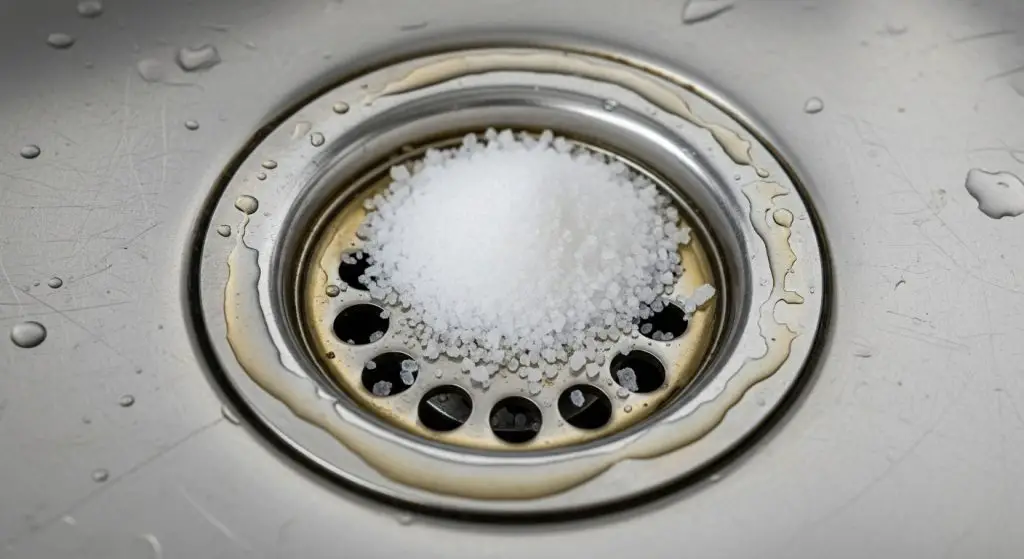
Pour it directly down your sink drain. There’s no need to add water yet — just let the salt settle into the pipe.
-
For an even stronger cleaning and deodorizing effect, mix 200 grams of salt with about 120 grams (half a cup) of baking soda before pouring it in. Baking soda enhances the salt’s cleaning power by breaking down grease and neutralizing odors.
-
Leave the mixture overnight. This gives the ingredients several hours to act on any buildup inside your pipes.
When you wake up the next morning:
-
Boil one liter of water in a kettle or pot.
-
Slowly pour the hot water down the drain. The heat will help dissolve any remaining residue and flush out the loosened debris.
You’ll notice immediate results — the water should drain more smoothly, and the unpleasant smells will be gone.
The Science Behind the Method
This homemade cleaning solution works because of a simple chemical process. Salt and baking soda both have abrasive and alkaline properties. When combined, they help break down fatty acids from grease and food waste that cling to the inside of pipes. The boiling water then melts any leftover grease and washes everything away, leaving your drain clean and odor-free.
Unlike commercial drain cleaners, which often contain harsh chemicals like sodium hydroxide or sulfuric acid, this natural method is completely safe for your pipes, your health, and the environment. It’s especially useful for households that prefer to avoid synthetic cleaning products.
Extra Tips for a Fresh and Functional Sink
-
Repeat the process two to three times a week if you cook frequently or if your kitchen tends to accumulate grease quickly.
-
Add a few drops of essential oil (like lemon, lavender, or eucalyptus) to the boiling water before pouring it into the drain for a pleasant, lasting fragrance.
-
Clean your sink regularly with a sponge dipped in a mixture of vinegar and baking soda to remove any surface grime and water stains.
-
Rinse with cold water after washing greasy dishes. Hot water can melt grease, but it may later solidify deeper in the pipes — cold water helps prevent it from sticking.
A Simple Habit With Big Benefits
This tiny nightly habit takes less than a minute but can save you from major plumbing headaches and expensive professional cleanings. By using only salt, baking soda, and boiling water, you can ensure your kitchen remains fresh, hygienic, and free from unpleasant odors.
So tonight, before you go to bed, grab that container of salt and sprinkle it into your sink. You’ll wake up to a cleaner, fresher kitchen and smoother-running drains — a simple, natural solution that truly works wonders.
In short: a handful of salt is all it takes to keep your sink clear, your kitchen smelling fresh, and your plumbing in top condition — with zero chemicals and minimal effort.