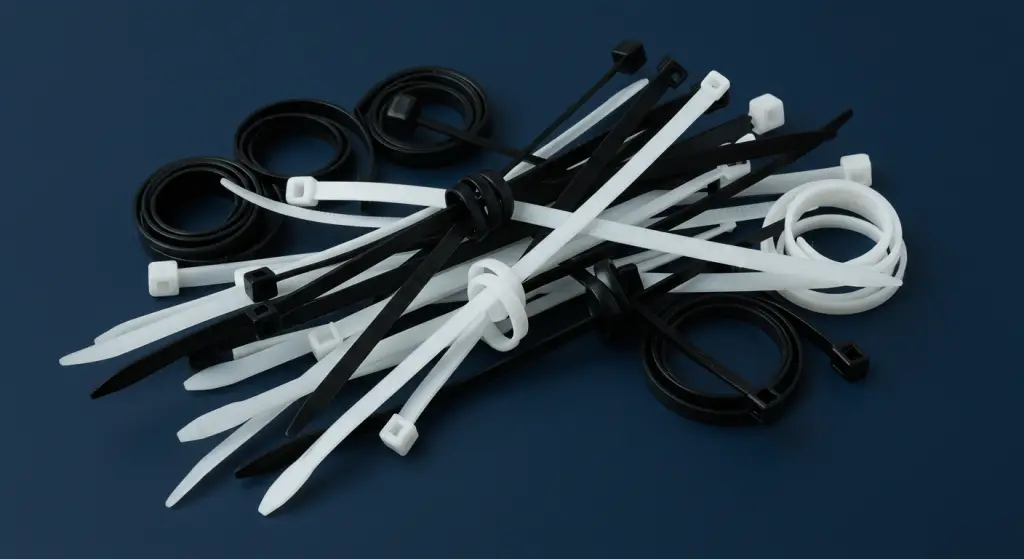
Never throw away plastic cable ties, they have many hidden uses around the house.
Plastic cable ties—those small, simple fasteners—are a staple in many households. Most people keep a few around for organizing cables or DIY projects, but very few realize their full potential. Far from being disposable, these inexpensive and versatile items can solve countless everyday problems, save time, and even prevent minor accidents. If you have a drawer full of cable ties gathering dust, it’s time to put them to work.
The Invention Behind Cable Ties
Originally designed for professional use, plastic cable ties help electricians, plumbers, and technicians keep wires, cables, and pipes neat and secure. Their design is simple: a flexible plastic strap with a locking mechanism that allows it to form a tight loop around objects. While this might seem like a limited function, the reality is that cable ties are incredibly adaptable and can serve dozens of purposes in and around the home.
Beyond professional use, cable ties are environmentally friendly to reuse. Throwing them away contributes to plastic waste, while finding creative ways to repurpose them not only reduces your household’s environmental footprint but also provides quick solutions to everyday problems.
Organize Cables and Wires
One of the most common uses for cable ties is, unsurprisingly, keeping cords and wires tidy. From computer cables to TV wires or even charging cords, a few cable ties can prevent tangling, reduce clutter, and make your workspace more efficient. Grouping cables together with ties ensures they stay out of the way and reduces wear and tear on delicate wires.
Quick Fixes Around the House
Cable ties are also handy for quick fixes when more permanent solutions aren’t available. For example:
-
Repair a Shower Curtain: When the rings on a shower curtain break, you don’t need to replace the entire curtain. Simply thread a cable tie through the hole where the ring was, loop it around the rod, and lock it. Trim the excess length, and your shower curtain is ready to slide smoothly again.
-
Temporary Keychain: If your keyring breaks, a cable tie can hold all your keys together. Simply thread the keys onto the tie, lock it, and trim the excess. The result is a secure and indestructible temporary keychain.
Organize Tools and Cleaning Supplies
Cable ties are perfect for keeping tools and household items neatly arranged:
-
Hang Brooms and Dustpans: Sometimes hooks are too small to hold the handles of cleaning tools. By threading a cable tie through the handle hole and securing it, you can hang brooms, dustpans, and mops on existing hooks. This keeps the balcony, garage, or utility closet organized and clutter-free.
-
Bundle Items Together: Use cable ties to bundle small tools, gardening supplies, or other miscellaneous items that tend to scatter around storage areas. This prevents misplacement and makes cleanup easier.
Travel and Luggage Safety
Cable ties are surprisingly useful when it comes to securing luggage:
-
Lock Zippers on Bags: To prevent unwanted access to your suitcase, loop a cable tie through the zipper pulls and lock it. This acts as a deterrent against tampering, especially for checked luggage during air travel. While not a substitute for a heavy-duty lock, it provides an added layer of security and peace of mind.
Child Safety Solutions
Parents often face the challenge of keeping children away from cabinets, drawers, or other potentially dangerous areas. Cable ties can serve as a quick childproofing tool:
-
Secure Cabinets: Loop a cable tie through cabinet handles or drawer pulls and lock it. Young children won’t be able to open the doors, keeping cleaning products, sharp objects, or fragile items out of reach. While this is a temporary solution, it’s ideal for situations when proper childproof locks aren’t available.
Creative DIY Uses
Beyond practical fixes, cable ties can be part of creative DIY projects:
-
Plant Supports: Use cable ties to secure plants or small trees to stakes in the garden. They are strong yet flexible enough to support growth without damaging stems.
-
Decorative Purposes: Craft enthusiasts can incorporate cable ties into projects such as decorative baskets, wall hangings, or art installations.
-
Emergency Repairs: Broken household items like fences, chairs, or toys can be temporarily fixed with cable ties until a more permanent solution is available.
Sustainability and Reuse
Using cable ties in multiple ways also promotes sustainability. Instead of discarding them after a single use, repurposing cable ties reduces plastic waste and lessens the demand for new materials. With a few cable ties, you can accomplish tasks that might otherwise require more expensive or specialized tools.
Tips for Using Cable Ties Effectively
-
Trim Excess Carefully: Always cut off the extra length after securing the tie to avoid sharp edges that could cause scratches or injuries.
-
Avoid Over-tightening: When using cable ties on delicate items like plants, clothes, or furniture, ensure they are not tightened excessively, as this can cause damage.
-
Combine with Other Materials: For extra stability, combine cable ties with fabric, tape, or string when securing items that require a gentler touch.
Final Thoughts
Plastic cable ties are more than just organizational tools—they are versatile problem solvers for every household. From quick fixes and childproofing to creative DIY projects, these small, inexpensive items can save time, money, and effort. Instead of throwing them away, keeping a stash at home ensures you’re prepared for emergencies and everyday challenges alike.
With a little imagination, plastic cable ties prove that even the simplest objects can have a multitude of uses. By rethinking their purpose, you can make your home more organized, safe, and resource-efficient. The next time you reach for a tool or face a household problem, check your drawer first—you might find the perfect solution in a humble cable tie.