Not Just Behind the President: Understanding the Quiet Influence of First Lady Liza Araneta Marcos
In many governments around the world, the role of a First Lady is often misunderstood or underestimated. Public attention usually focuses on visible duties—ceremonial appearances, charitable initiatives, or symbolic representation. Yet history repeatedly shows that influence does not always operate in the spotlight. In the case of First Lady Liza Araneta Marcos, wife of President Ferdinand “Bongbong” Marcos Jr., growing public interest reflects a deeper curiosity: who is she beyond the formal title, and what role does she play in shaping the direction of governance?
Gradually, a broader picture has emerged—one that presents a woman of substantial background, strong intellect, and strategic presence. While she rarely seeks public attention, her influence is often described as deliberate, informed, and quietly effective. This is not the story of a figure standing in the shadows, but of someone whose presence is felt through consistency, preparation, and perspective.
A Background That Shapes Perspective

Understanding influence begins with understanding background. Liza Araneta Marcos comes from an environment shaped by education, global exposure, and professional engagement. Her academic training and legal background have long been noted by observers, not as credentials for authority, but as tools that inform her worldview.
Education, particularly in fields that require critical analysis and structured reasoning, often shapes how individuals approach complex issues. Those familiar with her background describe a person comfortable with detail, long-term thinking, and careful evaluation. Such qualities are not always visible in public forums, but they are highly relevant in private discussions where policy considerations are explored.
The Power of Preparation
Influence is not always about speaking the loudest or appearing most frequently. In many cases, it is about preparation—being informed, understanding context, and anticipating consequences. This form of influence is subtle, but it can be decisive.
Reports from political observers suggest that the First Lady is deeply attentive to issues that affect governance and society. Rather than positioning herself as a public advocate, she is often described as someone who listens, processes, and reflects before offering insight. In environments where decisions carry national impact, such an approach can be invaluable.
Presence Without Performance
One of the most striking aspects of First Lady Liza Araneta Marcos’s public image is her restraint. In an era where visibility is often equated with relevance, her measured presence stands out. She does not rely on constant media exposure to assert importance. Instead, her influence is perceived through consistency and proximity to key discussions.
This approach challenges conventional assumptions about power. It suggests that leadership influence does not require constant performance. Sometimes, presence itself—steady, informed, and grounded—is enough to shape outcomes.
Networks and Relationships
In any political system, relationships matter. Connections built over years, across professional and social spheres, often provide insight and perspective that formal briefings alone cannot offer. The First Lady’s background has allowed her to cultivate relationships that extend beyond immediate political circles.
These connections do not automatically translate into authority, but they contribute to understanding. Exposure to different viewpoints, industries, and communities helps broaden perspective, particularly when governance decisions affect diverse sectors of society.
A Strategic Understanding of Timing
Another element often associated with effective influence is timing. Knowing when to speak, when to listen, and when to step back is a skill developed through experience and observation. Those who have worked closely with political processes understand that timing can be as important as content.
The First Lady’s approach appears aligned with this principle. Rather than constant engagement, she is perceived as selective—choosing moments where insight adds value rather than noise. This strategic restraint often strengthens credibility.
Public Curiosity and Quiet Authority
As public curiosity grows, so does discussion about her role. Some view her influence as a natural extension of partnership, while others see it as an example of modern political dynamics where informal advisory roles carry weight.
What remains consistent across interpretations is recognition of her intellectual presence. She is frequently described as someone who asks thoughtful questions and considers broader implications, qualities that contribute to informed decision-making without dominating the process.
Beyond the Symbolic Role
Traditionally, First Ladies are often associated with ceremonial responsibilities. While such roles remain important, modern governance increasingly recognizes the value of intellectual partnership. In this context, the First Lady’s involvement is less about symbolism and more about substance.
This does not mean direct authority or formal power. Rather, it reflects an environment where trusted perspectives are valued, especially when they are grounded in education, experience, and careful consideration.
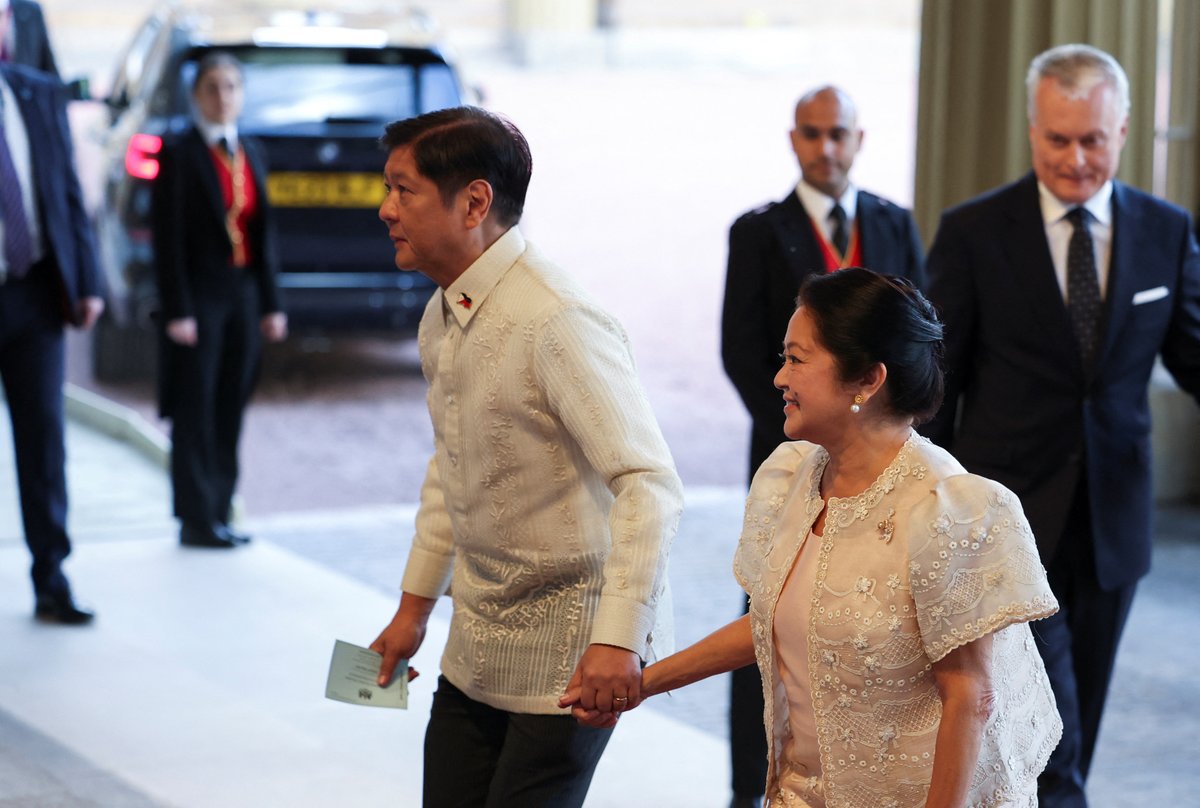
Influence as Support, Not Control
It is important to distinguish influence from control. Influence, in its most constructive form, supports decision-making rather than replaces it. It offers perspective, raises questions, and highlights potential consequences without overriding formal processes.
The narrative surrounding First Lady Liza Araneta Marcos often emphasizes this distinction. Her role is not described as directive, but as supportive—contributing to discussions rather than determining outcomes. This balance reinforces institutional integrity while benefiting from diverse viewpoints.
The Role of Silence in Leadership
Silence is often misunderstood as absence. In reality, silence can be intentional and strategic. In leadership environments, silence allows space for reflection and prevents unnecessary escalation.
The First Lady’s preference for limited public commentary reflects this understanding. By avoiding constant statements, she reduces the risk of misinterpretation while maintaining focus on substantive engagement behind the scenes.
Modern Governance and Informal Influence
Modern governance operates not only through formal structures but also through informal dynamics. Advisors, confidants, and partners play roles that are not always documented but are nonetheless influential.
In this sense, the First Lady’s role aligns with global patterns where spouses of leaders contribute through insight and counsel. This is not unique, but it is often underexplored due to its subtlety.
Public Perception Versus Reality
Public narratives often simplify complex roles. As interest grows, there is a tendency to frame influence in dramatic terms. However, reality is usually more nuanced. Influence develops through trust, consistency, and shared understanding rather than sudden interventions.
Recognizing this nuance helps maintain a balanced perspective. It prevents the oversimplification of roles and respects the complexity of governance.
A Figure of Quiet Confidence
Observers frequently describe First Lady Liza Araneta Marcos as composed and confident. Confidence, in this context, does not manifest through dominance but through assurance. It reflects comfort with responsibility and awareness of boundaries.
Such confidence often reassures rather than intimidates. It contributes to stable environments where ideas can be exchanged without pressure.
Why Her Role Matters
The growing attention surrounding the First Lady reflects broader questions about leadership partnerships. In complex political environments, trusted collaboration can enhance decision-making quality.
Her role matters not because it challenges formal authority, but because it complements it. Informed perspectives strengthen governance when they are integrated respectfully and responsibly.
Conclusion: Beyond Visibility, Toward Understanding
The story of First Lady Liza Araneta Marcos is not one of spectacle, but of substance. It is a reminder that influence does not always seek attention, and power does not always announce itself.
By focusing on preparation, restraint, and thoughtful engagement, she represents a form of influence that is quiet yet significant. Not just behind the president, but alongside governance itself, her presence reflects a modern understanding of partnership, perspective, and responsibility.
As public interest continues, the most meaningful understanding will come not from speculation, but from observing consistency, integrity, and respect for institutions. In doing so, the narrative shifts from curiosity to comprehension—recognizing that true influence often speaks softly, but carries lasting impact.