A Sudden Shift or Just Political Noise? Public
Debate Intensifies Over Rumored Changes Within the Philippine Power Landscape
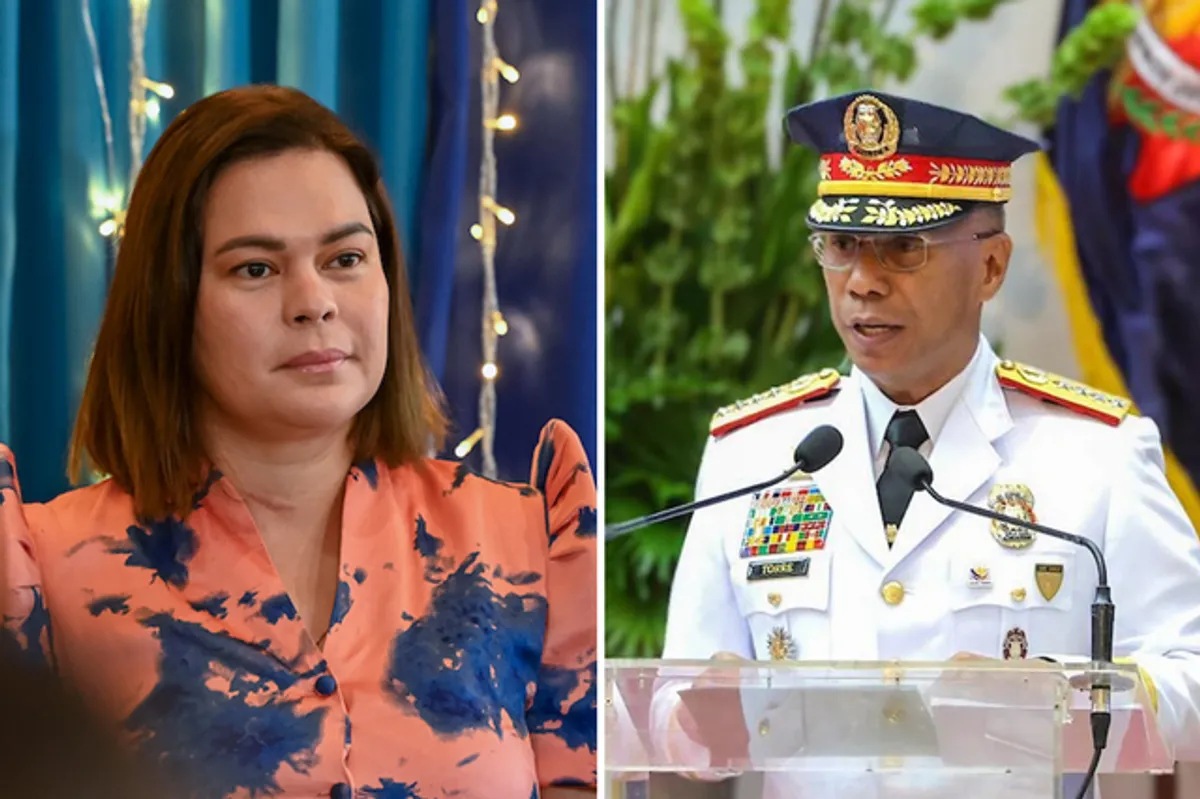
In recent days, public discussion in the Philippines has intensified following widespread online speculation suggesting that the country’s political balance may be quietly shifting. Social media platforms, political forums, and private group chats have been flooded with questions about whether senior figures within the Armed Forces of the Philippines (AFP) are truly reconsidering their positions, and whether Vice President Sara Duterte is becoming a central figure in these conversations. At the same time, Malacañang Palace is being described by commentators as facing increasing pressure amid what many call “unpredictable movements” behind the scenes.
But are these developments real indicators of a major transition, or are they simply the latest wave of political conjecture amplified by the speed and intensity of modern information channels?

The Rise of Speculation in a Hyperconnected Era
Political speculation is not new in the Philippines. However, the current environment—defined by rapid information sharing, anonymous sources, and emotionally charged commentary—has transformed how rumors spread and how quickly they shape public perception.
The idea that AFP generals might be “changing direction” gained traction not through official announcements, but through indirect signals: interpreted body language, selective silence, unverified accounts of meetings, and the absence or presence of certain names in public events. These fragments, when combined and shared repeatedly, began forming a narrative that something significant might be unfolding.
Importantly, none of these discussions have been supported by formal confirmation. Yet, in the public imagination, repetition can sometimes feel like validation.
The AFP and the Principle of Professionalism
At the core of the debate is the role of the Armed Forces of the Philippines, an institution constitutionally mandated to remain professional and non-partisan. Historically, the AFP has emphasized loyalty to the Constitution and civilian authority rather than to individual political figures.
Analysts caution that interpreting silence or routine engagements as political alignment risks misunderstanding how military institutions operate. Senior officers often maintain communication with multiple branches of government as part of their responsibilities. Such interactions, while ordinary, can be misread in a politically sensitive climate.
Still, public curiosity persists, fueled by the belief that shifts within powerful institutions often begin quietly before becoming visible.
Vice President Sara Duterte in the Public Conversation
Vice President Sara Duterte’s name has emerged repeatedly in these discussions, not due to any public declaration, but because of her political stature and the symbolic weight she carries. To her supporters, the speculation reflects growing recognition of her influence. To critics, it raises questions about ambition, timing, and future plans.
What remains clear is that the Vice President has largely maintained a measured public presence. This restraint itself has become a point of interpretation. In politics, silence can be viewed either as caution or confidence, depending on the observer’s perspective.
Without explicit statements, public opinion continues to fill the gaps.
Palace Pressure: Perception Versus Reality
Another major element of the discussion is the claim that Malacañang Palace is being “shaken” by behind-the-scenes movements. Commentators describe an atmosphere of uncertainty, suggesting that the Palace is closely watching developments and recalibrating strategies.
However, political historians note that every administration, regardless of stability, faces periods of heightened scrutiny. Moments of silence, internal adjustments, or delayed responses are often standard governance practices rather than signs of crisis.
The challenge lies in distinguishing between routine political management and genuine instability—especially when narratives are shaped externally by speculation rather than internal disclosures.
Why Timing Matters
The timing of these rumors has played a significant role in their impact. With future elections already looming in the public consciousness, every action and non-action is viewed through a long-term lens. Early positioning, alliance-building, and image management are expected at this stage of the political cycle.
As a result, ordinary developments are often elevated into symbols of larger intent. A meeting becomes a signal. A visit becomes a message. A delay becomes a strategy.
This heightened sensitivity creates fertile ground for dramatic interpretations.
Social Media: From Discussion to Amplification
Social media has not merely reported these rumors—it has reshaped them. Short clips, emotionally charged captions, and selective translations have allowed speculation to travel faster than context.
Platforms reward engagement, not verification. As a result, posts that suggest dramatic reversals or hidden power shifts gain traction quickly, while nuanced explanations struggle to compete.
This dynamic places the public in a difficult position: staying informed while navigating an environment where clarity is often sacrificed for impact.
The Psychology of Political Uncertainty
Why do such rumors resonate so deeply? Political psychologists suggest that periods of uncertainty naturally lead people to search for patterns and meaning. When official information is limited, individuals rely on interpretation, intuition, and group consensus.
In this context, speculation about the AFP, the Vice President, and the Palace becomes a way for the public to make sense of a complex system that often feels distant and opaque.
Whether accurate or not, these narratives provide a sense of participation in national affairs.
Signals, Silence, and Strategic Patience
One of the most debated aspects of the situation is silence—who is speaking, who is not, and why. In political communication, silence is rarely neutral. It can be a deliberate choice to avoid escalation, a sign of internal consultation, or simply adherence to protocol.
Observers are divided. Some interpret silence as confirmation that something is happening. Others see it as a responsible refusal to engage with unverified claims.
Until official statements are made, both interpretations remain speculative.
Lessons from the Past
Philippine political history offers numerous examples where rumored power shifts either materialized dramatically or dissolved without consequence. In many cases, early speculation exaggerated developments that later proved to be routine.
These precedents serve as reminders that not every rumor signals a turning point, even if it feels convincing in the moment.
What Can the Public Do?
For citizens, the challenge is balancing vigilance with discernment. Staying informed is essential, but so is recognizing the limits of available information.
Analysts recommend:
-
Paying attention to official statements, not just commentary
-
Distinguishing analysis from assertion
-
Avoiding conclusions based solely on repetition
Public engagement is valuable, but it is most effective when grounded in patience and critical thinking.
A Situation Still Unfolding
As of now, there is no definitive evidence confirming a coordinated shift within the AFP or a sudden realignment of political loyalty. What exists is a powerful conversation—one shaped by timing, personalities, and the modern media environment.
Whether this moment becomes a footnote or a precursor to larger change will depend on what follows: actions, statements, and transparent communication.
Conclusion: Between Speculation and Reality
The current wave of discussion reflects a nation deeply attentive to its political future. While rumors of dramatic reversals capture attention, they also highlight the importance of measured analysis.
Until verified developments emerge, the situation remains open-ended—a reminder that in politics, perception often moves faster than reality, but reality ultimately defines history.