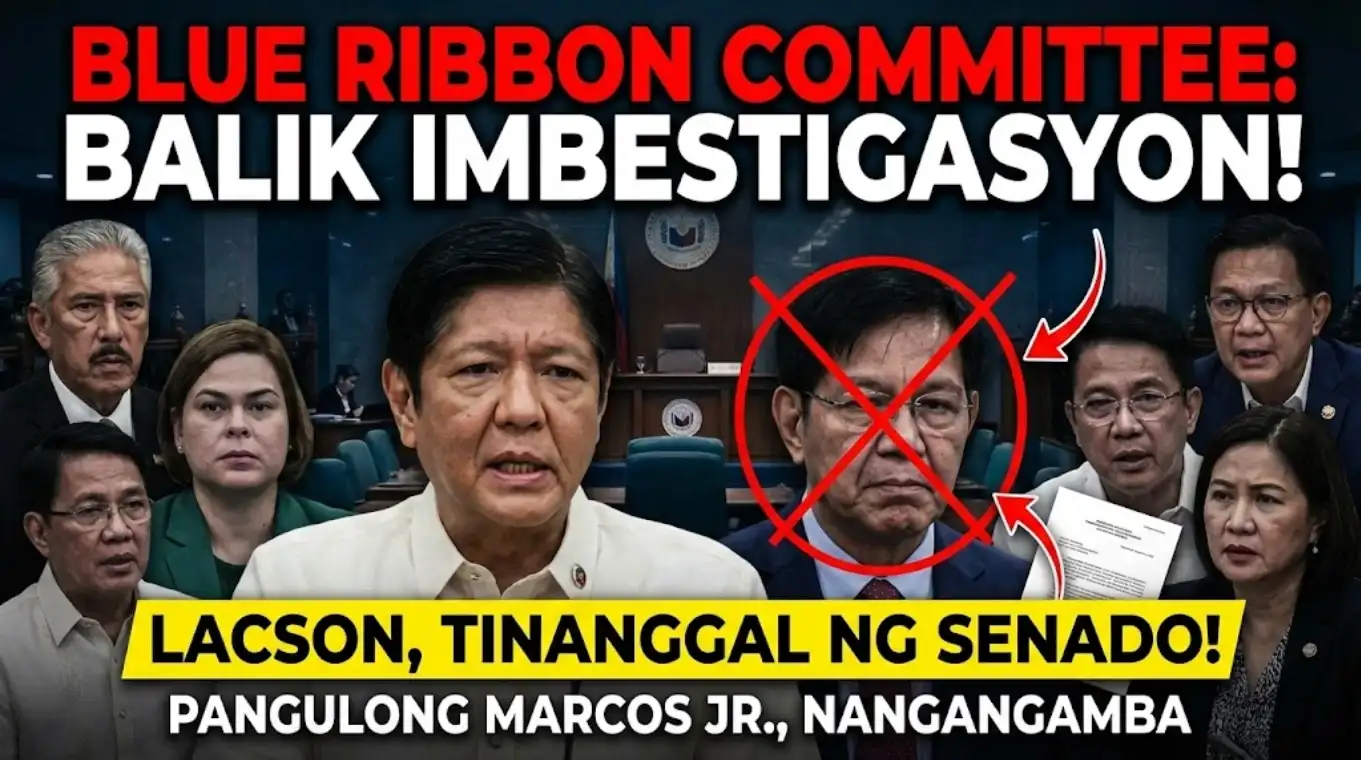
The Senate Blue Ribbon Committee, historically the hallowed ground for unearthing the country’s deepest anomalies, has transformed into a battlefield of personalities. In a development that has sent shockwaves through the legislative chamber, Committee Chairman Senator Panfilo “Ping” Lacson and Senator Rodante Marcoleta engaged in a heated verbal altercation, trading barbs that have temporarily overshadowed the massive investigation into the multi-billion peso flood control scam.
The confrontation, which occurred during the resumption of the inquiry into the Department of Public Works and Highways (DPWH) flood mitigation projects, highlights the fragility of the Senate’s investigative unity. What began as a procedural inquiry by Marcoleta quickly devolved into a direct challenge to Lacson’s leadership, raising serious questions about the direction of the probe and the impartiality of the committee itself.
The Spark: Allegations of Partiality
The tension in the hearing room was palpable from the moment the gavel fell. Senator Marcoleta, known for his meticulous and often combative legalistic style, took the floor to raise a “prejudicial question.” His target was not a witness, but the Chairman himself.
Marcoleta cited recent media interviews given by Senator Lacson, where the Blue Ribbon Chair reportedly expressed a preference for the testimony of whistleblower Brice Hernandez over that of contractors Pacifico “Curlee” Discaya and his wife, Sarah Discaya. Marcoleta argued that by publicly weighing the credibility of witnesses before the committee had fully deliberated, Lacson had compromised the “integrity, impartiality, and objectivity” of the proceedings.
“Foremost to my mind is the integrity of this committee,” Marcoleta stated, his voice echoing in the tense silence of the session hall. He insinuated that the Chair had already formed a conclusion, thereby rendering the hearings a mere formality.
Senator Lacson, a veteran lawmaker with zero tolerance for what he terms “hijacking” of legislative inquiries, did not take the accusation sitting down. Visibly irked, Lacson fired back, cutting off Marcoleta’s line of questioning to deliver a stinging retort that would dominate headlines.
“Why are you so protective of the Discayas?” Lacson demanded.
The question hung heavy in the air. It was a direct counter-offensive, implying that Marcoleta’s procedural objections were a smokescreen to shield the controversial contractors from scrutiny. Marcoleta immediately denied the accusation, asserting his role was to ensure due process, but the damage was done. The hearing had shifted from an investigation of flood waters to an investigation of motives.
The Context: A Nation Underwater
To understand the volatility of this clash, one must look at the stakes involved. The Blue Ribbon Committee is currently investigating a scandal of catastrophic proportions—alleged corruption in flood control projects that has left millions of Filipinos vulnerable to rising waters.
The inquiry was triggered by the discovery of “ghost projects” and severe irregularities in the utilization of flood mitigation funds. Reports indicate that former DPWH officials may have submitted incorrect grid coordinates to Malacañang, leading inspection teams to tag hundreds of projects as “non-existent” or completed when they were barely started.
At the center of this storm are the “Cabral Files”—a cache of documents left by the late DPWH Undersecretary Catalina Cabral. These files allegedly contain damning evidence of a systematic scheme to siphon billions of pesos into the pockets of officials and favored contractors. Senator Lacson has indicated that these documents are crucial to connecting the dots between the contractors, such as the Discayas, and high-ranking government enablers.
The public’s patience is wearing thin. With every typhoon that submerges the capital, the demand for accountability grows louder. The Lacson-Marcoleta feud, while politically riveting, threatens to derail the timeline of an investigation that the public desperately needs to be concluded.
The Battle of Wills
The clash between Lacson and Marcoleta is not merely a disagreement over rules; it is a collision of two distinct political brands.
Senator Lacson has positioned himself as the crusader against the “hyenas” of the public coffers. His approach to the Blue Ribbon chairmanship has been aggressive and streamlined. He has little patience for dilatory tactics and has publicly warned that he will not allow the committee to be used as a platform for grandstanding. His recent remark, telling detractors to “shut the f* up” if they cannot contribute constructively, exemplifies his no-nonsense, albeit controversial, leadership style.
On the other side of the ring is Senator Marcoleta. Often viewed as a fierce debater with a keen eye for technicalities, Marcoleta has taken up the mantle of the “devil’s advocate” in these hearings. His supporters argue that his scrutiny ensures that the committee does not become a kangaroo court. However, his critics, echoed by Lacson’s sharp retort, question whether his interventions are designed to clarify the truth or muddied the waters to benefit specific interest groups.
The “Discaya” connection is particularly sensitive. The couple has been linked to billions in contracts that are now under suspicion. By questioning why Lacson prefers the testimony of Hernandez—who has provided details on the “25% kickback” scheme—Marcoleta inadvertently placed himself in the line of fire, inviting speculation about his alliances.
The “Ghost” of Investigations Past
This incident recalls previous Senate dramas where investigations were stalled by internal wrangling. However, the stakes here are arguably higher. The flood control scam is not just about stolen money; it is about infrastructure that determines the safety of lives and property.
The delay caused by these verbal fireworks has tangible consequences. Every hearing spent bickering over parliamentary courtesy is a day lost in tracing the money trail. Witnesses like Hernandez, who have been offered safe houses due to threats to their lives, remain in limbo. The “Cabral Files” remain under-analyzed as the committee debates the Chair’s media habits rather than the content of the evidence.
Moreover, the rift invites external pressure. If the Senate cannot present a united front, it strengthens the position of those being investigated. Contractors and accused officials can exploit these divisions, claiming the investigation is politically motivated rather than evidence-based.
What Lies Ahead?
As the dust settles on this latest explosive episode, the Blue Ribbon Committee faces a critical test. Can Senator Lacson restore order and steer the ship back to the evidence? Will Senator Marcoleta continue his line of questioning, or will the public backlash force a truce?
The “shockwave” mentioned in reports is not just the volume of their voices, but the realization that the Senate’s most powerful committee is fractured. For the Filipino taxpayer, watching their hard-earned money wash away in floods and corruption, the theater of the Senate is becoming less entertaining and more infuriating. The probe must heat up not in temperature of tempers, but in the intensity of its pursuit of truth.
Frequently Asked Questions (FAQs)
Q: What is the main conflict between Senator Lacson and Senator Marcoleta? A: The conflict stems from Senator Marcoleta questioning Senator Lacson’s impartiality as the Blue Ribbon Committee Chair. Marcoleta claimed Lacson prejudged the case by favoring witness Brice Hernandez over the Discaya couple in media interviews. Lacson retaliated by asking Marcoleta why he was “protective” of the Discayas.
Q: Who are the Discayas mentioned in the hearing? A: Pacifico “Curlee” Discaya and his wife, Sarah Discaya, are prominent contractors allegedly linked to the multi-billion peso flood control anomalies. They are central figures in the investigation regarding “ghost projects” and fund misuse.
Q: What are the “Cabral Files”? A: The “Cabral Files” refer to a set of documents left behind by the late DPWH Undersecretary Catalina Cabral. These documents are believed to contain critical evidence and records detailing the corruption and bribery schemes within the flood control projects.
Q: Why is the flood control probe considered urgent? A: The investigation is urgent because it involves billions of pesos in public funds intended for flood mitigation. With the Philippines facing frequent typhoons, the failure of these projects directly impacts public safety, property, and lives, fueling public demand for immediate accountability.
Q: What is the status of the Blue Ribbon investigation now? A: Despite the heated exchange, the investigation is ongoing. However, the internal conflict between the Senators threatens to slow down the proceedings. The committee is currently trying to authenticate documents and hear testimonies from key witnesses like engineer Brice Hernandez while managing the political friction.