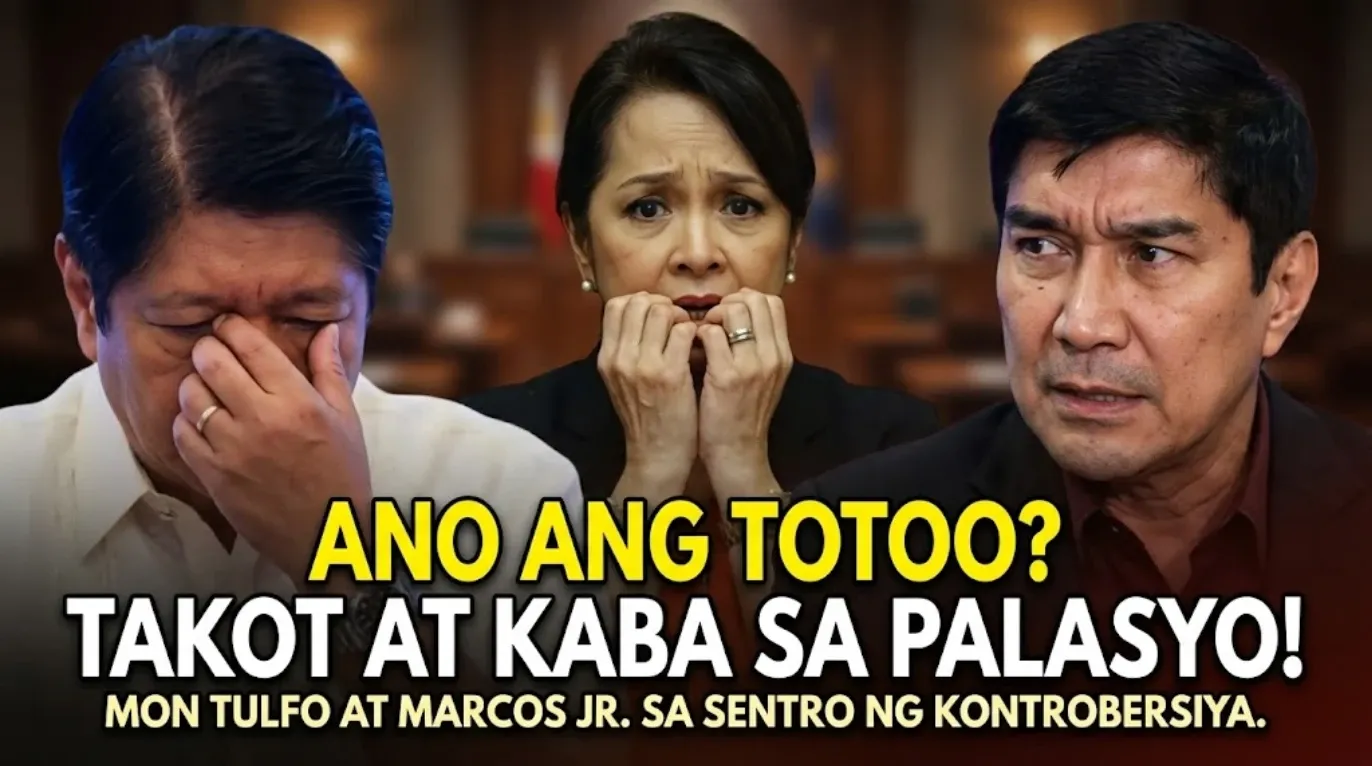
The fragile peace within the Philippine political sphere has been shattered by a startling revelation that warns of a “grave conspiracy” targeting the highest office in the land. In a development that has sent shockwaves from Malacañang to Davao, veteran columnist Ramon “Mon” Tulfo has exposed an alleged destabilization plot aimed at ousting President Ferdinand “Bongbong” Marcos Jr., implicating some of the country’s most powerful figures.
This explosive disclosure, which Tulfo claims is based on highly reliable intelligence, has forced the Armed Forces of the Philippines (AFP) and national intelligence agencies into immediate action. The administration is now grappling with the possibility that the political rift between the Marcos and Duterte factions has escalated from a war of words into a tangible threat to national security. As the government verifies the existence of a funded operation to change the course of history, the public is left questioning whether this is a genuine coup in the making or a dangerous escalation of political theater.
The Bombshell Revelation
The controversy erupted when Tulfo, a journalist known for his unfiltered commentary and deep connections within the military and police establishments, published a detailed “watchlist” on social media. Unlike vague rumors that often circulate in political circles, Tulfo’s report was specific, identifying what he described as the financial backers and tactical implementers of a plan to unseat the President.
Tulfo described the conspiracy as “serious” and one that “nearly changed Philippine history,” suggesting that the plot had reached an advanced stage of planning. He claimed his information came from a “reliable informant” within the intelligence community who provided him with the names of individuals currently being monitored by the government.
Defending the integrity of his report, Tulfo remained defiant against threats of libel or backlash. In a statement that underscored the gravity of his claims, he asserted that he would not reveal his source even under extreme duress, using a graphic metaphor to emphasize his resolve. He insisted that his publication of the list was an objective act of journalism, intended to inform the public about a looming threat to the country’s democratic institutions.
The “Terror List” and High-Profile Financiers
What makes Tulfo’s revelation particularly volatile is the caliber of the names included in the alleged conspiracy. The list does not point to obscure radicals but rather to the heart of the Philippine political elite.
Heading the list of alleged financiers is Vice President Sara Duterte. The implication that the second-highest official in the land could be funding a move against the President marks a new low in the rapidly deteriorating relationship between the UniTeam coalition partners. Joining her on the list is her brother, Davao City Representative Paolo “Pulong” Duterte. The inclusion of the Duterte siblings suggests a consolidated effort by the powerful Davao clan, according to the narrative spun by the “watchlist.”
Another heavyweight named as a financier is former Ilocos Sur Governor Luis “Chavit” Singson. Singson, a political kingpin with a history of surviving and influencing national upheavals, adds a layer of complexity and resource capability to the alleged plot.
Beyond the financiers, the list details the operational wing of the supposed coup. It includes a roster of retired and active military officials, such as Retired General Romeo Poquiz, Retired General Orlando De Leon, and Retired General Johnny Macanas. These names suggest an attempt to command loyalty within the armed forces, a critical component of any successful destabilization effort in the Philippines. Also mentioned were former Bureau of Corrections chief Gerald Bantag, who is currently a fugitive, and legal personalities like Attorney Ferdinand Topacio and former Executive Secretary Vic Rodriguez.
Malacañang’s Response: Verified Threat or Noise?
The reaction from the Palace was swift and calculated. Rather than dismissing the report as mere gossip, Malacañang confirmed that the information had been received and acted upon. Palace Press Officer Claire Castro addressed the media, stating that the list provided by Tulfo had been formally forwarded to the AFP and the intelligence community for “monitoring and verification.”
This official acknowledgment changes the nature of the narrative. By admitting that the intelligence agencies are probing the claims, the administration has validated the potential seriousness of the threat. However, Castro was careful to manage public panic. She emphasized that the presence of a name on a list or a post on social media does not constitute irrefutable proof of guilt. The government’s stance is one of caution: they are treating the “serious revelations” with the gravity they deserve, but they are waiting for the intelligence community to validate the actionable intel before making any legal moves.
The AFP has since gone on high alert, conducting loyalty checks and deepening their surveillance to ensure that the chain of command remains unbroken. The military leadership is acutely aware that rumors of a coup, if left unchecked, can become self-fulfilling prophecies by sowing doubt among the rank and file.
The Counter-Attack: Denials and “Full Fantasy”
The accused parties have launched a fierce counter-offensive, vehemently denying any involvement in a destabilization plot and questioning Tulfo’s credibility and mental state.
Representative Paolo “Pulong” Duterte led the charge with a blistering statement. He branded Tulfo a “liar” and ridiculed the veteran journalist’s claims as a “full fantasy.” In a statement laden with insults, the Davao lawmaker dismissed the plot as the product of an overactive imagination and suggested that the “destabilization” narrative was being peddled by the administration itself to distract from its own failings. He denied the existence of any coup funding and challenged the logic of the accusations, questioning why he would waste resources on a plot that he deemed nonexistent.
Vice President Sara Duterte adopted a more dismissive tone. She characterized the allegations as “gossip” (chismis) and refused to dignify the “grave conspiracy” narrative with a detailed defense. Her strategy appears to be one of detachment, portraying the accusations as political noise designed to harass her office and supporters.
Baguio City Mayor Benjamin Magalong, whose name was mentioned in the list with a note “for confirmation,” also issued a strong denial. A former police general himself, Magalong warned that spreading such “false, misleading, and harmful” rumors serves only to erode trust in the nation’s institutions. He framed the circulation of unverified intelligence as the true act of destabilization, dividing the people and creating unnecessary anxiety.
Context: The Fracture of the UniTeam
To understand the weight of these allegations, one must look at the broader political context. The “UniTeam” alliance that swept President Marcos and Vice President Duterte to power in 2022 has effectively collapsed. Over the past year, policy differences, budget disputes, and the ICC investigation into the drug war have driven a wedge between the two families.
This environment of mistrust makes the public more susceptible to believing reports of coups and conspiracies. The Philippines has a long history of military interventions and “People Power” movements, making the word “destabilization” a potent trigger for national anxiety. The accusation that the Vice President is plotting against the President is the ultimate manifestation of this political divorce.
Conclusion
Mon Tulfo’s “bombshell” has undeniably altered the political atmosphere. Whether the “grave conspiracy” is a concrete operational plan or a swirl of intelligence chatter remains to be seen. What is clear is that the trust between the Marcos administration and the Duterte camp is irrevocably broken. As the AFP and intelligence agencies continue their probe, the nation waits with bated breath. The outcome of this investigation will not only determine the fate of the individuals named on the list but could also redefine the future of Philippine democracy.
Frequently Asked Questions (FAQs)
1. Who is Mon Tulfo and why does his report matter? Mon Tulfo is a veteran Filipino journalist and columnist known for his “Hard Hitting” style. He has decades of experience covering the military and police sectors. His reports are significant because he often claims to have access to insider information and “deep throat” sources within the intelligence community.
2. Is there actual proof of a coup plot? Currently, there is no public physical evidence (such as seized weapons or documents) presented to prove the plot. The “proof” at this stage consists of the intelligence “watchlist” Tulfo released. The AFP and intelligence agencies are currently verifying these claims.
3. Who are the main people accused of financing the plot? The primary individuals named as alleged financiers are Vice President Sara Duterte, her brother Congressman Paolo “Pulong” Duterte, and former Governor Chavit Singson.
4. How did the Dutertes respond to the accusations? Both Sara and Paolo Duterte have denied the allegations. Paolo called Tulfo a “liar” and the story a “fantasy,” while Sara dismissed the reports as mere “gossip.”
5. What is the government doing about the list? Malacañang stated that the list has been forwarded to the Armed Forces of the Philippines (AFP) and the National Intelligence Coordinating Agency (NICA). These agencies are tasked with validating the information and monitoring the individuals mentioned.
6. Can a journalist be sued for publishing this list? It is possible. Publishing unverified accusations that damage a reputation can lead to libel suits in the Philippines. However, Tulfo argues that his report is “objective” and a matter of public interest, which is a common defense in journalism. No formal cases have been filed yet regarding this specific post.