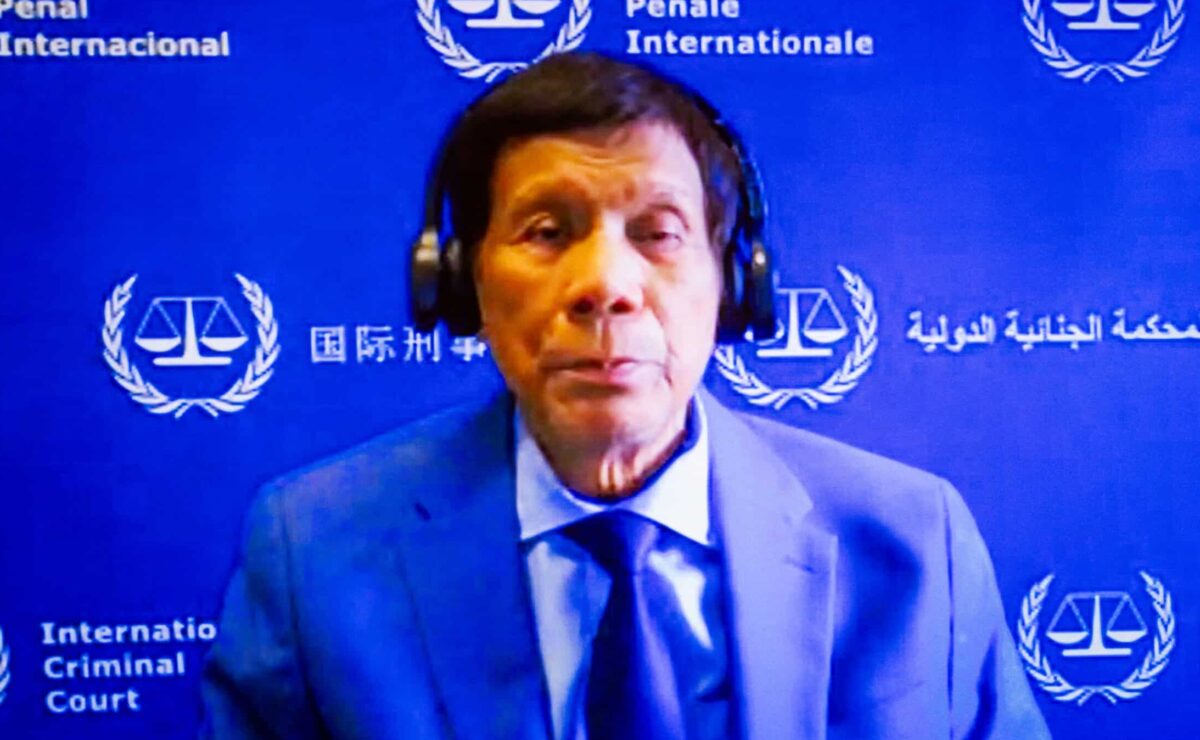
In moments when international legal institutions enter public discussion, tension often follows. This is not because decisions are imminent, but because uncertainty fills the space where clarity has yet to arrive. In the Philippines today, public attention has turned toward the International
Criminal Court (ICC), not as a symbol of conclusion, but as a reminder of how slow, complex, and emotionally charged global legal processes can be.
Observers emphasize that any decision by the ICC is not immediate. It requires time—sometimes years—to review arguments, assess evidence,
compare legal interpretations, and follow procedural safeguards. Yet while institutions move carefully, public opinion moves quickly. This difference in pace creates emotional friction, where belief and doubt exist side by side, shaping conversations across communities, media, and social platforms.

The Nature of International Legal Processes
International courts are fundamentally different from domestic courts. They operate across borders, legal traditions, and political contexts. Their authority relies not only on legal frameworks but also on international cooperation, procedural legitimacy, and adherence to strict standards of review.
Unlike public discourse, which often seeks immediate answers, international legal bodies are designed to prioritize caution. Every step—jurisdictional review, admissibility assessment, evidentiary comparison—follows formal procedures intended to ensure fairness. These safeguards exist precisely because decisions can carry wide implications beyond a single country.
This deliberate pace, however, can be misunderstood by the public as hesitation or indecision.
Why Time Is Central to Credibility
Legal credibility depends on thoroughness. In international cases, time allows institutions to verify information from multiple sources, cross-check testimonies, and evaluate claims against established legal standards. Rushed decisions risk undermining legitimacy.
Observers often stress that delay does not imply weakness. Instead, it reflects the seriousness of the responsibility involved. International rulings are rarely reversed once issued, making accuracy essential.
For the public, however, time can feel like uncertainty. In the absence of official conclusions, speculation fills the gap.
Public Emotion in Periods of Legal Uncertainty
Public opinion rarely remains neutral during prolonged legal processes. Emotions tend to polarize, especially when national identity, sovereignty, or historical memory is involved.
In the Philippines, reactions range from strong confidence in institutional processes to deep skepticism. Some see international review as a necessary mechanism for accountability. Others interpret it as external pressure or misunderstanding.
Both responses stem from emotional investment rather than legal analysis. This is natural. Legal outcomes affect collective narratives, not just statutes.
Belief and Doubt as Parallel Reactions
Belief and doubt are not opposites; they often coexist. Many individuals express trust in legal institutions while simultaneously questioning motives, timing, or scope. This duality reflects a mature public consciousness grappling with complexity.
Belief provides hope that systems can address unresolved issues. Doubt acts as a protective mechanism against disappointment. Together, they form a psychological balance during periods of uncertainty.
Understanding this emotional dynamic helps explain why public discourse appears conflicted rather than unified.
Media’s Role in Amplifying Tension
Modern media accelerates emotional response. Headlines simplify, commentary personalizes, and social platforms reward strong reactions. Nuance struggles to compete with immediacy.
International legal processes, however, resist simplification. Legal language is technical, procedural, and often inaccessible to non-specialists. This gap between legal reality and public communication creates room for misinterpretation.
Responsible reporting can reduce tension by explaining process rather than predicting outcomes. Unfortunately, explanation is often overshadowed by speculation.
Institutional Neutrality vs. Public Expectation
International courts are designed to be institutionally neutral. They do not operate based on popularity, political cycles, or public pressure. Their legitimacy depends on independence.
Public expectation, on the other hand, is shaped by urgency. People affected by uncertainty seek reassurance, acknowledgment, or closure. When institutions remain silent during procedural stages, frustration can grow.
This mismatch does not indicate failure. It highlights the difference between legal responsibility and emotional need.
The Importance of Legal Literacy
One reason international legal situations generate tension is limited public understanding of legal frameworks. Concepts such as jurisdiction, admissibility, and evidentiary thresholds are complex.
Without legal literacy, procedural steps can appear arbitrary. Educating the public about how international law functions can reduce anxiety and temper expectations.
Legal literacy does not require agreement—it requires understanding.
Historical Context and Collective Memory
Public reactions are also shaped by history. Past experiences with institutions, both domestic and international, influence present attitudes. Trust is cumulative, built over time through consistency and transparency.
Where historical grievances exist, skepticism tends to rise. Where institutions have delivered perceived fairness, confidence grows. Neither reaction is irrational; both are shaped by memory.
International legal bodies must navigate this context carefully, aware that legal decisions resonate beyond courtrooms.
The Risk of Premature Conclusions
One of the greatest risks during ongoing legal review is premature judgment. Drawing conclusions before processes are complete can distort public understanding and harden divisions.
Observers caution that international legal review is not linear. Developments may appear significant but remain procedural. Public patience is tested when visibility is low.
Resisting the urge to predict outcomes protects both public discourse and institutional integrity.
Law as Process, Not Event
A common misunderstanding is viewing legal decisions as events rather than processes. In reality, law unfolds over time, shaped by evidence, argument, and review.
International law, in particular, operates incrementally. Each stage builds upon the last. Skipping steps undermines legitimacy.
Recognizing law as process encourages a more measured public response.
National Identity and External Review
International legal review often triggers questions about sovereignty and national dignity. These concerns are deeply emotional and deserve acknowledgment.
However, participation in international legal frameworks also reflects commitment to shared standards. External review does not automatically negate internal capacity; it complements global accountability mechanisms.
Balancing national pride with international cooperation remains one of the most delicate challenges in global governance.
Silence as Procedure, Not Avoidance
Periods of silence from legal institutions are often procedural rather than strategic. Confidentiality protects the integrity of review and prevents external influence.
To the public, silence can feel unsettling. Yet in legal contexts, restraint is often a sign of professionalism.
Understanding this distinction can reduce unnecessary tension.
The Role of Civil Discourse
Healthy public discourse does not demand consensus. It requires respect for complexity and acknowledgment of uncertainty.
When belief and doubt coexist respectfully, society demonstrates resilience. Polarization emerges when uncertainty is framed as threat rather than process.
Encouraging thoughtful discussion strengthens democratic culture, even amid legal ambiguity.
Waiting as a Civic Skill
In fast-moving societies, waiting feels unnatural. Yet some outcomes cannot be rushed without consequence.
Developing patience as a civic skill allows institutions to function properly and protects public trust. Waiting does not mean passivity; it means allowing due process to unfold.
This perspective reframes delay as responsibility rather than weakness.
Global Attention and Local Impact
International legal situations attract global attention, but their impact is felt locally. Communities internalize uncertainty differently depending on access to information, education, and social context.
Bridging the gap between global processes and local understanding requires transparent communication and responsible interpretation.
Without this bridge, tension deepens.
The Ethical Dimension of Legal Review
Beyond law, there is ethics. International review raises questions about accountability, fairness, and moral responsibility. These questions cannot be answered solely by verdicts.
Ethical reflection complements legal process. It encourages societies to examine systems, behaviors, and values beyond individual cases.
In this sense, legal review becomes an opportunity for introspection.
Conclusion: Between Confidence and Caution
The current international legal situation highlights a familiar human challenge: navigating uncertainty. Institutions move cautiously by design. Public emotion moves quickly by nature.
Between belief and doubt lies understanding. Recognizing that international legal decisions require time does not weaken public engagement—it strengthens it.
The most constructive response is not speculation, but informed patience. Law, when allowed to function properly, serves not only justice but collective trust.
In times of tension, the true test is not the speed of decisions, but the maturity of response.