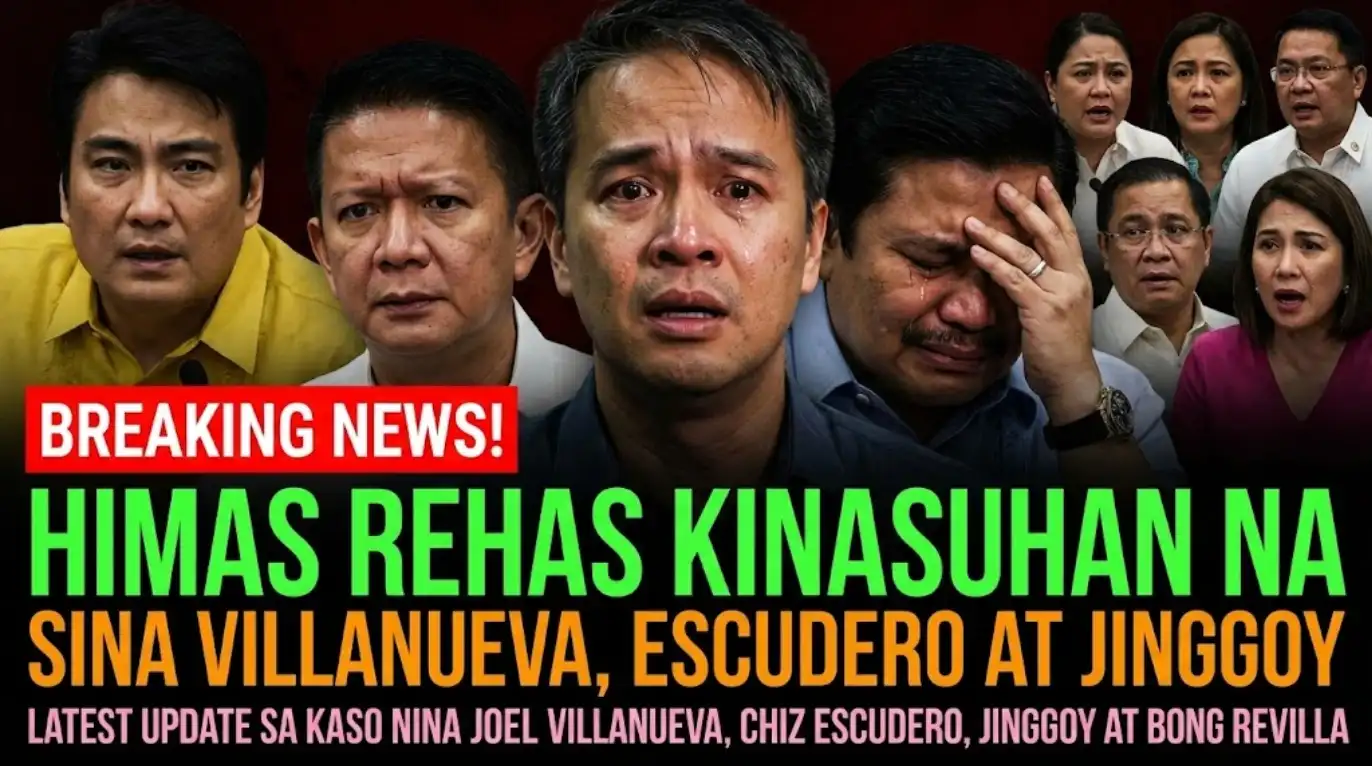
Senate Probe Confirmed: DPWH Leaks Reveal Billions in Insertions
The Secret Is Finally Out
For months, rumors of a “secret list” circulating within the halls of the Philippine Senate have fueled speculation among political insiders and the public alike. Now, the whispers have turned into a roar. Exclusive reports and leaked documents from the Department of Public Works and Highways (DPWH) have blown the lid off what is shaping up to be the biggest budgetary scandal of the year.
The controversy, now dubbed the “DPWH Leaks,” exposes a staggering web of alleged budget insertions, “ghost” projects, and massive fund realignments buried deep within the 2025 National Expenditure Program (NEP). At the center of this storm are two of the country’s most prominent political figures: Senator Joel Villanueva and Senate President Francis “Chiz” Escudero.
As the Senate Blue Ribbon Committee launches a motu proprio investigation, the Filipino public is left asking a critical question: How did billions of pesos intended for flood control vanish into thin air while the country remains submerged during typhoon season?
The ‘Bicam’ Black Box: How the Billions Disappeared
To understand the magnitude of this scandal, one must look at the mechanism used to move these funds: the Bicameral Conference Committee, often referred to as the “third house” of Congress. It is here, behind closed doors and away from the public eye, that the final version of the national budget is crafted.
According to the leaked documents, a total of approximately ₱142 billion was allegedly inserted into the DPWH budget during these bicameral sessions. Unlike the initial budget hearings, which are televised and open to scrutiny, the bicameral talks are notorious for their lack of transparency. It is in this “black box” that lawmakers reportedly carved out massive allocations for their favored districts.
The leaks suggest that these funds were primarily categorized under “Unprogrammed Appropriations”—a budgetary gray area that allows the executive branch to release funds only when “excess revenue” is available. However, critics argue that this mechanism has been weaponized to create a massive pork barrel system, bypassing the strict itemization required by the Supreme Court’s landmark ruling against the Priority Development Assistance Fund (PDAF).
The Bulacan Connection: Villanueva’s Multi-Billion Question
One of the most damning portions of the leaked list concerns the province of Bulacan, the political stronghold of Senator Joel Villanueva. The documents allege that Bulacan received a staggering ₱12 billion in flood control projects, a figure that dwarfs the allocations for other flood-prone provinces.
Specifically, the Senate probe has focused on a series of “ghost” projects amounting to ₱600 million, which were reportedly inserted into the 2023 and 2024 budgets. These projects, labeled as “comprehensive flood mitigation structures,” were intended to protect the towns of Bocaue, Marilao, and Meycauayan. However, on-site inspections by the Commission on Audit (COA) and independent investigators have revealed little to no actual construction.
During the Senate hearings, former DPWH officials testified that these projects were “paper insertions”—funding requests that existed only in documents but had no detailed engineering designs or feasibility studies.
Senator Villanueva has vehemently denied these allegations. In an impassioned defense on the Senate floor, he claimed to be a victim of “identity theft,” suggesting that his name was used by unscrupulous contractors and DPWH officials without his knowledge. “I have never asked for kickbacks, and I have never inserted funds for ghost projects,” Villanueva declared. However, his defense was shaken by the testimony of a whistleblower who claimed to have personal knowledge of the transactions.
The Sorsogon Scheme: Escudero Under Fire
While Villanueva fights off allegations regarding Bulacan, Senate President Chiz Escudero faces scrutiny over funding for his home province of Sorsogon. The leaked list indicates that Sorsogon was the second-largest beneficiary of the budget insertions, with an estimated ₱9.1 billion allocated for infrastructure projects.
The controversy deepened when former DPWH Undersecretary Roberto Bernardo took the witness stand. In what has been described as a “bombshell” testimony, Bernardo alleged that Escudero received “commitments”—a euphemism for kickbacks—totaling hundreds of millions of pesos. Bernardo detailed a specific instance involving a ₱160 million payout allegedly delivered via a “bagman” connected to a prominent construction firm.
Escudero has dismissed the allegations as a “demolition job” orchestrated by his political rivals. He argues that the funding for Sorsogon is legitimate and necessary for the province’s development. “Sorsogon has always been neglected in the past. Is it a crime to finally bring development to my province?” Escudero argued.
However, the sheer volume of the allocation has raised eyebrows. Critics point out that Sorsogon’s flood control budget is significantly higher than that of Metro Manila or the Bicol Region’s other provinces, despite the latter suffering more severe flooding during recent typhoons.
The Whistleblower’s Testimony: Inside the Kickback System
The most explosive element of the Senate probe has been the testimony of Roberto Bernardo. A career official at the DPWH, Bernardo’s decision to turn state witness has provided the investigation with a roadmap of the alleged corruption.
Bernardo detailed a systemic culture of “SOP” (Standard Operating Procedure) within the agency, where lawmakers allegedly demand a 20% to 30% cut of the total project cost in exchange for securing the funding. According to his affidavit, these transactions often take place in neutral locations—hotels, restaurants, and private residences—using intermediaries to distance the politicians from the cash.
“The system is designed to be untraceable,” Bernardo told the Blue Ribbon Committee. “The money is delivered in cash, usually in bags or boxes. There are no receipts, no paper trails. But the contractors know, and the district engineers know: if you don’t pay, the project is cancelled.”
Bernardo also implicated several other high-profile names, including former senators and local officials, suggesting that the “DPWH Leaks” are just the tip of the iceberg. His testimony has been corroborated by two other district engineers who have since sought protective custody from the Senate.
Public Outrage and the Reality of Flooding
The timing of these revelations could not be worse. The Philippines is currently reeling from the aftermath of Tropical Storm Kristine and other weather disturbances that have left large swathes of the country underwater. For millions of Filipinos, the “DPWH Leaks” are not just a political scandal; they are a matter of life and death.
Social media has erupted with outrage, with hashtags like #NasaanAngPondo (Where is the Fund) trending for days. Netizens have juxtaposed images of the flooded streets of Bulacan and Bicol with the faces of the senators named in the leak. The irony is palpable: billions of pesos were ostensibly spent on “flood control,” yet the waters continue to rise.
Civil society groups and watchdogs like the “Right to Know Right Now” coalition have called for a freeze on all unprogrammed funds until a full audit is conducted. “We cannot continue to pour money into a leaking bucket,” said a representative from the coalition. “Every peso stolen from a flood control project is a peso that could have saved a home or a life.”
The Senate Investigation: A Test of Integrity
The Senate Blue Ribbon Committee now faces the daunting task of investigating its own members. The hearings have been tense, with accusations of bias and grandstanding flying from both sides.
Committee Chair Senator Panfilo Lacson has promised a “no-nonsense” investigation, vowing to follow the evidence wherever it leads. “There are no sacred cows in this chamber,” Lacson stated. “If a senator is involved, they will be held accountable. The Senate cannot investigate corruption in other agencies while ignoring the rot within its own walls.”
However, skepticism remains high. Many fear that the investigation will eventually fizzle out, or result in a “whitewash” designed to protect the institution’s reputation. The history of Philippine politics is littered with explosive scandals that ended with no convictions.
As the probe continues, the pressure is mounting on the Ombudsman and the Department of Justice to step in. Justice Secretary Jesus Crispin Remulla has already indicated that his office is building a case for plunder and graft against several individuals named in the leak, signaling that this time, the consequences might be real.
Conclusion: What Comes Next?
The “DPWH Leaks” scandal has exposed the deep-seated vulnerabilities in the Philippine budget system. It has laid bare how the noble goal of infrastructure development can be hijacked for personal gain. For Senators Villanueva and Escudero, the coming months will be a fight for their political survival. For the Filipino people, it is a waiting game to see if justice will finally be served.
The Senate investigation is far from over. With more witnesses expected to come forward and more documents being declassified, the full extent of the “secret list” has yet to be revealed. One thing is certain: the era of hiding billions in the “bicam black box” may be coming to an end.
Frequently Asked Questions (FAQs)
Q: What exactly are the “DPWH Leaks”? A: The “DPWH Leaks” refer to a set of documents and whistleblower testimonies that reveal a list of alleged budget insertions in the 2025 National Expenditure Program. These insertions supposedly allocated billions of pesos to specific flood control projects favored by certain lawmakers, bypassing standard vetting procedures.
Q: Why are Senators Villanueva and Escudero involved? A: Senator Joel Villanueva is implicated due to alleged massive allocations (₱12 billion) and “ghost” projects in his home province of Bulacan. Senate President Chiz Escudero is questioned regarding ₱9.1 billion in projects for Sorsogon and allegations of receiving kickbacks from contractors, which he denies.
Q: What is a “ghost project”? A: A “ghost project” is a government project that has been funded and paid for but was never actually built or completed. In the context of this scandal, funds were released for flood control structures that inspectors found to be non-existent.
Q: What are “Unprogrammed Appropriations”? A: These are standby funds in the national budget that can only be used if the government collects revenue exceeding its targets or secures new loans. Critics argue this category is prone to abuse because it allows the executive branch and lawmakers to fund projects that were not part of the original, detailed budget proposal.
Q: Will the senators facing allegations be removed from office? A: Not immediately. They are currently under investigation by the Senate Blue Ribbon Committee. If evidence warrants, the Office of the Ombudsman may file criminal charges (such as plunder or graft) at the Sandiganbayan (anti-graft court). Removal from office would require an expulsion vote by the Senate or a final conviction by the courts.
Q: How does this affect the average Filipino? A: The alleged misuse of flood control funds directly impacts public safety. Money that should have been used to build dikes, pumping stations, and drainage systems was reportedly diverted, leaving communities vulnerable to severe flooding during typhoons. It also represents a massive loss of taxpayer money.