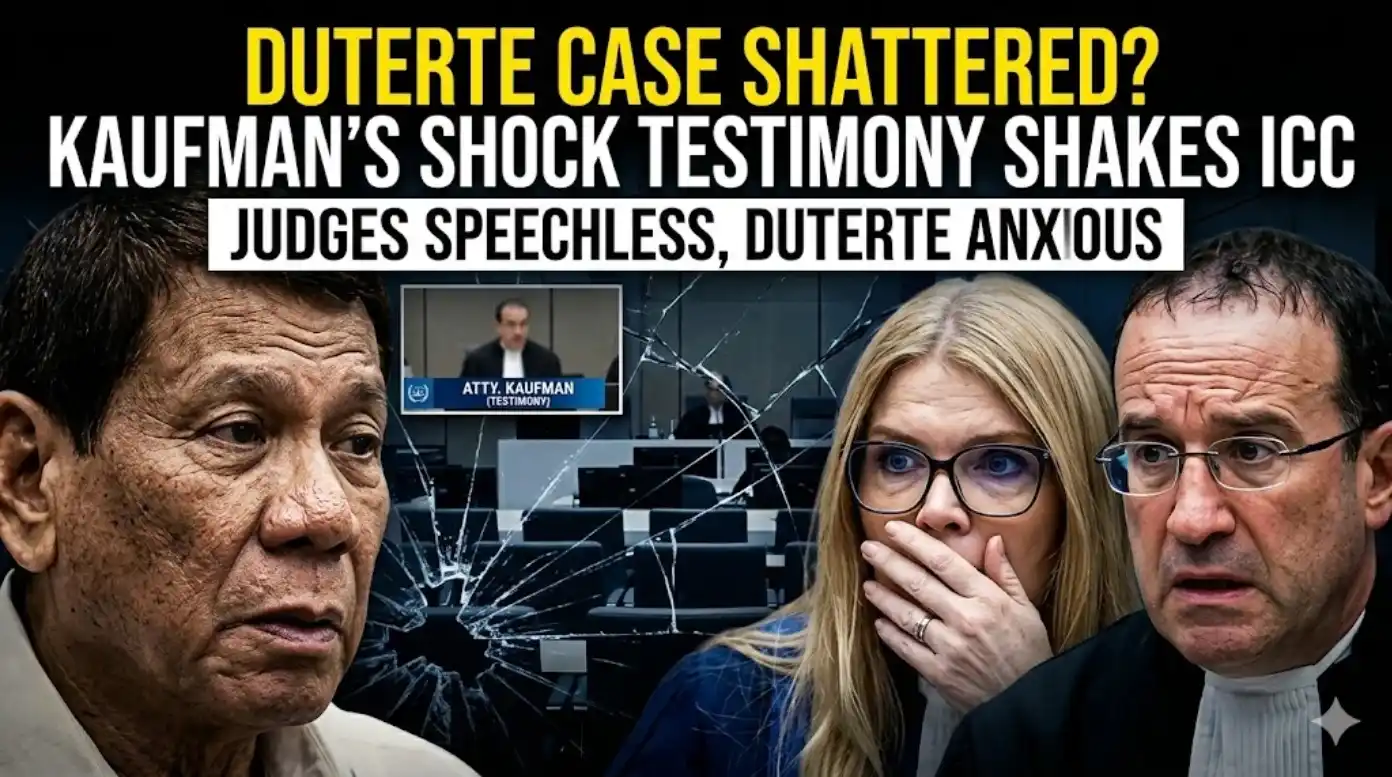
The International Criminal Court (ICC) has reached a pivotal juncture in the confirmation of charges hearing against former Philippine President Rodrigo Duterte. As the proceedings entered their third day, the legal atmosphere in The Hague turned increasingly technical and contentious. The defense team, led by high-profile international lawyer Nicholas Kaufman, has put forward a cornerstone argument that seeks to redefine the linguistic and operational framework of the Duterte administration’s “War on Drugs.” Central to this defense is the interpretation of the word “neutralize”—a term that has appeared in thousands of police reports and official memoranda throughout the anti-narcotics campaign.
According to the defense’s manifestation before the Pre-Trial Chamber, the term “neutralization” has been weaponized by the prosecution to imply a state-sanctioned policy of extrajudicial killing. However, Kaufman argued that within the context of Philippine law enforcement and standard operating procedures, to “neutralize” a suspect simply means to disable their ability to commit a crime or to resist arrest. The defense maintains that this could include the service of a warrant, a peaceful surrender, or the use of non-lethal force to subdue a violent individual. By reframing this terminology, the defense aims to dismantle the prosecution’s claim that there was a “common plan” or an explicit “state policy” to systematically eliminate suspected drug users and pushers.
The Linguistic Battleground of Day 3
The third day of the hearing was marked by intense scrutiny of the “Davao Model,” a blueprint for the national drug war that the prosecution claims originated during Duterte’s tenure as Mayor of Davao City. The prosecution’s evidence relies heavily on the testimony of former insiders who allege that “neutralization” was a coded instruction for execution. In response, the defense presented a series of Philippine National Police (PNP) manuals and administrative circulars. They argued that these documents define neutralization as a broad category of police intervention that prioritizes the life of the suspect unless the officer’s life is in imminent danger.
The defense emphasized that if the court accepts the prosecution’s narrow definition of the word, it would effectively criminalize standard police work conducted in any sovereign nation. They contended that the “War on Drugs” was a legitimate exercise of the state’s police power to protect the public from the scourge of illegal narcotics, which Duterte frequently described as a threat to national security. The argument suggests that any deaths that occurred were “incidental” to lawful operations—the result of suspects fighting back (the “nanlaban” narrative)—rather than a pre-meditated objective of the mission.
Challenges to Witness Credibility
Beyond the linguistic defense, Day 3 also saw a concerted effort to undermine the witnesses presented by the ICC Prosecution. The defense labeled these witnesses as “disgruntled former subordinates” and “individuals with personal vendettas” against the former President. Specifically, they questioned the motives of those who claimed to have been part of the so-called “Davao Death Squad.” The defense argued that these individuals are seeking immunity or international protection in exchange for fabricated testimonies that link Duterte directly to specific kill orders.
The tense phase of the hearing involves the Chamber’s examination of whether these testimonies are corroborated by physical or documentary evidence. The defense pointed out that many of the prosecution’s claims rely on hearsay or secondary accounts of meetings that allegedly took place decades ago. By highlighting these gaps, the defense is attempting to prevent the charges from being confirmed, arguing that the “threshold of evidence” required for a full trial has not been met.
A Matter of Sovereignty and Jurisdiction
While the hearing focuses on the charges of crimes against humanity, the underlying theme remains the Philippine government’s challenge to the ICC’s jurisdiction. Although the defense participated in the hearing to address the charges, they did so under a “special appearance” that continues to reserve the right to challenge the court’s authority. The defense reiterated that the Philippine justice system is functioning and capable of investigating these matters internally, a principle known as complementarity.
The most tense moments occurred when the prosecution presented data on the scale of the killings, which they estimate to be between 12,000 and 30,000 victims. The defense countered by citing official government figures, which are significantly lower, and argued that the prosecution’s data is inflated by including homicides that were personal or criminal in nature and unrelated to the state’s anti-drug operations. The defense’s strategy is to isolate the former President from the individual actions of rogue police officers, asserting that any abuses were “isolated incidents” and not part of a coordinated government policy.
The Global Impact of the Proceedings
The proceedings are being watched closely by human rights organizations and international legal experts. The outcome of this confirmation hearing will set a precedent for how the ICC handles cases involving democratically elected leaders who implement aggressive internal security policies. If the judges accept the defense’s explanation of “neutralization,” it could significantly weaken the prosecution’s case. Conversely, if the judges find that the term was a clear euphemism for murder within the context of the evidence, the path to a full trial will be cleared.
As the hearing concludes its most critical phase, the Pre-Trial Chamber will now take the presented arguments and evidence under advisement. A decision on whether to confirm the charges against Rodrigo Duterte is expected in the coming months. For the families of the victims, this phase represents the closest they have come to an international accounting of the violence that defined a six-year presidency. For the defense, it is a battle to protect the legacy of a leader who remains popular among a large segment of the Philippine population.
The Road Ahead for the ICC Case
If the charges are confirmed, the ICC will move toward an actual trial, which would involve the issuance of an arrest warrant or a summons to appear. However, given that the Philippines has withdrawn from the Rome Statute and the current administration has expressed a lack of intent to cooperate with an arrest, the legal path remains fraught with diplomatic and political obstacles. The defense’s focus on the definition of “neutralization” is a tactical move designed to provide the judges with a “reasonable doubt” before the case even reaches the trial stage.
The tension in the courtroom reflects the high stakes of the situation. Rodrigo Duterte, even in his post-presidency, remains a polarizing figure. His supporters see the ICC as an instrument of Western interference, while his critics see it as the only avenue for justice in a system where domestic remedies have supposedly failed. The Day 3 arguments have laid bare the fundamental disagreement: was the drug war a lawful police action or a systematic campaign of state-sponsored violence? The answer, according to the ICC judges, will depend largely on how they interpret the language of command and the intent behind the word “neutralization.”
Frequently Asked Questions (FAQs)
What does the defense mean by “neutralization”? The defense argues that “neutralization” is a standard police term used to describe disabling a threat, which can include non-lethal methods like arrest or surrender, rather than an order to kill.
Why is Day 3 of the hearing considered the “most tense phase”? This phase involves the direct clashing of evidence regarding the “Davao Model” and the credibility of insider witnesses who claim the former President ordered the killings.
Does the ICC have jurisdiction over Rodrigo Duterte? This is a point of contention. The ICC asserts jurisdiction because the alleged crimes occurred while the Philippines was still a member of the Rome Statute. The defense and the Philippine government argue the court no longer has authority.
What happens if the ICC confirms the charges? If the charges are confirmed, the case will proceed to trial. The court may issue an arrest warrant, though enforcement depends on the cooperation of member states and the Philippine government.
Who is leading the defense for Rodrigo Duterte? The defense is led by Nicholas Kaufman, an experienced international criminal lawyer who has represented various high-profile clients in international tribunals.
How many victims are involved in the ICC investigation? The ICC prosecution estimates the death toll to be between 12,000 and 30,000, while the defense argues these numbers are unverified and include deaths unrelated to the drug war.
What is the “Davao Model”? It is the prosecution’s theory that the national “War on Drugs” was a scaled-up version of a system used in Davao City, where Duterte served as mayor, involving alleged death squads and a reward system for killings.