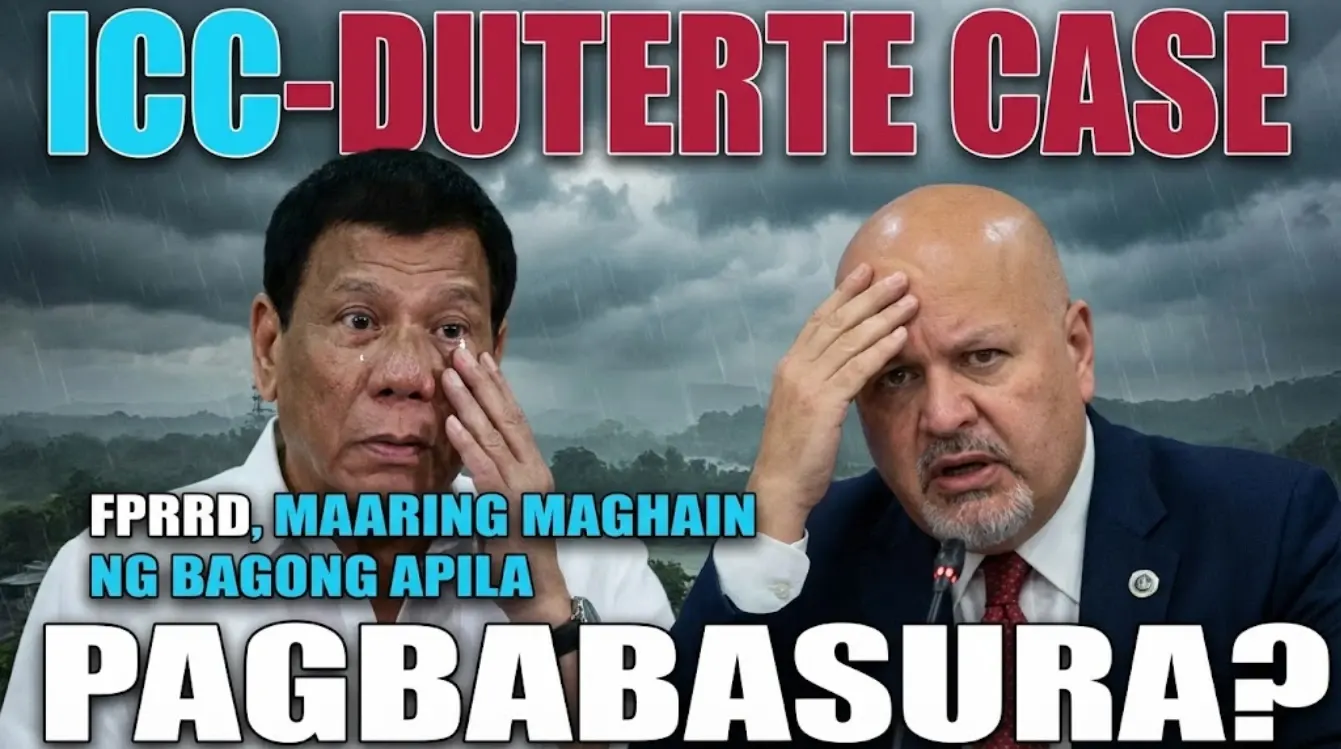
The atmosphere in The Hague is described by international observers as “tensioned” as the International Criminal Court (ICC) enters one of the most critical phases in its recent history. At the center of this legal storm is Presiding Judge Julia Antoanella Motoc, who is currently leading the Pre-Trial Chamber I in a meticulous review of arguments and evidence regarding the case against former Philippine President Rodrigo Duterte.
As the calendar inches closer to the rescheduled hearing on February 23, 2026, the silence from the courtroom is deafening—a signal, experts say, that the Chamber is deeply immersed in the “voluminous” data presented by both the prosecution and the defense. For the Filipino public, split between loyal supporters and demanders of justice, the waiting game has reached a fever pitch.
The Weight on Judge Motoc’s Shoulders
Judge Julia Motoc, a Romanian legal scholar with a formidable reputation in human rights law, faces the monumental task of sifting through thousands of pages of documentation. Appointed to the ICC in December 2023, Motoc is no stranger to high-pressure environments, having served on the European Court of Human Rights and the Constitutional Court of Romania.
Sources close to the proceedings emphasize that the current pause is not a delay but a procedural necessity. “Any decision by the ICC, especially one involving a former head of state, needs time to review and compare arguments,” notes a legal analyst based in the Netherlands. “Judge Motoc and her colleagues, Judges Reine Alapini-Gansou and Socorro Flores Liera, are cross-referencing witness testimonies against the defense’s recent submissions regarding the jurisdiction and the accused’s health.”
This review period is critical. The defense, led by British-Israeli lawyer Nicholas Kaufman, has vigorously argued that the court lacks jurisdiction and that the 80-year-old former president is unfit to stand trial due to “debilitating” health issues—a claim the judges rejected on January 26, ruling that Duterte is indeed “fit to stand trial.” Now, the focus shifts entirely to the strength of the evidence itself.
A Mountain of Evidence: The “War on Drugs” Files
What exactly is Judge Motoc reviewing? The prosecution’s case is built on a decade of documentation, spanning from Duterte’s time as Mayor of Davao City to his presidency.
The “Article 15” communication, which triggered the investigation, alleges that state actors killed thousands of civilians under the guise of an anti-narcotics campaign. The files reportedly include:
-
Video Footage: Speeches where the former President allegedly incited violence against drug suspects.
-
Witness Affidavits: Testimonies from self-confessed members of the alleged “Davao Death Squad” (DDS) and families of victims (EJKs).
-
Police Records: Documents that contradict the official “nanlaban” (fought back) narrative used in police operations.
The defense, however, maintains that these are “political fabrications” orchestrated by opposition figures. They argue that the ICC has no business intervening in the Philippines’ domestic affairs, a sentiment echoed by the current administration in Manila during the early stages of the probe.
Political Tremors in Manila
While the legal battle rages in Europe, the political aftershocks are being felt violently in the Philippines. The “Unity” government that brought President Ferdinand “Bongbong” Marcos Jr. and Vice President Sara Duterte to power has effectively fractured.
The arrest of the elder Duterte in March 2025 was a watershed moment. Since then, the political landscape has shifted into a proxy war. Vice President Sara Duterte has been vocal in her defense of her father, traveling to The Hague and condemning the proceedings as a “colonial interference.”
Meanwhile, President Marcos Jr. finds himself walking a diplomatic tightrope. While he initially maintained a stance of non-cooperation, his administration’s refusal to block the ICC warrant execution in 2025 was seen by the Duterte camp as a betrayal. This “passive cooperation” allowed Interpol to execute the Red Notice, leading to the historic arrest at Ninoy Aquino International Airport.
Celebrity and Senatorial Reactions
The tension isn’t limited to the executive branch. In the Senate, the “celebrity” politicians who were the architects of the drug war are feeling the heat.
Senator Ronald “Bato” dela Rosa, the former police chief who implemented “Oplan Tokhang,” has largely vanished from the public eye. Reports suggest he is in an “undisclosed location” within the Philippines, declaring he is “waiting for justice” but refusing to surrender voluntarily. His name, along with others, is redacted in ICC documents, but he remains a primary person of interest.
On the other side of the spectrum, celebrities and activists who opposed the drug war are hailing the progress. Figures who were previously red-tagged are now using their platforms to explain the significance of Judge Motoc’s review to the masses. “This isn’t about vengeance,” wrote a prominent actress and activist on social media. “It’s about proving that the rule of law exists, even for the powerful.”
The “Health” Defense: A Failed Strategy?
A significant portion of Judge Motoc’s recent review involved the medical arguments presented by the defense. The defense team filed motions claiming that Duterte’s age and “frail” condition made it impossible for him to participate meaningfully in his defense.
The Chamber, however, employed independent medical experts—geriatric neurologists and psychiatrists—to assess the former president. Their findings, released in late January 2026, concluded that while he has age-related ailments, his cognitive faculties remain sharp enough to understand the charges and instruct his counsel.
This ruling was a major blow to the defense’s strategy, clearing the path for the upcoming confirmation of charges. It effectively removed the last procedural hurdle before the court could address the substantive crimes.
What Happens on February 23?
The upcoming hearing is not the trial itself, but a “Confirmation of Charges” hearing. This is a pre-trial stage where Judge Motoc and her chamber must decide if there is “sufficient evidence” to commit the case to trial.
Observers warn that the public should manage their expectations. The review process is slow by design. Judge Motoc must ensure that the rights of the accused are protected just as vigorously as the rights of the victims. A hasty decision could lead to a mistrial or a successful appeal—something the prosecution is desperate to avoid given the high profile of the accused.
If the charges are confirmed, Duterte will face a full trial, a process that could take years. If they are not, he could theoretically be released, though this is considered unlikely given the weight of the evidence already accepted by the Pre-Trial Chamber.
Global Implications
The world is watching Judge Motoc. This case is seen as a litmus test for the ICC’s relevance in Asia. A successful prosecution would send a powerful message to authoritarian leaders globally. Conversely, a collapse of the case due to procedural errors or insufficient evidence would deal a devastating blow to the Court’s credibility.
For now, the “International Legal Situation” remains tensioned. The lights are burning late in The Hague as Judge Motoc compares the arguments. In Manila, the country holds its breath. The decision is looming, and its impact will define the Philippine narrative for generations to come.
Frequently Asked Questions (FAQs)
Q: Who is Judge Julia Motoc? A: Judge Iulia Antoanella Motoc is a Romanian judge at the International Criminal Court (ICC). She is the Presiding Judge of the Pre-Trial Chamber I, which handles the case against Rodrigo Duterte. She has previously served on the European Court of Human Rights and the Constitutional Court of Romania.
Q: Why is the ICC decision taking so long? A: The ICC follows strict procedural rules to ensures due process. Judge Motoc and her chamber must review thousands of pages of evidence, witness testimonies, and defense arguments. They also had to resolve complex preliminary issues, such as the jurisdiction challenge and the assessment of Duterte’s medical fitness to stand trial.
Q: Is Rodrigo Duterte currently in jail? A: Yes. Former President Duterte is currently in the custody of the ICC at the United Nations Detention Unit in The Hague, Netherlands. He was arrested in March 2025.
Q: What will happen on February 23, 2026? A: The ICC has scheduled a hearing for this date. It is expected to be part of the “Confirmation of Charges” phase, where the judges will determine if the evidence is strong enough to proceed to a full trial.
Q: Can the Philippine government stop the trial? A: No. Since the Philippines has withdrawn from the Rome Statute, the government argues it has no jurisdiction. However, the ICC ruled that it retains jurisdiction over crimes committed while the Philippines was a member (2011–2019). The current Marcos administration has stated it will not interfere with the ICC’s independent processes.