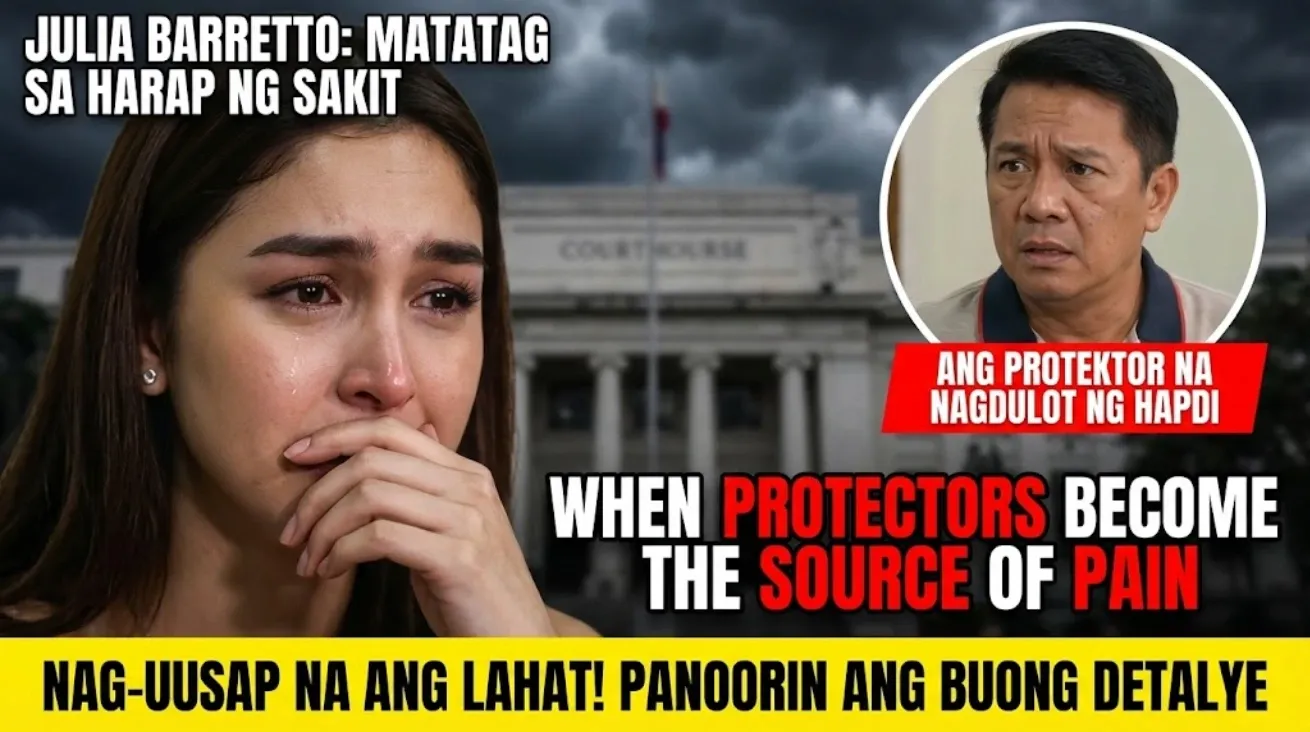
MANILA — In the Philippines, the family is often revered as the ultimate sanctuary. It is the one place where a child, no matter how old, expects to find safety, acceptance, and unconditional love. But a shifting narrative in the local entertainment and political landscape is challenging this age-old ideal. The painful reality for many—epitomized by the highly publicized struggles of actress Julia Barretto—is that sometimes, the very people tasked with protecting us are the ones who inflict the deepest scars.
The sentiment currently echoing across social media platforms is both heartbreaking and revelatory: “The person who should be protecting our children is the one who will be the source of their suffering.”
This statement is not just a viral quote; it is a summary of the tumultuous, years-long battle between the Barretto children and their estranged father, comedian Dennis Padilla. It serves as a grim warning about the consequences of toxic parenting and the breaking point of utang na loob (debt of gratitude) in Filipino culture.
The Spark: A Cycle of Public Shaming
For years, the conflict between Dennis Padilla and his children—Julia, Claudia, and Leon—has played out like a tragic soap opera, but with real-world psychological consequences. The tension often flares up during what should be happy occasions: Father’s Day, birthdays, or weddings.
The most recent waves of controversy stemmed from Padilla’s tendency to take his grievances to social media. When his children fail to greet him publicly or when he feels slighted, the actor often posts deleted-then-reposted captions that paint his children as ungrateful. This pattern of “public shaming” was called out by his only son, Leon Barretto, in a brave open letter that resonated with millions of Filipino netizens.
Leon’s plea was simple yet devastating: he asked his father to stop resorting to public humiliation when things didn’t go his way. He articulated a pain that many silent children carry—the trauma of walking on eggshells, fearing that a private lapse in communication will result in a public scandal orchestrated by a parent.
The “Visitor” Treatment and the Wedding Fallout
The rift deepened during the wedding of Claudia Barretto to her longtime partner. Padilla publicly lamented being treated like a “visitor” at his own daughter’s wedding, complaining about not being part of the entourage or walking her down the aisle.
While his sentiments might garner sympathy in a traditional context, the backlash was swift when the other side of the story emerged. Reports and statements from the family suggested that his presence was accommodated despite the estrangement, yet his demand for the spotlight overshadowed the bride’s peace.
This incident highlighted a critical disconnect: a parent demanding the honors of the title without having fulfilled the responsibilities of the role. It raised the question that Julia herself has posed in interviews: valid relationships are built on trust and protection, not just biology.
Julia Stands Firm: “I Need to Protect My Peace”
Julia Barretto’s handling of this family crisis has become a case study in setting boundaries. In her candid interview with broadcaster Karen Davila, Julia admitted to a heartbreaking truth: she is tired.
“I just need more love from him, more protection,” she said, her voice steady but laced with the weight of years of conflict. “I just feel like he should be my number one protector, and that’s not really what I’m getting from him right now.”
Her refusal to force a reconciliation for the sake of appearances marks a significant departure from traditional showbiz answers. In the past, celebrities would often offer platitudes about “family is family.” Julia’s stance—that forgiveness does not necessitate access—is empowering a generation of Filipinos to prioritize their mental health. She acknowledged that the cycle of “making up and getting hurt again” had to end for her own survival.
The Mother’s Defense: Allegations of Abuse
The narrative took a darker, more political turn when Marjorie Barretto, Julia’s mother, broke her silence to defend her children. Her revelations moved the conversation from “celebrity gossip” to “violence against women and children.”
Marjorie alleged instances of physical abuse during their marriage, including a shocking claim that Padilla had once struck her so hard she lost an eardrum. But perhaps more damaging to his current plea for connection was her description of the children’s trauma. She revealed that the kids would physically shake in fear at the sound of their father’s voice or when his name appeared on their phones.
“You should be the number one protector of your children,” Marjorie stated, echoing the viral sentiment. “At least just don’t destroy them.”
This moves the issue into the realm of R.A. 9262 (Anti-Violence Against Women and Their Children Act) and R.A. 7610, laws designed to shield families from not just physical but psychological abuse. While no new cases are currently being litigated in the public eye, the discussion highlights how the fear of a parent can be as damaging as physical separation.
The Death of “Utang na Loob” in Toxic Dynamics
The Philippines is a country built on filial piety. The concept of utang na loob dictates that children owe their parents a lifetime of gratitude simply for giving them life. For decades, this cultural value has silenced victims of parental abuse, forcing them to endure toxicity to avoid being branded as walang hiya (shameless).
However, the public reaction to the Barretto saga indicates a massive cultural shift. Netizens, traditionally quick to judge “ungrateful” children, have overwhelmingly sided with Julia, Leon, and Claudia. The comments sections of news portals are filled with stories of ordinary Filipinos who have cut ties with toxic relatives.
The consensus is clear: Respect is earned, not inherited. The “Protector” title is not automatic; it is a role that must be performed every day. When a protector becomes a source of suffering—through public humiliation, emotional manipulation, or past abuse—the child has every moral right to build a wall rather than a bridge.
Consequences of the “Tormentor” Parent
The tragedy of Dennis Padilla’s situation serves as a warning to parents everywhere. By weaponizing his children’s silence and using public pressure to force a relationship, he has achieved the exact opposite of what he claims to want.
Instead of intimacy, he has created distance. Instead of respect, he has generated fear. And instead of being remembered as a father who protected his children from the world, he is risking a legacy where his children must protect themselves from him.
Julia Barretto stands firm not out of spite, but out of necessity. Her journey underscores a universal truth that is finally being embraced in the Philippines: A child’s duty to honor their parents ends where the parent’s duty to protect the child fails.
Frequently Asked Questions (FAQs)
1. What sparked the recent issue between Julia Barretto and Dennis Padilla? The conflict reignited after Dennis Padilla posted deleted comments on social media expressing disappointment over not being greeted on Father’s Day and feeling sidelined at his daughter Claudia’s wedding. This led to his son, Leon, writing an open letter asking him to stop the public shaming.
2. What did Julia Barretto say about her father in her interview? In an interview with Karen Davila, Julia admitted she is not ready to forgive her father yet because she is “tired” of the cycle of pain. She stated she needs him to be her protector, but instead, she feels the need to protect her peace from him.
3. How does this relate to Filipino culture and “Utang na Loob”? The public support for the Barretto children signals a shift in Filipino values. While utang na loob (debt of gratitude) traditionally binds children to parents regardless of behavior, more Filipinos are now recognizing that toxic parenting justifies setting boundaries and that respect must be mutual.
4. What were Marjorie Barretto’s allegations against Dennis Padilla? Marjorie Barretto alleged that Dennis was physically abusive during their marriage, citing an incident where she lost an eardrum. She also claimed that their children are traumatized by his erratic behavior and “explosive temper,” causing them to fear his calls.
5. Are the Barretto children legally obligated to support their father? Under the Family Code of the Philippines, children are generally obliged to support their parents. However, in cases involving abuse or abandonment, the law can be complex. The current discourse focuses more on the moral and psychological boundaries rather than legal financial obligations.