In the constantly shifting landscape of Philippine politics, moments of confrontation often reveal deeper struggles beneath the surface. Recently, one such moment unfolded when Vice President Sara Duterte addressed the growing controversy surrounding a new name tied to the impeachment debate—Madriaga.
What began as another political accusation quickly transformed into a wider discussion about credibility, corruption allegations, government priorities, and the future direction of the country.
The Vice President’s remarks did not simply answer questions. They ignited a narrative that stretches from the halls of Congress to international legal forums and into the lives of ordinary Filipinos.
The Emergence of the “Madriaga” Controversy
At the center of the issue is a figure identified as Madriaga, whose testimony and claims have been linked to the latest impeachment discussions targeting the Vice President.
According to Duterte, her legal team filed a perjury case against Madriaga after concluding that his statements were fabricated.
Her reasoning, she said, was straightforward.
She would not allow the accusations against her to mirror the earlier international case filed before the International Criminal Court against her father, former President Rodrigo Duterte.
The Vice President pointed out that in the ICC case, the earliest testimonies submitted by opposition figures such as Antonio Trillanes IV relied heavily on controversial witnesses like Edgar Matobato and Arturo Lascañas.
Those witnesses were allowed to testify publicly in Philippine hearings and media interviews. According to Duterte, their credibility was rarely challenged in the way her camp is now challenging Madriaga.
For her, the difference lies in the evidence.
“We filed a perjury case,” she explained, “because everything he says is untrue.”
The legal move signals a shift from defensive politics to a more aggressive strategy: confronting accusations not only politically, but in court.
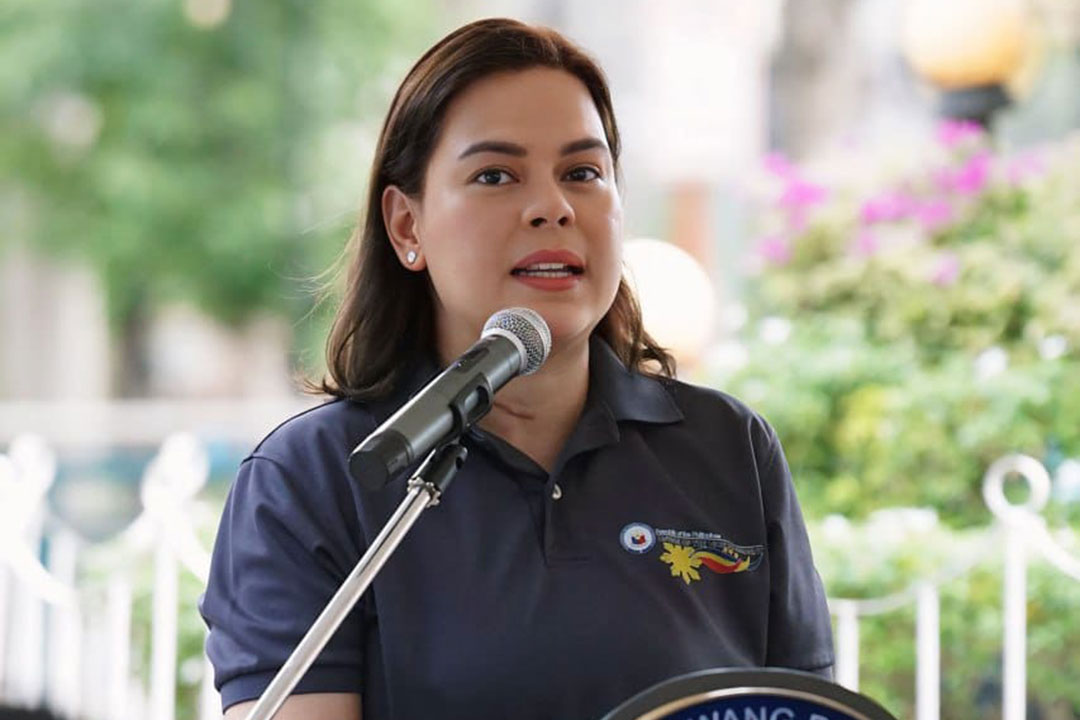
A Narrative Built After the First Impeachment Attempt
The Vice President also highlighted a timeline that she believes reveals inconsistencies in the accusations against her.
She claims that Madriaga’s affidavit surfaced only after the Supreme Court dismissed the earlier impeachment complaint filed in 2025.
During that first attempt, critics lacked a whistleblower who could claim firsthand knowledge of wrongdoing.
Instead, Duterte argues, they relied primarily on documents and political arguments.
That changed when Madriaga entered the story.
“He suddenly became the missing link,” she said.
According to her interpretation, the narrative evolved rapidly afterward. News reports began describing unnamed individuals using terms such as “bagman,” “aide,” or “civilian intelligence agent”—phrases she claims do not appear in Madriaga’s original affidavit.
For Duterte’s supporters, this suggests a political storyline developing outside the actual evidence.
For critics, however, it reflects a growing body of allegations that demand further investigation.
Claims of a Double Standard
A major theme of Duterte’s remarks was what she described as a double standard in the government’s handling of corruption allegations.
She pointed to a separate controversy involving claims that hundreds of billions of pesos in funds—reportedly reaching ₱805 billion—were distributed to lawmakers.
In that case, according to Duterte, multiple individuals have come forward with testimonies.
Some of them are reportedly former military or security personnel who claim they personally delivered money to political figures.
“These are ordinary citizens,” Duterte said. “They know they could be sued, harassed, or even harmed. Yet they still spoke.”
For her, this willingness to testify without clear political gain should make the allegations impossible to ignore.
However, she argued that the administration has remained largely silent about these accusations.
Instead of investigating the substance of the claims, she says critics focus on attacking the character of the whistleblowers.
“They attack the person,” she said, “but they never address what the person actually said.”
Political Rivalries and the Administration’s Response
The remarks also contained indirect criticisms of the administration of President Ferdinand Marcos Jr., often referred to in the Philippines as BBM.
Duterte suggested that the current leadership is not seriously pursuing anti-corruption efforts because the allegations could implicate powerful political figures.
She specifically mentioned tensions with House leadership, including Speaker Martin Romualdez, a cousin of the president.
In Duterte’s telling, the impeachment process itself has become a political weapon rather than a genuine accountability mechanism.
For the administration’s allies, however, the investigation into confidential funds and other issues is a legitimate exercise of congressional oversight.
The divide reflects a deeper political split between two powerful factions that once campaigned together under the banner of “unity.”
The Broader Context: Impeachment and Political Strategy
Impeachment is a rare but powerful constitutional process in the Philippines, capable of removing high-ranking officials from office.
While the Vice President insisted she is ready to face the proceedings if necessary, she emphasized that her legal defense team is fully prepared.
“I have confidence in the lawyers who are handling my defense,” she said.
Her camp has been methodically preparing documents, affidavits, and legal arguments to challenge the accusations.
At the same time, Duterte suggested that the impeachment push is part of a long-term political strategy to damage her reputation ahead of future elections.
For nearly three years, she said, critics have worked to undermine her credibility.
Such claims resonate with her supporters, who view the impeachment drive as politically motivated.
Yet for her opponents, accountability for public funds and transparency in government remain legitimate concerns.
A Defense Built on Her Record
Throughout the discussion, Duterte repeatedly pointed to her past leadership roles as evidence of her integrity and competence.
She highlighted her tenure as mayor of Davao City, where she served for several years before becoming Vice President.
Under her administration, she said, the city received more than 200 awards and recognitions for governance and development initiatives.
By the time she stepped down, she noted, Davao ranked among the most competitive and wealthiest cities in the Philippines, with no outstanding debt.
She also defended her time as secretary of the Department of Education, emphasizing reforms such as the return of students to in-person classes after pandemic disruptions.
According to Duterte, the department achieved a clean audit opinion from the Commission on Audit, something she said had not been accomplished in previous administrations.
Rethinking Education in a Digital Era
One of the most forward-looking parts of Duterte’s remarks focused on the future of education in the Philippines.
She argued that the country must rethink the traditional classroom model.
“For decades,” she said, “the mindset has been that learning happens only in a classroom.”
But technological advancements have changed that.
Digital education, remote learning systems, and hybrid teaching methods can expand access to education beyond physical classrooms.
The COVID-19 pandemic demonstrated that learning can occur in many environments.
For Duterte, the goal should not simply be building more classrooms, but ensuring that students actually learn.
“What matters,” she said, “is not where a child sits every day, but what the child learns.”
OFWs and the Reality of Economic Struggles
The conversation also shifted to the challenges facing Overseas Filipino Workers (OFWs), particularly those living in conflict-affected regions of the Middle East.
Duterte said her office has been monitoring the situation and is ready to assist Filipinos who wish to return home.
However, many OFWs reportedly told her office they do not want to return to the Philippines because they fear there are no jobs waiting for them.
For Duterte, this reflects a deeper economic problem.
Many Filipinos, she said, wake up each day not knowing how they will afford food or support their families.
Others struggle to pay for medical treatments such as chemotherapy.
“It’s painful,” she said, “that while our people face these problems, politics continues to dominate the national conversation.”
Another controversy discussed during the interview involved alleged text messages detailing the use of flood-control funds during elections.
Duterte hinted that more evidence exists but has not yet been released publicly.
The reason, she suggested, is fear that the administration would dismiss or suppress the information.
Whistleblowers, she claimed, worry about harassment, lawsuits, or threats if they come forward.
This climate of fear, she said, discourages transparency.
The Question of Wealth and Transparency
Critics have also raised questions about Duterte’s financial disclosures, particularly regarding alleged unexplained wealth.
She rejected the accusations outright.
Her assets, she said, have grown over 16 years, and every increase can be explained through legitimate income or transactions.
“If you say something is unexplained,” she said, “then show exactly where.”
She challenged her critics to identify specific properties or financial entries that lack documentation.
Once identified, she promised, she would provide the necessary explanations and records.
Preparing for Political Battles Ahead
Despite the controversies surrounding her, Duterte maintained a confident tone about the future.
If another impeachment complaint is filed, she said, she is ready to face it.
At the same time, she acknowledged that the relentless criticism could affect public trust.
When asked about survey ratings, she said she remains skeptical of polling results.
Surveys, she suggested, can be manipulated or influenced by political interests.
Instead, she believes the real measure of public support appears during her visits to provinces, where crowds gather to hear her speak.
Courage, Compassion, and the Legacy of a Political Era
Near the end of her remarks, Duterte returned to a theme she says defines her political vision: “courage and compassion.”
These values, she argued, were central to the administration of her father from 2016 to 2022.
They also formed part of the campaign message she once shared with President Marcos during their “unity” platform.
Today, she believes those principles have been lost.
Her goal, she said, is to restore them.
The phrase has now become the slogan of her public engagements and political messaging.
A Nation Watching Closely
The unfolding dispute surrounding Madriaga, impeachment efforts, and corruption allegations highlights the intense political rivalries shaping the Philippines today.
For some observers, the situation reflects a government struggling with internal divisions.
For others, it represents a healthy—if messy—exercise of democratic accountability.
What remains clear is that the stakes are high.
The conflict involves powerful political families, competing narratives, and questions about the direction of governance in a nation of more than 110 million people.
As investigations continue and political tensions rise, the Philippine public watches closely.
Because beyond the legal battles and political drama lies a deeper question:
Who will ultimately earn the trust of the Filipino people—and shape the country’s future?