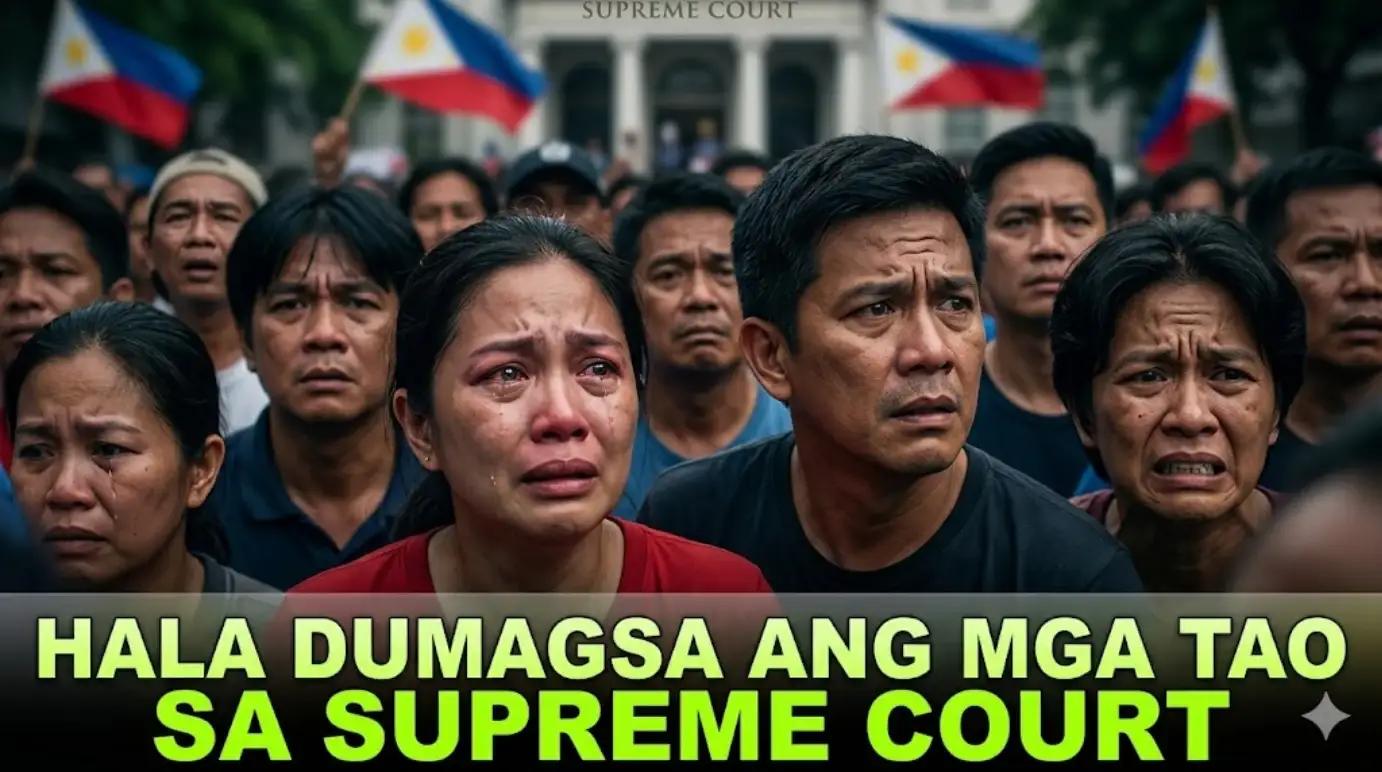
The Philippine judicial landscape is currently facing one of its most significant challenges in recent history as a massive legal movement converges on the Supreme Court. In a development that has captured the attention of both local and international observers, formal petitions and a substantial volume of signatures have been submitted to the High Tribunal, specifically asking the justices to rule on the validity and implementation of arrest petitions involving former President Rodrigo Duterte. This move comes at a critical juncture in the country’s legal history, marking a definitive moment where domestic law and international jurisdictional claims intersect.
For several months, the legal status of the former president has been a subject of intense speculation and heated debate. The submission of these petitions to the Supreme Court represents a formalization of the public’s desire for judicial clarity. The documents filed argue that there are fundamental constitutional questions that only the highest court in the land can resolve. Specifically, the petitions seek a definitive ruling on whether the Philippine government is obligated to serve or recognize arrest warrants issued by international bodies, or if the domestic judicial system maintains absolute sovereignty over its citizens, especially a former head of state.
The atmosphere surrounding the Supreme Court in Padre Faura has been charged with anticipation. Supporters of the former president, organized under various civic groups and legal advocacy wings, have gathered to witness what they describe as a “defense of the Constitution.” The signatures accompanying the legal filings are intended to demonstrate to the Court that the issue is not merely a private legal matter but one of immense public interest. The petitioners argue that the lack of a clear ruling from the Supreme Court has created a vacuum of uncertainty that affects the stability of the nation’s legal framework.
At the heart of the legal argument is the principle of “complementarity.” Under international law, particularly the Rome Statute to which the Philippines was formerly a signatory, international courts are only supposed to intervene when a national justice system is “unwilling or unable” to prosecute. The petitions submitted to the Supreme Court assert that the Philippine judicial system is both willing and fully functional. By asking the Court to rule on the arrest petitions, the filers are essentially asking the justices to affirm the competence and independence of the Philippine courts against external interventions.
Furthermore, the petitions highlight specific procedural concerns regarding how an arrest would be carried out. There are questions regarding the role of the Philippine National Police and the Department of Justice in executing orders that may conflict with existing domestic laws. The Supreme Court is being asked to provide a roadmap or a “status quo” order to ensure that no actions are taken that would violate the due process rights of the former president. The legal teams involved emphasize that this is not about evading justice, but about ensuring that justice is administered within the bounds of the Philippine Constitution.
The impact of this case extends far beyond the personality of Rodrigo Duterte. It touches upon the very definition of Philippine sovereignty in the 21st century. If the Supreme Court chooses to take up these petitions, its ruling will dictate how the Philippines interacts with global legal entities for decades to come. Legal scholars suggest that the Court will likely look at the timing of the Philippines’ withdrawal from the International Criminal Court and whether obligations incurred during the period of membership still hold weight under current domestic statutes.
As the documents are processed by the Clerk of Court, the executive branch remains in a delicate position. While the current administration has expressed various stances on international cooperation, a definitive ruling from the Supreme Court would provide the necessary legal cover for any executive action—or inaction. The petitioners are hopeful that the Court will act with urgency, given the high-profile nature of the individual involved and the potential for social unrest should the legal ambiguity persist.
In the coming weeks, the Supreme Court is expected to deliberate on whether to consolidate these new petitions with existing cases related to the same subject matter. The “Supreme Court asked to rule on Rodrigo Duterte’s arrest petitions” headline is more than just a news update; it is a signal of a major shift in the legal strategy of the Duterte camp, moving the battleground from the court of public opinion directly into the halls of the judiciary.
As the nation waits, the focus remains on the “Gods of Faura.” Their interpretation of the law will determine the next steps in this long-running legal saga. Whether they choose to issue a Temporary Restraining Order or move directly to oral arguments, the eyes of the world are on the Philippines. The resolution of these arrest petitions will serve as a landmark case in Philippine jurisprudence, testing the strength of the country’s institutions and its commitment to its own sovereign laws.
The sheer volume of the submission—reportedly consisting of thousands of pages of signatures and legal memoranda—underscores the complexity of the case. It involves not just criminal law, but constitutional law, international treaty law, and administrative law. The petitioners remain steadfast in their belief that the Supreme Court is the final arbiter of truth and justice in the Philippines, and they are prepared to wait for a thorough and fair deliberation.
Frequently Asked Questions (FAQs)
What is the main objective of the petitions submitted to the Supreme Court? The primary goal is to seek a definitive judicial ruling on the legality and enforceability of arrest petitions or warrants against former President Rodrigo Duterte, specifically regarding whether domestic or international jurisdiction takes precedence.
Why were signatures included in the submission? The signatures are intended to show the Supreme Court that the petitions represent a significant matter of public interest and that a large portion of the constituency is calling for a resolution to the legal uncertainty surrounding the former president.
Does this ruling affect the International Criminal Court (ICC) proceedings? While the Supreme Court is a domestic body, its ruling will dictate how the Philippine government responds to ICC requests. A ruling asserting domestic sovereignty could effectively block the local enforcement of international arrest orders.
What happens if the Supreme Court refuses to rule on the petitions? If the Court declines to act, the legal ambiguity remains, potentially leaving the decision to the executive branch. However, given the constitutional questions involved, most legal experts expect the Court to eventually provide some form of guidance or ruling.
Who are the primary petitioners in this case? The petitions were submitted by a coalition of legal advocates, former government officials, and civic organizations who support the former president and advocate for the protection of Philippine judicial independence.
How long will it take for the Supreme Court to reach a decision? There is no fixed timeline for Supreme Court deliberations. Given the complexity and the high-profile nature of the case, it could take several months or even longer if the Court decides to hold oral arguments and solicit comments from various government agencies.