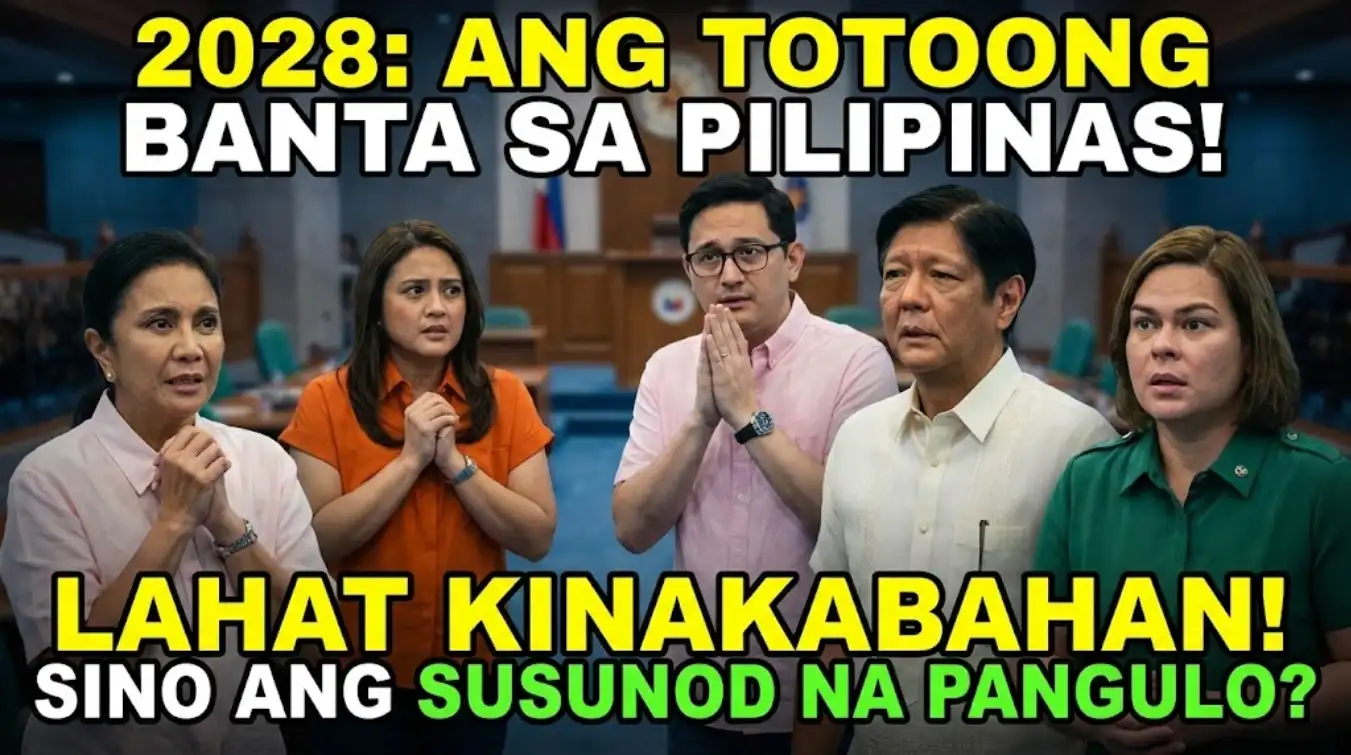
The Philippine political arena is no stranger to plot twists, but the latest rumor circulating in digital corridors and coffee shops alike has managed to stun even the most seasoned observers. The speculation? A potential “super alliance” between President Ferdinand “Bongbong” Marcos Jr. (PBBM) and his former arch-rival, former Vice President Leni Robredo. Dubbed by netizens as the new “UniTeam 2028,” this hypothetical partnership has ignited a firestorm of debate, confusion, and cautious hope across the archipelago.
As the country inches closer to the midterm elections, the mere suggestion of a Marcos-Robredo ticket highlights the volatile and rapidly shifting nature of Philippine politics. What was once an impossible scenario—the merging of the “Solid North” and the “Pink Movement”—is now being floated as a strategic necessity to counter emerging political threats. This article delves into the origins of this explosive rumor, the political mechanics that might drive it, and the profound impact it is having on the electorate.
The Spark: A Strategic Proposal
The rumor did not emerge from a vacuum. It gained traction following statements from political figures, most notably former Senator Antonio Trillanes IV, who suggested that a united front might be necessary for the 2028 presidential elections. The logic put forth is one of survival and common interest: with the fracturing of the original UniTeam (the alliance between Marcos and the Dutertes), the administration may need a powerful new partner to secure stability.
For political strategists, the math is intriguing. A coalition between the Marcos administration’s machinery and the passionate, volunteer-driven base of Robredo could theoretically create an unbeatable force. However, for the voters who lived through the divisive 2022 campaign, the proposition feels like a fever dream. The animosity between the two camps was the defining feature of the last election, making any talk of reconciliation a bitter pill for hardliners on both sides to swallow.
The “UniTeam” Breakup: Why New Alliances Are Forming
To understand why this rumor exists, one must look at the current state of the ruling coalition. The “UniTeam” that swept the 2022 elections—bringing together the Marcos and Duterte dynasties—has shown visible cracks. Disagreements over policy, confidential funds, and confidential maneuverings have led to a public cooling of relations between the Palace and the Vice President’s camp.
In Philippine politics, a vacuum in alliances is quickly filled. As the distance between Marcos and the Dutertes grows, political survival instincts kick in. The administration needs a broad coalition to maintain its legislative agenda and prepare for the 2028 succession. This vulnerability has opened the door for “unthinkable” options to be placed on the table. The “enemy of my enemy is my friend” adage is frequently cited by analysts attempting to rationalize why a Marcos-Robredo team-up is even being discussed.
The Reaction: Shock, Denial, and Curiosity
The public reaction to the “UniTeam 2028” rumor has been visceral. Social media platforms, the modern town squares of Filipino discourse, have exploded with commentary.
On one side, the “Kakampinks” (supporters of Robredo) have largely expressed skepticism and refusal. For many, the moral and ethical divides that defined their 2022 struggle are too wide to bridge. The idea of compromising with the very administration they campaigned against is seen by purists as a betrayal of their core values.
On the other side, Marcos loyalists are equally baffled. After years of framing the opposition as the primary obstacle to the country’s progress, embracing its figurehead would require a massive narrative shift.
Yet, there is a third group: the pragmatists. These voters, weary of endless polarization, are asking “What if?” What if the two strongest political forces in Luzon united to stabilize the country? Could such an alliance finally end the cycle of vengeance politics? While a minority view, it underscores a growing fatigue with partisan bickering.
The Official Stance: “Too Early”
Amidst the noise, Malacañang has stepped in to temper the speculation. Palace officials have officially denied that any such talks are taking place, categorizing the rumors as “premature.” The administration maintains that its sole focus is on governance, economic recovery, and addressing the immediate needs of the Filipino people, such as inflation and food security.
Similarly, camps close to former Vice President Robredo have indicated that she remains focused on her private advocacy work and her role in Naga. There has been no confirmation from her circle that she is entertaining a return to national politics in 2028, let alone in partnership with the President.
However, in the Philippines, a denial is often just a placeholder. History is replete with politicians who claimed they had no intention of running, only to file their candidacy at the eleventh hour. Consequently, the denials have done little to quell the rumor mill.
The Implications for 2028
If—and it is a massive if—such an alliance were to materialize, it would fundamentally reshape the electoral map.
-
Consolidation of Luzon: A Marcos-Robredo ticket would likely lock in the vast majority of votes in Luzon, the country’s most vote-rich island group, making it incredibly difficult for a challenger from the Visayas or Mindanao to compete.
-
The Opposition’s Dilemma: It would leave the traditional “opposition” leaderless, forcing a reconfiguration of checks and balances. Who would critique the government if the primary critic joined it?
-
The Duterte Factor: Such a move would almost certainly solidify a distinct opposition bloc led by the Duterte family, creating a clear new binary in Philippine politics: the “Center” (Marcos-Robredo) versus the “South” (Duterte).
Conclusion: A Test of Political Maturity?
Whether the “UniTeam 2028” rumor is a genuine trial balloon or merely a piece of political fan fiction, its existence serves a purpose. It forces Filipinos to confront the nature of their political system. Is it based on ideology and principles, or is it purely transactional?
For now, the rumor remains just that—a rumor. But as the 2025 midterms approach, every handshake, every photo op, and every statement between these two camps will be scrutinized for clues. The mere fact that we are asking “Is it possible?” proves that in Philippine politics, the only rule is that there are no rules.
Frequently Asked Questions (FAQs)
Q: Is there official confirmation of a Marcos-Robredo alliance? A: No. Malacañang has denied the rumors, calling them premature. Leni Robredo’s camp has not confirmed any plans for 2028.
Q: Who started the “UniTeam 2028” rumor? A: The speculation gained significant traction after former Senator Antonio Trillanes IV suggested that a unity ticket might be necessary to counter other political forces, specifically the Duterte faction.
Q: Can Leni Robredo run for office again in 2028? A: Yes. As a former Vice President, she is eligible to run for any position, including President, Vice President, or Senator.
Q: What happened to the original Marcos-Duterte UniTeam? A: While they are still technically allies in government, there have been public disagreements and a fracturing of relations between the Marcos and Duterte camps, leading to speculation that they will run on opposing tickets in future elections.
Q: When is the next Philippine presidential election? A: The next presidential and vice-presidential elections are scheduled for the second Monday of May 2028.